Circular RNA-based liquid biopsy: a promising approach for monitoring drug resistance in cancer
Desh Deepak Singh, Dharmendra Kumar Yadav, Dongyun Shin

TL;DR
Circular RNAs in liquid biopsies offer a non-invasive way to monitor cancer drug resistance and guide personalized treatment.
Contribution
This paper reviews the potential of circular RNAs as stable, informative biomarkers for tracking drug resistance in cancer through liquid biopsies.
Findings
Circular RNAs are stable and abundant in body fluids, making them ideal candidates for liquid biopsy.
CircRNAs contribute to drug resistance via mechanisms like apoptosis inhibition and drug efflux.
Advanced detection methods enable precise profiling of circRNAs for monitoring tumor evolution.
Abstract
Drug resistance remains a significant challenge in achieving successful cancer treatment, often leading to disease recurrence and reduced patient survival. While traditional tissue biopsies provide valuable insights into tumor biology, they are invasive, infrequent, and may fail to capture the full complexity of tumor heterogeneity and dynamic molecular changes. In contrast, liquid biopsy has emerged as a minimally invasive, real-time approach for monitoring tumor evolution through the analysis of circulating biomarkers. Among these biomarkers, circular RNAs (circRNAs) - a distinct class of non-coding RNAs characterized by covalently closed-loop structures - have gained attention due to their remarkable stability, abundance in body fluids, and functional involvement in gene regulation. Increasing evidence supports the role of circRNAs in mediating drug resistance through mechanisms such…
Genes, proteins, chemicals, diseases, species, mutations and cell lines named across the full text — each resolved to its canonical identifier and authoritative record.
Click any figure to enlarge with its caption.
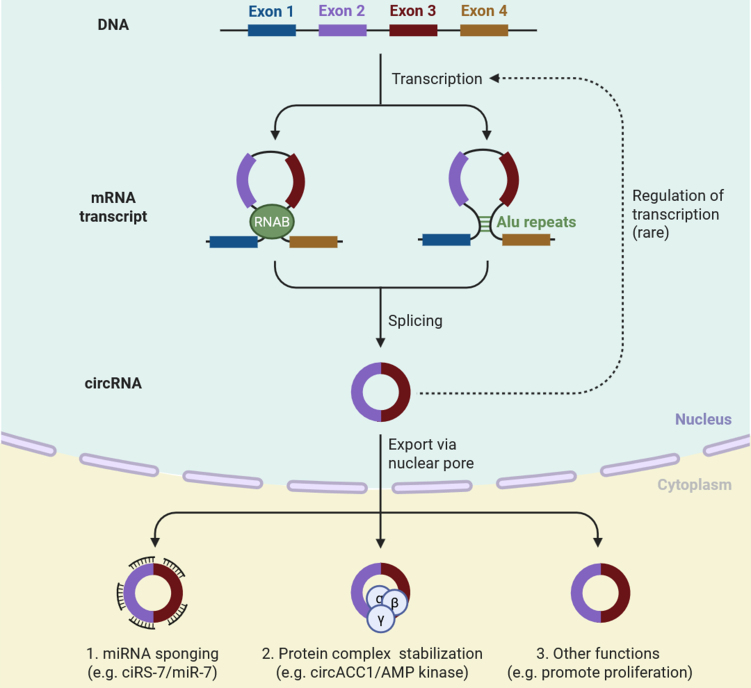 Figure 1
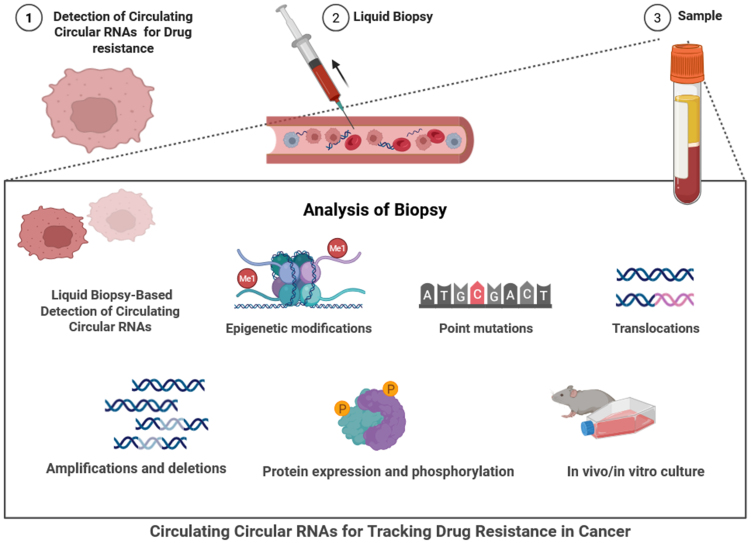 Figure 2
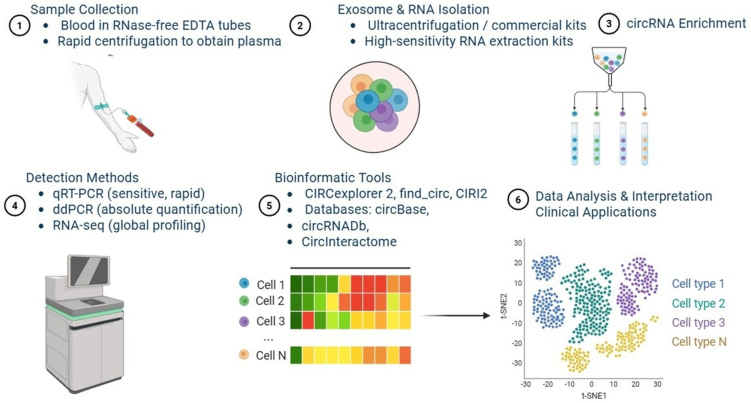 Figure 3
|
|
|
|
|
|
|
|
| 1 | circHIPK3 | Colorectal, lung, bladder | miR-124, miR-558 | Acts as a sponge to suppress tumor-suppressor miRNAs; promotes resistance to 5-FU and cisplatin | Biomarker for chemotherapy resistance | [ |
| 2 | circFOXO3 | Breast, lung, gastric | FOXO3, p21, CDK2 | Interferes with cell cycle regulation and apoptosis pathways | Prognostic marker; potential therapeutic target | [ |
| 3 | circRNA_100290 | Oral squamous cell carcinoma | miR-29 family | Modulates cell proliferation and cisplatin resistance | Diagnostic and drug response predictor | [ |
| 4 | circ_0001946 | NSCLC | miR-135a-5p, STAT6 | Promotes gefitinib resistance by activating STAT6/PI3K/AKT pathway | Potential marker for EGFR-TKI resistance monitoring | [ |
| 5 | circRNA CDR1as | Glioma, breast | miR-7, EGFR pathway | Regulates drug response via miRNA sponging and EGFR signaling | Associated with resistance to targeted therapy | [ |
| 6 | circ-PVT1 | Gastric cancer | miR-124-3p, ZEB1 | Facilitates paclitaxel resistance by modulating EMT | Marker of chemoresistance and poor prognosis | [ |
| 7 | circMTO1 | HCC | miR-9/p21 | Enhances doxorubicin sensitivity via tumor suppressor pathways | Therapeutic sensitization target | [ |
| 8 | circAKT3 | GBM | PI3K/AKT pathway | Promotes TMZ resistance via maintaining stemness | Candidate for targeting glioma stem cells | [ |
| 9 | circ-ABCB10 | Breast, lung cancer | miR-1271, BCL2 | Enhances resistance by modulating apoptosis and cell survival | Liquid biopsy candidate for resistance monitoring | [ |
|
|
|
|
|
|
|
|
| 1 | Biological sample | Plasma/serum | Primary source of circulating circRNAs; obtained from peripheral blood | Minimally invasive; widely used; good RNA stability | Low RNA yield; variability depending on handling | [ |
| 2 | Biological sample | Urine/saliva/CSF | Alternative fluids for site-specific cancers (e.g., urological, CNS) | Non-invasive; can reflect local tumor biology | Lower circRNA concentrations; limited standard protocols | [ |
| 3 | Cellular/molecular assay | Exosome isolation | Isolation of tumor-derived exosomes containing circRNAs | Enhances tumor specificity; protects RNA from degradation | Time-consuming; requires specialized kits or equipment | [ |
| 4 | Cellular/molecular assay | RNase R treatment | Digests linear RNAs to enrich circRNAs | Increases specificity for circRNAs | May result in partial RNA loss if not optimized | [ |
| 5 | RNA extraction method | Column-based/magnetic bead kits | Commercial kits (e.g., Qiagen, Norgen) used for isolating total RNA from biofluids | High RNA purity; optimized for low-input samples | Costly; requires careful sample handling | [ |
| 6 | Detection principle | qRT-PCR with divergent primers | Amplifies the back-splice junction unique to circRNAs | Cost-effective; highly specific for known circRNAs | Limited to known targets; less sensitive for low-abundance circRNAs | [ |
| 7 | Detection principle | ddPCR | Uses microdroplets to detect and quantify RNA copies with high sensitivity | Absolute quantification; ideal for rare circRNAs | Expensive; requires specialized instruments | [ |
| 8 | Detection principle | RNA-seq | Unbiased sequencing to detect both known and novel circRNAs | Comprehensive; detects novel circRNAs and expression changes | Data-intensive; needs bioinformatics expertise | [ |
| 9 | Bioinformatics analysis | CIRCexplorer2, find_circ, CIRI2, DCC | Tools used to identify circRNAs from sequencing data by mapping back-splice junctions | Enables genome-wide circRNA discovery | Complex pipelines; prone to false positives without proper filtering | [ |
| 10 | Bioinformatics analysis | circBase, CircInteractome, circAtlas | Databases for annotation, interaction prediction, and biological interpretation of circRNAs | Provides functional context and regulatory network insights | Limited clinical annotations for novel circRNAs | [ |
| 11 | Clinical relevance | Resistance monitoring | Real-time, longitudinal assessment of treatment response via circRNA dynamics | Guides therapy decisions; non-invasive surveillance | Not yet standardized for clinical use; requires large-scale validation | [ |
| 12 | Clinical relevance | Personalized treatment adaptation | Using circRNA expression changes to tailor treatment regimens dynamically | Supports precision oncology | Translational challenges; regulatory hurdles | [ |
|
|
|
|
|
|
|
|
|
| 1 | NSCLC | hsa_circ_0000190, hsa_circ_0014235 | Plasma | Upregulated | miR-142, miR-124-3p | Promotes EGFR-TKI resistance by sponging miRNAs | [ |
| 2 | TNBC | circ_0006528, circANKS1B | Serum | Upregulated | miR-148a-3p, miR-149-5p | Enhances EMT, metastasis and paclitaxel resistance | [ |
| 3 | CRC | circ_0005963 | Plasma | Upregulated | miR-122, GLUT1 | Facilitates glycolysis and oxaliplatin resistance | [ |
| 4 | Gastric cancer | circAKT3, circ_0000267 | Plasma | Upregulated | PI3K/AKT/mTOR | Regulates cisplatin resistance via autophagy control | [ |
| 5 | HCC | circ_0004913, circMTO1 | Serum | Downregulated (in some) | miR-9, p21 | Acts as tumor suppressor; associated with sorafenib resistance | [ |
| 6 | Prostate cancer | circFOXO3 | Plasma | Dysregulated | FOXO3 pathway | Modulates androgen deprivation therapy resistance | [ |
| 7 | Pancreatic cancer | circ-LDLRAD3 | Plasma | Upregulated | miR-137 | Promotes gemcitabine resistance via EMT regulation | [ |
| 8 | GBM | circHIPK3, circNT5E | CSF/plasma | Upregulated | miR-124, miR-422a | Enhances proliferation and TMZ resistance | [ |
| 9 | Ovarian cancer | circCELSR1 | Plasma | Upregulated | miR-1252, FOXR2 | Contributes to cisplatin resistance via PI3K/AKT activation | [ |
| 10 | Bladder cancer | circRIP2 | Urine/plasma | Upregulated | miR-1305, TGF-β2 | Facilitates EMT and chemoresistance | [ |
|
|
|
|
|
|
|
|
|
| 1 | ctDNA | Plasma/serum | Not applicable (DNA only) | Detects resistance mutations (e.g., EGFR, KRAS) | Non-invasive; mutation-specific tracking; quick turnaround | Does not reflect non-coding RNA regulation; low abundance in early-stage disease | [ |
| 2 | CTCs | Whole blood | Possible (but rarely used for circRNA) | Phenotypic and genotypic profiling of resistance-related pathways | Can be cultured; provides both RNA and protein information | Low frequency; difficult to isolate and purify; not ideal for circRNA analysis | [ |
| 3 | Exosomes | Plasma, serum, saliva, urine, CSF | Highly enriched for circRNAs | Reflects tumor-secreted resistance-related molecules and intercellular signals | Protect circRNAs from degradation; tumor-specific; suitable for dynamic tracking | Isolation and characterization methods not yet standardized; requires optimization | [ |
| 4 | cfRNA | Plasma/serum | Includes circRNAs (after enrichment) | Tracks therapy-related changes in gene expression and resistance regulation | Minimally invasive; suitable for repeated monitoring | CircRNAs are a minor fraction of total cfRNA; requires enrichment and sensitive detection | [ |
| 5 | Exosomal circRNAs | Exosome fraction from plasma/serum | Direct and stable source of circRNAs | Dynamic monitoring of resistance; potential predictive biomarker | High specificity and stability; resistant to RNases | Requires high-quality isolation; functional validation needed | [ |
|
|
|
|
|
|
|
| 1 | qRT-PCR | Fluorescence-based amplification (SYBR/Probe) | High sensitivity and specificity; cost-effective; fast turnaround; widely used for known targets | Requires prior knowledge of RNA; limited multiplexing; not ideal for novel discovery | [ |
| 2 | ddPCR | Droplet partitioning + fluorescence detection | Absolute quantification; extremely sensitive; useful for low-abundance RNAs; high reproducibility | Higher cost; requires specialized equipment; limited throughput | [ |
| 3 | Conventional RT-PCR | End-point PCR + gel electrophoresis | Simple and inexpensive; good for qualitative confirmation | Low sensitivity; not quantitative; risk of contamination | [ |
| 4 | RNA-seq | NGS | Unbiased transcriptome-wide profiling; can detect novel RNAs including circRNAs; enables differential expression analysis | High cost; requires advanced bioinformatics; longer turnaround | [ |
| 5 | Microarrays | Hybridization-based array platforms | Enable profiling of many RNAs at once; established technology | Limited to known sequences; lower dynamic range and sensitivity than RNA-seq | [ |
| 6 | Northern blotting | RNA separation by gel + probe hybridization | Provides RNA size and abundance information; visual confirmation | Low sensitivity; labor-intensive; requires large RNA input | [ |
| 7 | ISH | Tissue-based hybridization with labeled probes | Detects spatial localization of RNA in tissue or cells | Low throughput; semi-quantitative; needs tissue sections | [ |
| 7 | NanoString nCounter | Barcoded probe-based digital counting | No need for amplification; highly multiplexed; works with degraded samples | Expensive; limited to pre-designed probes; not suitable for discovery | [ |
|
|
|
|
|
|
|
|
|
|
| 1 | F-circEA study | Completed (translational) | NSCLC | Plasma cfRNA/exosomes | F-circEA (from EML4-ALK) | qRT-PCR | Proof-of-concept: F-circEA detected in the plasma of ALK-positive patients; shows biomarker potential | [ |
| 2 | CircRNA microarray study | Translational | Ovarian cancer | Plasma circRNAs | Multiple novel circRNAs | CircRNA microarray, RT-PCR | Identified differentially expressed circRNAs related to drug sensitivity | [ |
| 3 | Pancreatic cancer circRNA panel study | Translational | PDAC | Plasma | 5-CircRNA diagnostic panel | RNA-seq + qRT-PCR | Proposed a diagnostic + drug response circRNA signature; preclinical stage | [ |
| 4 | ctDNA-Guided SERENA-6 trial (AstraZeneca) | Phase III | Breast cancer | ctDNA | Not circRNA-specific | ddPCR/NGS | Demonstrated ctDNA-guided treatment switching improved PFS; circRNA potential underexplored | [ |
| 4 | NHS London liquid biopsy pilot | Pilot program | Breast cancer | ctDNA | Not circRNA-specific | ddPCR | Applied ctDNA for ESR1 mutation detection; supports framework for circRNA integration | [ |
- —the National Research Foundation of Korea (grant numbers: RS-2020-NR049589 and RS-2025-00555975)
- —the Gachon University Research Fund of 2022 (GCU-202206050001)
Peer Reviews
No public reviews on file for this paper yet. If you reviewed it on a platform where reviews are public (OpenReview, ICLR, NeurIPS, ICML), you can paste yours below so the community can read it here.
Videos
No videos yet. Explain this paper in a talk, walkthrough, or lecture? Add one.
Taxonomy
TopicsCircular RNAs in diseases · Cancer-related molecular mechanisms research · Extracellular vesicles in disease
INTRODUCTION
The emergence of drug resistance in cancer therapy is one of the greatest obstacles to long-term therapeutic success. Even with advances in chemotherapy, targeted therapies, and immunotherapies, many solid tumors relapse in patients due to either intrinsic or acquired resistance mechanisms^[1]^. While biopsies are considered the gold standard for tumor characterization, tissue sampling is invasive, usually performed only once at diagnosis, and fails to capture the temporal and spatial heterogeneity of tumor biology^[2]^. As precision oncology advances, there is a need for dynamic and non-invasive methods to assess cancer progression and therapy response^[3]^. Liquid biopsy presents this opportunity by assessing tumor-derived elements [circulating tumor cells (CTCs), circulating tumor DNA (ctDNA), etc.] from biofluids, most commonly blood, urine, or saliva^[4]^. New markers in liquid biopsy include circular RNAs (circRNAs) and other non-coding RNAs, which have garnered attention as potential biomarkers in the context of drug resistance due to their structural stability, abundance, linearity of representation, and biologically relevant functional states^[5]^. CircRNAs represent a class of endogenous non-coding RNAs identified by a covalently closed-loop structure that is resistant to degradation by exonucleases^[6]^. Their circular structure confers exceptional stability in bodily fluids, making them promising candidates for biomarker discovery^[7]^. CircRNAs were initially dismissed as transcriptional noise, but they are now recognized as regulators of biological processes such as proliferation, apoptosis, autophagy, and gene expression^[8]^. A growing body of evidence has shown that circRNAs are involved in the development of resistance to anticancer therapies through multiple mechanisms, including sponging microRNAs (miRNAs), interacting with RNA-binding proteins (RBP), regulating signal transduction pathways, and modulating transcription^[9]^.
The finding of circulating circRNAs through liquid biopsy represents a new frontier for non-invasive monitoring of drug resistance in a cancer context^[10]^. Given that circRNAs are stable in plasma and other fluids, we can readily quantify circRNA presence and abundance through innovative molecular techniques, including quantitative reverse transcription polymerase chain reaction (qRT-PCR), RNA sequencing (RNA-seq), and droplet digital PCR (ddPCR)^[5]^. Therefore, researchers have been able to link resistance to specific therapies with cancer-specific circRNA signatures^[11]^. For example, in non-small cell lung cancer (NSCLC), circRNA_102231 was shown to be overexpressed in cases where NSCLC patients had resistance to gefitinib, an epidermal growth factor receptor (EGFR)-tyrosine kinase inhibitor (TKI)^[12]^. The mechanism involved acting as a sponge to miR-130a-3p, which resulted in upregulation of oncogenic miR targets. As another example, in the context of breast cancer, circRNA cerebellar degeneration-related protein 1 gene (CDR1) antisense RNA (CDR1as) was correlated with tamoxifen resistance through modulation of the miR-7/EGFR pathway^[13]^. Cancer drug resistance is often multifaceted and involves changes in drug metabolism, expression of efflux pumps, DNA repair, epithelial-mesenchymal transition (EMT), and stemness. CircRNAs have the potential to disrupt many of these pathways^[14]^. For example, circHIPK3 has been shown to support chemoresistance by targeting various downstream processes in colorectal and bladder cancers^[15]^. The involvement of circRNAs in modulating resistance at multiple levels highlights their promise as unifying biomarkers that profile the changing resistance landscape during treatment^[16]^. In addition, it is plausible that circRNAs may provide a better biological picture of tumor heterogeneity than a biopsy from only one tumor site, given that circRNAs may be from diverse tumor sites^[17]^. Despite the very optimistic possibilities, challenges remain in circulating circRNAs for clinical purposes^[18]^. First, protocols for sample collection, RNA isolation, and data normalization must be established to ascertain reproducibility. Second, there may be detection and validation issues with lowly abundant circRNAs^[19]^; circumvention of low amounts of rare circRNAs may require a very sensitive detection method^[20]^. A third significant challenge is to reliably differentiate tumor-derived circRNAs from circRNAs in normal tissues^[21]^. Fourth, circRNAs with significant clinical value must be further validated in extensive, multi-center translational studies and matched to numerous cancer types and treatment approaches^[22]^. The detection of circulating circRNAs using liquid biopsy represents a watershed innovation in cancer diagnostics and therapeutic monitoring^[22]^. Real-time detection of molecular underpinnings of drug resistance would enhance personalized treatment through circRNA profiling to guide drug choice and ultimately improve patient outcomes^[23]^. As this exciting field develops further, circRNA biomarkers are expected to be integrated into clinical practice, facilitating more adaptive cancer care within the context of personalized medicine.
CIRCRNAS FOR TRACKING DRUG RESISTANCE IN CANCER
CircRNAs are generated from pre-mRNA transcripts through a unique phenomenon known as back-splicing. Back-splicing is an event where a downstream splice donor connects to an upstream splice acceptor^[24]^. Back-splicing can occur with the help and support of RBP or inverted repeat elements - sequences that bring exons into close proximity, enabling their circularization^[25]^. The resulting circRNAs consist of covalently closed loop structures and therefore lack 5′ caps or 3′ poly (A) tails^[26]^. The absence of these terminal modifications contributes to the very high stability of circRNAs compared with linear RNAs [Figure 1]^[27]^. CircRNAs can additionally stabilize protein complexes, as demonstrated by circACC1, which aids in the assembly of the adenosine monophosphate (AMP) kinase complex and has a role in metabolism^[28]^. CircRNAs have also been associated with promoting proliferation, survival, and resistance to therapy in cancer cells by interacting with major signal transduction pathways^[29]^. They are not commonly involved in the regulation of transcription in the nucleus; however, there is an emerging role (either positive or negative) for some circRNAs to direct gene expression in multiple ways [Figure 1]^[30]^. Once formed, circRNAs will be exported from the nucleus to the cytoplasm via nuclear pores^[31]^. Once in the cytoplasm, they will exert many biological functions. One of the most reported is miRNA sponging^[32]^. CircRNAs contain multiple binding sites for specific miRNAs. By binding these miRNAs, circRNAs can sequester them away from their target mRNAs and all their splicing isoforms, thereby inhibiting their regulatory effects^[32]^. For example, ciRS-7 acts specifically as a sponge for the miR-7 pathway, affecting oncogenic pathways. Studies have established certain circRNAs, such as circHIPK3, circFOXO3, and circRNA_100290, which can modulate some cancer pathways and affect chemotherapy sensitivity^[32]^. CircHIPK3 is one of the well-studied circRNAs and has been reported to be overexpressed in colorectal, lung, and bladder cancer^[33]^. This circRNA functions as a sponge for multiple tumor-suppressive miRNAs, such as miR-124 and miR-558, and promotes cell proliferation and chemoresistance to 5-fluorouracil (5-FU) and cisplatin^[34]^. Another significant circRNA is circRNA forkhead box O3 (circFOXO3), which has been shown to bind to cyclin-dependent kinase 2 (CDK2) and p21, and affect cell cycle regulation and apoptosis in breast and lung cancer. Dysregulation of circFOXO3 has also been implicated with chemoresistance and poor clinical outcomes^[35]^. CircRNA plasmacytoma variant translocation 1 (Circ-PVT1) participates in paclitaxel resistance in gastric cancer as a sponge for miR-124-3p and regulates the EMT marker zinc finger E-box-binding homeobox 1 (ZEB1), thus promoting invasive and drug-resistant phenotypes; circ-MTO1 in hepatocellular carcinoma (HCC) promotes doxorubicin sensitivity by sponging miR-9 and upregulating the tumor suppressor p21, and its downregulation correlates with increased resistance and poorer prognosis^[36]^. Circ-AKT3 regulates temozolomide (TMZ) resistance in glioblastoma (GBM) by regulating the phosphoinositide 3-kinase (PI3K)/protein kinase B (AKT) pathways and cancer stem cell characteristics^[37]^. Circ-ABCB10, another extensively studied circRNA, provides resistance to multiple drugs in lung and breast cancer by regulating B-cell lymphoma 2 (BCL2) through the modulation of miR-1271^[18]^. As circRNAs continue to advance, future endeavors should address resistance issues, such as integrating circRNA panels into monitoring workflows, and further evaluating and validating circRNAs as therapeutic targets to reverse drug resistance and improve patient outcomes^[9]^. Key circRNAs implicated in cancer drug resistance, along with their pathways, mechanisms, and clinical applications, are presented in Table 1.
This schematic illustrates the formation of circRNAs through back-splicing of pre-mRNA, where exons are circularized via RBP or Alu repeat elements. The resulting circRNA is exported from the nucleus into the cytoplasm. CircRNAs can perform multiple regulatory functions, including (1) miRNA sponging (e.g., ciRS-7 sequestering miR-7); (2) stabilization of protein complexes (e.g., circACC1 supporting AMP kinase activity); and (3) other cellular roles, such as promoting proliferation and modulating gene expression. Though rare, circRNAs may also influence transcriptional regulation in the nucleus. These diverse functions contribute to circRNAs’ roles in cancer progression and drug resistance [Created in BioRender. Singh DD (2025)]. circRNAs: Circular RNAs; RBP: RNA-binding proteins; miRNA: microRNA; AMP: adenosine monophosphate.
LIQUID BIOPSY-BASED DETECTION OF CIRCULATING CIRCRNAS
Cancer treatment has evolved considerably with the introduction of targeted therapies, immunotherapies, and combination regimens^[29]^. Unfortunately, drug resistance (whether intrinsic or acquired) remains a significant challenge that can culminate in therapeutic failure, progression of disease, and suboptimal survival^[44]^. Due to the dynamic and heterogeneous nature of tumors, it is wise to continually assess molecular changes during treatment^[6]^. Although tissue biopsies can be educational, they are invasive, typically only provide a limited evaluation of tumor biology, and cannot be used for longitudinal monitoring^[45]^. As a result, liquid biopsy has emerged as a novel, non-invasive application to assess real-time cancer progression and treatment resistance^[46]^. Table 2 presents a comparative analysis of the components involved in liquid biopsy-based detection of circulating circRNAs for monitoring drug resistance in cancer^[55]^. Liquid biopsy is the characterization of tumor-derived constituents, such as CTCs, ctDNA, extracellular vesicles, and different species of RNA, including circRNAs, in biofluids (e.g., blood)^[56]^. Due to their closed-loop structure that lacks free 5′ and 3′ ends, circRNAs resist exonuclease degradation, enabling them to freely circulate and serve as stable and strong biomarkers^[6]^. In the cancer context, circRNAs can exhibit multiple roles, e.g., serving as a miRNA sponge, interacting with RBP, regulating transcription, and even translated into functional peptides^[16,57]^. Importantly, dysregulated circRNA expression could result in mechanisms of drug resistance across multiple malignancies, such as lung, breast, liver, and colon cancer^[44]^. CircRNAs detected through liquid biopsy will have a multitude of advantages for the clinic, many based on what we discussed in the previous sections^[24]^. First, circRNAs in liquid biopsies are exceptionally stable, allowing their detection in biofluids often without immediate specimen processing^[58]^. Second, liquid biopsies enable clinicians to collect real-time samples from patients multiple times, providing insights into system or tumor responses and facilitating early detection of resistance^[2]^. Third, liquid biopsies are non-invasive and can obtain biospecimens from patients who might otherwise be ineligible due to poor general condition, prior trauma, or advanced disease^[59]^. Fourth, circulating circRNAs can originate from multiple tumor sites, offering a more comprehensive view of the disease and potentially revealing emerging resistance profiles simultaneously^[59,60]^. Recent advancements in technology have enabled sensitive and specific detection of circRNAs from plasma and serum samples using qRT-PCR, ddPCR and RNA-seq methods^[60]^. These platforms allow for profiling circRNA expression changes during treatment, which may provide early signals of therapeutic failure or developing resistance. Numerous preclinical and clinical studies have identified circRNA signatures correlated with chemoresistance, resistance to tyrosine kinase inhibitors, and resistance to immune checkpoint blockade, highlighting their translational potential^[61]^. Despite these promising advancements, challenges exist. There remains a lack of standardization for the many pre-analysis variables that can influence circRNA measurements (e.g., sample processing in clinical laboratories, RNA isolation protocols, and data normalization)^[62]^. Additionally, further validation through large, multi-center clinical studies is required to assess the diagnostic or prognostic value of specific circRNAs. Combining circRNA biomarkers with other molecular and clinical measures may enhance their predictive power and increase their utility in personalized medicine^[63]^. In summary, the liquid biopsy-based detection of circulating circRNAs provides a new, effective paradigm for non-invasive tracking of drug resistance in cancer^[6]^. As research continues and the technology advances, it is possible that circRNA profiling will become a relevant component of the clinical oncology arsenal, enabling real-time treatment guidance for drug resistance and improving outcomes in the era of precision oncology^[44]^.
CIRCULATING CIRCRNAS AS EMERGING BIOMARKERS IN LIQUID BIOPSY FOR DRUG RESISTANCE SURVEILLANCE IN CANCER
CircRNAs are becoming increasingly popular as circulating biomarkers. Evidence of their dysregulation in numerous cancers adds to our knowledge of resistance mechanisms and a bright future for therapeutic monitoring^[15]^. The liquid biopsy-based approach for detecting circulating circRNAs is used to monitor drug resistance in cancer^[15]^. The process begins with the identification of resistant cancer cells and the collection of a blood sample, from which plasma or serum is isolated^[18]^. Biopsy analysis involves detecting epigenetic modifications, point mutations, translocations, amplifications, deletions, and assessing protein expression and phosphorylation [Figure 2]^[64]^. Functional assays using in vitro or in vivo models are employed to further validate the findings. Central to this approach is the detection of circRNAs, which act as stable, non-invasive biomarkers for tracking therapeutic resistance and guiding personalized cancer treatment decisions^[65]^. In NSCLC, the circRNA hsa_circ_0000190 and hsa_circ_0014235 were found to be upregulated in the plasma and sponge miRNAs, such as miR-142 and miR-124-3p, which promotes resistance to EGFR tyrosine kinase inhibitors^[65]^. In triple-negative breast cancer (TNBC), the circANKS1B found in serum contributed to the enhancement of EMT and paclitaxel resistance by targeting miR-148a-3p^[66]^. Likewise, circ_0005963 in plasma from colorectal cancer (CRC) enhances oxaliplatin resistance by governing glycolytic regulation through the GLUT1/miR-122 axis^[67]^. CircAKT3 is associated with gastric cancer targets and upregulates the autophagy pathway [PI3K/AKT/mechanistic target of rapamycin (mTOR)], helping promote cisplatin resistance^[68]^. In HCC, circMTO1 serves as a tumor suppressor but is downregulated in sorafenib resistance^[69]^. GBM-associated circRNAs, including circHIPK3 and circNT5E, have been detected in plasma and cerebrospinal fluid (CSF), with alterations in miRNA influencing TMZ resistance^[70]^. Similarly, circRNAs in ovarian (circCELSR1), pancreatic (circ-LDLRAD3), and bladder cancer (circRIP2) regulate pathways associated with chemotherapy resistance, including the EMT, PI3K/AKT, and transforming growth factor beta (TGF-β) signaling^[71]^. Overall, circRNAs from liquid biopsies are a novel source of non-invasive biomarkers for monitoring the development of drug resistance in cancer therapies in real time and offer the opportunity for strategic personalized therapeutic responses and interventions [Table 3]^[6]^. In the investigation of drug resistance, circRNAs have been implicated through several mechanisms. One of the primary roles of circRNAs is functioning as miRNA sponges - they sequester miRNAs that would otherwise inhibit oncogenic mRNA targets^[82]^. For example, circHIPK3 has been shown to sponge miR-124 to confer resistance to chemotherapeutic agents in colorectal and bladder cancers^[83]^. Likewise, in certain cancer subtypes, circRNA CDR1as can sequester miR-7, resulting in dysregulated EGFR expression and leading to resistance to targeted therapies in lung and breast cancers^[84]^. Beyond intravenously (IV) drug resistance mediated through the inhibition of miRNA activity, circRNAs can also affect protein targeting and transcription regulation, and some may even encode peptides related to multidrug resistance. These functions further support the role of circRNA as mediators in resistance pathways^[85]^. The relative ease of detecting cirRNAs through liquid biopsies - which provide a minimally invasive method to sample repeatedly and allow clinicians to track molecular signatures or emerging resistance over the course of treatment - offers a potential means of evaluating real-time treatment responses^[86]^. This is particularly important in advanced or later-stage cancers, where tumor heterogeneity and limited accessibility make repeated solid tissue biopsies impractical or impossible for traditional pathological diagnosis^[87]^. Current analyses of circulating circRNA focus on their expression patterns and their utility in inferring the internal molecular status and characteristics of the primary tumor. At the same time, these circulating circRNAs may serve as early indicators of emerging therapeutic resistance or treatment failure, enabling timely clinical intervention guided by rapid circRNA analysis^[88]^. Liquid biopsy markers offer non-invasive tools for monitoring drug resistance in cancer. ctDNA can identify genetic mutations and resistance-related alterations, but its low abundance in early-stage disease limits its sensitivity^[89]^. CTCs provide phenotypic and genotypic information, yet they are rare and technically challenging to isolate^[90]^. Exosomes, which carry proteins, DNA, and RNA, including circRNAs, offer both molecular stability and functional insights^[91]^. CircRNAs, due to their covalently closed structure, are highly stable and abundant in exosomes, making them promising biomarkers for real-time tracking of therapeutic resistance across various cancer types [Table 4]^[9]^.
The figure depicts the use of liquid biopsy-based detection of circulating circRNAs to track drug resistance in cancer, beginning with the identification of drug-resistant tumor cells (Step 1) and progressing to liquid biopsy collection via blood draw and non-invasive material (Step 2). The resulting sample (Step 3), generally plasma or serum, will undergo analysis for molecular changes associated with the resistance. The analysis options include various molecular methods to detect epigenetic modifications, point mutations, translocations, and copy number changes such as amplifications or deletions. Other assessments also include protein expression and phosphorylated proteins, as well as the use of in vivo/in vitro methodologies to establish functional changes. Importantly, the aim is to detect and characterize the stable, circulating circRNAs in the liquid biopsy, where they may serve as potential circulating biomarkers. The proposed workflow enables real-time, non-invasive capture of valuable information regarding therapeutic resistance and supports the implementation of precision oncology and therapies for cancer treatment [Created in BioRender. Singh DD (2025)]. circRNAs: Circular RNAs.
TOOLS AND TECHNIQUES FOR MONITORING LIQUID BIOPSY OF CIRCRNAS IN CANCER THERAPY RESISTANCE
Monitoring of circulating circRNAs by liquid biopsy utilizes various RNA detection methods, including qRT-PCR, ddPCR, and RNA-seq^[94,95]^. qRT-PCR is a sensitive, rapid technique, ddPCR enables absolute quantification, and RNA-seq provides comprehensive circRNA profiling. These methods differ in cost, throughput, and suitability for clinical application^[96]^. Non-invasive monitoring of circRNAs in circulation to track mechanisms of therapeutic resistance requires a multifaceted approach combining molecular techniques with bioinformatics methods to provide real-time insight into the biology of tumors^[97,98]^. Blood should be collected using RNase-free ethylenediaminetetraacetic acid (EDTA) tubes and processed quickly by centrifugation to provide plasma. Exosome preparations, whether obtained by ultracentrifugation or polystyrene-based commercial systems, can provide tumor-specific circRNAs, further increasing their utility for monitoring tumor evolution in the context of therapy^[99,100]^. High-sensitivity kits provide total RNA extraction that can be treated with RNase R to enrich circRNAs by removing linear RNA^[101]^. Finally, divergent primers can be developed for the qRT-PCR method to detect known circRNAs that can be isolated with ddPCR^[102]^. High-sensitivity droplet dPCR provides sensitive absolute quantitation of circRNAs as a complementary method for potentially longitudinal monitoring and/or resistance contributions^[103]^.
The combination of circRNA-specific back-splice junction detection with deconvolution-based methods improves specificity, which would enable the identification of cancer type- or drug resistance-associated circRNAs at low abundance. Deconvoluted sequencing in combination with longitudinal RNA-seq also facilitates early detection of therapeutic resistance^[101]^. Future integration of deconvoluted sequencing with artificial intelligence (AI) and single-cell RNA-seq libraries is expected to further improve sensitivity and predictive power, and to support the use of bulk RNA-seq as a non-invasive monitoring tool^[101-104]^. As RNA-seq becomes more affordable, global profiling of circRNAs may be achieved through the use of rRNA-depleted or RNase R-treated libraries and bioinformatics tools such as CIRCexplorer2, find_circ and CIRI2^[105]^. Exosome-derived circRNAs also display tumor specificity, as drug-resistant tumor cells tend to preferentially package them, which could provide insight into the persistence and localization of drug resistance during therapy^[106]^. The integration of bioinformatics platforms and databases (circBase, circRNADb, and CircInteractome) will facilitate circRNA annotation, differential expression analysis, and functional characterization, while incorporating pathway and network analysis platforms will help elucidate the mechanisms by which circRNAs contribute to cancer drug resistance [Figure 3]^[107]^.
Schematic representation of the experimental and analytical pipeline for circRNA detection and characterization. (1) Sample collection: blood is collected in RNase-free EDTA tubes, followed by rapid centrifugation to obtain plasma; (2) Exosome and RNA isolation: performed using ultracentrifugation or commercial high-sensitivity RNA extraction kits; (3) CircRNA enrichment: strategies to enrich circRNAs for downstream analyses; (4) Detection methods: include qRT-PCR (sensitive, rapid), ddPCR (absolute quantification), and RNA-seq (global profiling); (5) Bioinformatic tools: circRNA analysis pipelines such as CIRCexplorer2, find_circ, and CIRI2, along with databases such as circBase, circRNADb, and CircInteractome; (6) Data analysis and interpretation: application of circRNA data in clinical translation and biomarker development [Created in BioRender. Singh DD (2025)]. circRNA: Circular RNA; EDTA: ethylenediaminetetraacetic acid; qRT-PCR: quantitative reverse transcription polymerase chain reaction; ddPCR: droplet digital polymerase chain reaction; RNA-seq: RNA sequencing.
The integration of these tools enables the development of dynamic circRNA-based biomarker panels that can provide real-time guidance for therapeutic decisions^[95]^. Although these approaches are still evolving, challenges remain in standardizing sample handling, accounting for pre-analytical variability, and differentiating tumor-derived circRNAs from those originating from non-malignant sources^[16]^. Nevertheless, the convergence of effective detection methods, sophisticated analytical methods, and key clinical investigations is positioning circRNA profiling as a key part of future precision oncology^[96]^. Looking ahead, liquid biopsies leveraging circRNAs to monitor therapeutic resistance are expected to increasingly support personalized, adaptive cancer treatment plans^[2]^. A comparison of RNA detection methods is presented in Table 5.
CLINICAL TRIALS ON LIQUID BIOPSY-BASED DETECTION OF CIRCULATING CIRCRNAS FOR TRACKING DRUG RESISTANCE IN CANCER
Various preclinical and translational studies have demonstrated that circRNAs such as circFOXO3, circHIPK3, and F-circEA are involved in drug resistance pathways, including the evasion of apoptosis, regulation of autophagy, and drug efflux [Table 6]^[105]^. Moreover, trials involving liquid biopsies have concentrated on ctDNA, CTCs, or miRNAs to monitor treatment response or early resistance in cancers such as breast, lung, and CRC^[106]^. For example, ctDNA-based clinical trials, including SERENA-6 by AstraZeneca and the NHS London pilot, have demonstrated the utility of early mutation detection in guiding therapy switches^[107]^. In contrast, circRNAs have not yet been integrated into routine clinical workflows^[52]^. Efforts have been made in observational studies and small cohort studies to study circRNAs in biofluids (especially in exosomes) as indicators of drug resistance in breast, prostate, and NSCLCs^[111]^. Importantly, these earliest studies provide proof-of-concept evidence that circRNA profiles can capture the dynamic evolution of a tumor’s adaptation to therapy^[24]^. Given the advances in sequencing and computational tools available for back-splice junction recognition, detecting circRNAs in clinical samples is technically feasible^[112]^. To translate these findings into clinical practice, dedicated trials are needed to evaluate the sensitivity, specificity, and predictive value of circRNA panels in monitoring drug resistance^[113]^. Future clinical investigations should focus on validating circRNA signatures in longitudinal patient samples, combining ctDNA and circRNA assays, and gradually integrating circRNAs into companion diagnostic workflows. Conducting such trials would represent an important milestone in personalized oncology, enabling real-time therapy adjustments based on evolving resistance patterns identified non-invasively^[6]^. Achieving this will require multi-center collaboration, standardized protocols for circRNA extraction and quantification, and regulatory support for biomarker-based decision making. As precision oncology advances, circRNA liquid biopsies represent a promising tool for early resistance detection and optimized therapy across multiple cancer types.
LIMITATIONS OF THE STUDY ON CLINICAL TRIALS ON LIQUID BIOPSY-BASED DETECTION OF CIRCULATING CIRCRNAS FOR TRACKING DRUG RESISTANCE IN CANCER
Despite the growing interest in utilizing liquid biopsy for cancer management, clinical trials specifically focused on the detection of circulating circRNAs for monitoring drug resistance remain limited and face several important challenges^[114]^. One of the foremost limitations is the lack of ongoing or completed large-scale clinical trials that investigate the diagnostic or prognostic utility of circRNAs in a real-world therapeutic context^[115]^. Most available studies are preclinical or translational, primarily using in vitro cell lines or small patient cohorts, which limits their generalizability and clinical applicability^[116]^. The lack of robust clinical validation and longitudinal patient data makes it difficult to establish circRNAs as reliable biomarkers for tracking drug resistance. Additionally, the standardization of circRNA detection protocols presents a major barrier^[117]^. There is currently no universally accepted method for the enrichment, isolation, and quantification of circRNAs in clinical samples^[118]^. Techniques such as RNase R treatment, divergent primer design, and RNA seq are highly sensitive to experimental conditions, leading to variability in results across laboratories and studies^[119]^. Furthermore, the low abundance and tissue-specific expression of circRNAs often require advanced technologies such as ddPCR or deep RNA seq, which may not be available in routine diagnostic settings. Another major limitation lies in the functional characterization of identified circRNAs^[52]^. While many studies report associations between specific circRNAs and drug resistance phenotypes, few have established causal mechanisms or validated these findings in vivo^[113]^. This gap undermines the translational potential of circRNA signatures and limits their incorporation into clinical trial designs^[120]^. Moreover, circRNAs often function as competing endogenous RNAs or miRNA sponges, and their network-level interactions with other non-coding RNAs or mRNAs are complex and still not fully understood^[84]^. From a regulatory and ethical standpoint, the introduction of novel biomarkers into clinical trials necessitates rigorous validation under Good Clinical Practice and compliance with data safety and ethical standards, which adds time and logistical complexity to trial initiation and conduct^[121]^. Additionally, the cost and data burden of high-throughput circRNA profiling, especially when integrated with other omics data, may limit its widespread adoption, particularly in low-resource clinical settings^[122]^.
Another issue is the lack of clear clinical utility or guidelines on how circRNA-based resistance detection would influence therapeutic decisions^[123]^. Unlike ctDNA, which can reveal actionable mutations leading to drug switching [e.g., estrogen receptor 1 (ESR1) mutations in breast cancer], circRNAs currently lack such validated clinical pathways^[124]^. Their integration into decision-making algorithms and treatment protocols remains theoretical at this stage. Lastly, patient heterogeneity in terms of tumor type, treatment history, and genetic background adds another layer of complexity, making it difficult to define universal circRNA panels for resistance tracking^[125]^. In conclusion, while the scientific foundation for using circulating circRNAs as non-invasive biomarkers for drug resistance is strong, the absence of clinical trial validation, methodological standardization, and real-time clinical utility assessment significantly limits current implementation. Addressing these limitations through collaborative, multi-center clinical trials and robust bioinformatics pipelines will be crucial for advancing the role of circRNAs in precision oncology.
FUTURE PROSPECTIVE
The significant potential of circRNAs in liquid biopsy for monitoring cancer drug resistance necessitates extensive future research, both experimental and clinical^[44]^. To begin, large-scale multi-center clinical trials should be launched to evaluate the clinical utility of circRNAs as predictive biomarkers of therapeutic resistance in multiple cancer types^[112]^. These trials should assess circRNA expression levels in solid tumors, hematological malignancies, and pediatric hematological malignancies using a longitudinal model^[126]^. The expression profiles will be correlated with resistance, progression-free survival (PFS), and therapeutic response to treatment modifications^[120]^. To ensure consistency and reproducibility, standardized pre-analytical and analytical methods are essential^[44]^. This includes establishing global standards for sample collection, circRNA extraction, RNase R-based enrichment, and detection using highly sensitive techniques (e.g., qRT-PCR, ddPCR, or RNA seq)^[52]^. Long-term data on circRNA expression will further enhance the clinical translatability of circRNAs as predictive biomarkers of therapeutic resistance, with far-reaching implications in cancer management.
The development of affordable, point-of-care diagnostic platforms for detecting tumor-specific circRNAs in body fluids could enable real-time monitoring of resistance while facilitating personalized treatment planning^[127]^. Future work should also prioritize functional characterization of resistance-associated circRNAs, including their molecular roles and interactions with miRNAs, mRNAs, and signaling pathways^[85]^. Such efforts would establish the biomarker potential of circRNAs and support the feasibility of therapeutically targeting oncogenic circRNAs. Combining circRNA profiles with other omics data (e.g., proteomics, genomics, metabolomics), using AI and machine learning approaches, may further enhance predictive accuracy and facilitate the development of comprehensive resistance signatures^[128]^. Another important step will be advancing circRNAs as companion diagnostics to guide precision-targeted therapies or immunotherapies^[129]^. Close collaboration with regulatory authorities will also be critical to define the biomarker qualification pathway for circRNAs while ensuring compliance with clinical and ethical standards^[130]^. In summary, advancing the field of circRNAs in liquid biopsy requires a multidisciplinary strategy that integrates molecular biology, bioinformatics, clinical oncology, and regulatory science. With sustained research investment and a strong translational focus, circRNAs hold the promise to transform non-invasive cancer monitoring and the precision management of therapeutic resistance.
CONCLUSION
Combining liquid biopsy with circRNA research is a revolutionary way to monitor drug resistance in cancer. circRNAs have a covalently closed-loop structure, making them highly stable in circulation and ideal candidates for non-invasive biomarkers in real-time disease monitoring. Advances in molecular testing such as qRT-PCR, ddPCR, and RNA seq have provided adequate sensitivity and specificity to detect circRNA from plasma, serum, and exosomes. In this way, circRNA can be linked to specific resistance mechanisms that include the regulation of apoptosis, autophagy, epithelial–mesenchymal transition, and drug efflux. By assessing therapeutic responses, circRNA-based liquid biopsy can capture molecular changes, enabling real-time interpretation of these dynamic events. Beyond this analytical purpose, liquid biopsy with circRNAs can guide treatment decisions, enable early detection of resistance, and improve personalized cancer care. Further standardization and clinical validation of such approaches are needed; nonetheless, current evidence supports the potential of circulating circRNAs as future clinical tools in precision oncology.
The reference list from the paper itself. Each links out to its DOI / PubMed record.
- 1Wang X Zhang H Chen X Drug resistance and combating drug resistance in cancer Cancer Drug Resist 201921416010.20517/cdr.2019.1034322663 PMC 8315569 · doi ↗ · pubmed ↗
- 2Ma L Guo H Zhao Y Liquid biopsy in cancer current: status, challenges and future prospects Signal Transduct Target Ther 2024933610.1038/s 41392-024-02021-w 39617822 PMC 11609310 · doi ↗ · pubmed ↗
- 3Huang L Rong Y Tang X Yi K Wu J Wang F Circular RN As are promising biomarkers in liquid biopsy for the diagnosis of non-small cell lung cancer Front Mol Biosci 2021862572210.3389/fmolb.2021.62572234136531 PMC 8201604 · doi ↗ · pubmed ↗
- 4Batool SM Yekula A Khanna P The liquid biopsy consortium: challenges and opportunities for early cancer detection and monitoring Cell Rep Med 2023410119810.1016/j.xcrm.2023.10119837716353 PMC 10591039 · doi ↗ · pubmed ↗
- 5Wen G Zhou T Gu W The potential of using blood circular RNA as liquid biopsy biomarker for human diseases Protein Cell 2021129114610.1007/s 13238-020-00799-333131025 PMC 8674396 · doi ↗ · pubmed ↗
- 6Zhang Y Wang Y Su X Wang P Lin W The value of circulating circular RNA in cancer diagnosis, monitoring, prognosis, and guiding treatment Front Oncol 20211173654610.3389/fonc.2021.73654634722285 PMC 8551378 · doi ↗ · pubmed ↗
- 7Wang S Zhang K Tan S Circular RN As in body fluids as cancer biomarkers: the new frontier of liquid biopsies Mol Cancer 2021201310.1186/s 12943-020-01298-z 33430880 PMC 7798340 · doi ↗ · pubmed ↗
- 8Babin L Andraos E Fuchs S Pyronnet S Brunet E Meggetto F From circ RN As to fusion circ RN As in hematological malignancies JCI Insight 20216 e 15151310.1172/jci.insight.15151334747369 PMC 8663548 · doi ↗ · pubmed ↗