Targeting BRAF Class II and III Mutations in NSCLC with the pan-RAF inhibitor Exarafenib Reveals ARAF-KSR1-Mediated Resistance and Rational Combination Strategies
Tadashi Manabe, Hannah C. Bergo, Qingtian Li, Tim Sen Wang, Paul Severson, Nichol Miller, Catherine Lee, Elifnur Yay Donderici, Nicole Zhang, Wei Wu, Yu-ting Chou, Daniel L. Kerr, Paul Allegakoen, Kathryn B. Grandinetti, Liliana Soroceanu, Robert J. Pelham, Eric S. Martin

TL;DR
This study explores a new treatment for a specific type of lung cancer using a drug called exarafenib, which targets BRAF mutations and identifies a resistance mechanism involving ARAF-KSR1 complexes.
Contribution
The study identifies a novel resistance mechanism to pan-RAF inhibition in BRAF-mutant NSCLC and proposes a rational combination therapy to overcome it.
Findings
Exarafenib shows robust anti-tumor activity in preclinical models of BRAF Class II and III NSCLC.
Exarafenib resistance is mediated by ARAF-KSR1 scaffolding complexes maintaining MAPK signaling.
Combining exarafenib with MEK inhibition overcomes resistance in preclinical models.
Abstract
The serine/threonine kinase BRAF is frequently mutated in several tumor types, including melanoma and non-small cell lung cancer (NSCLC). Oncogenic BRAF mutations can be classified as Class I, II, or III owing to differences in underlying oncogenic mechanisms. While there are approved targeted therapies for BRAF Class I mutants, there are no approved targeted therapy strategies for Class II and Class III BRAF mutated cancers. By leveraging analysis of a large, real world circulating tumor DNA (ctDNA) profiling database, we highlight a significant subset of NSCLC patients whose tumors harbored Class II and Class III BRAF mutations. These mutations comprise ~65% of BRAF-mutant NSCLC cases, with Class II patients showing significantly worse clinical outcomes compared to Class I patients. In several preclinical tumor systems with Class II and III BRAF mutations, exarafenib, a novel type 2…
Genes, proteins, chemicals, diseases, species, mutations and cell lines named across the full text — each resolved to its canonical identifier and authoritative record.
Click any figure to enlarge with its caption.
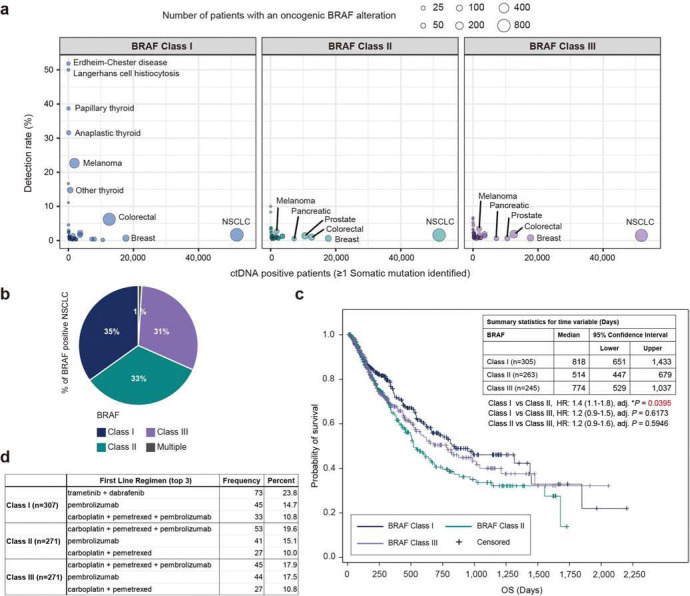 Figure 1
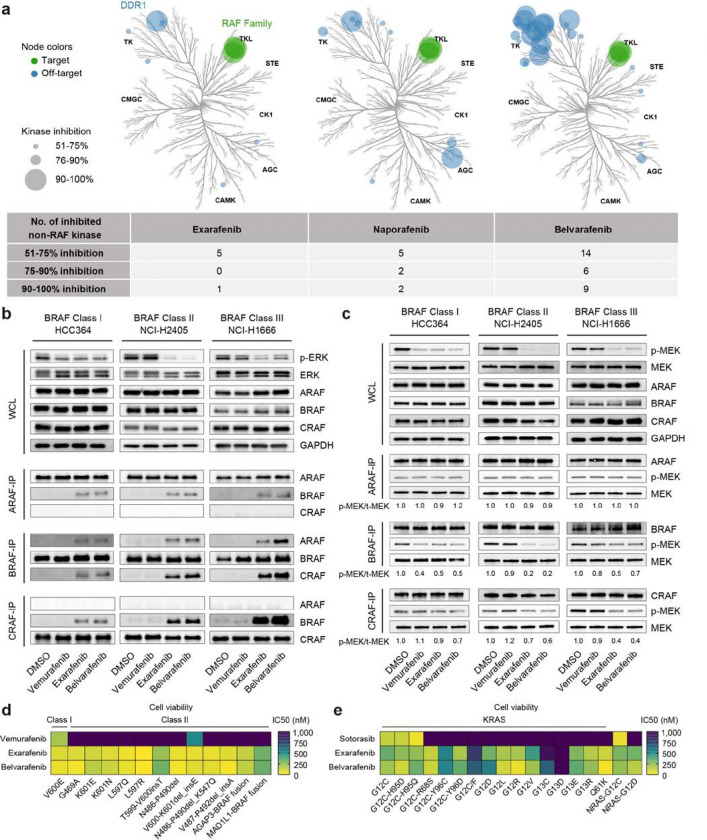 Figure 2
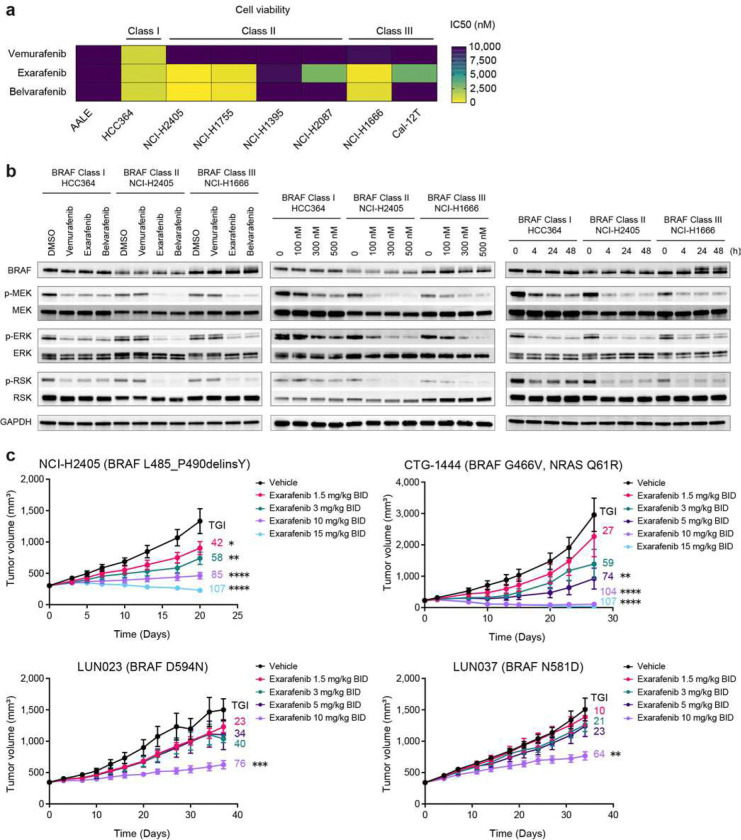 Figure 3
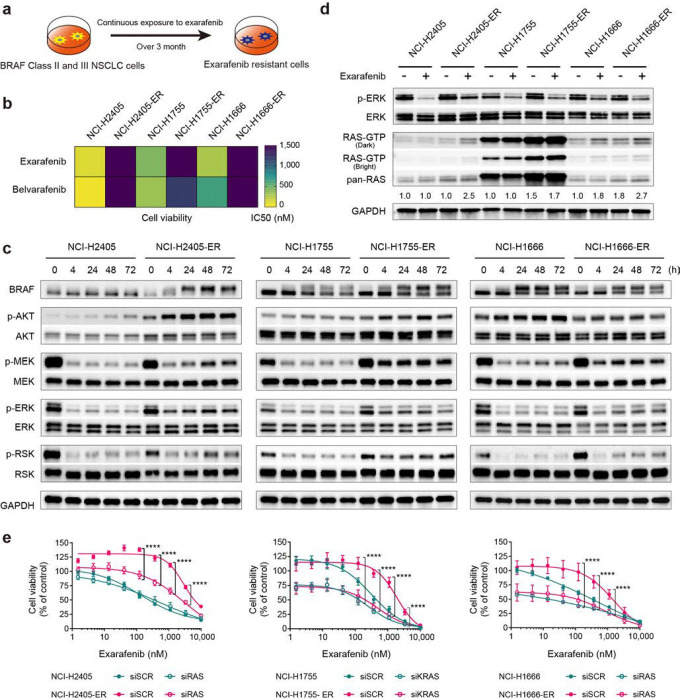 Figure 4
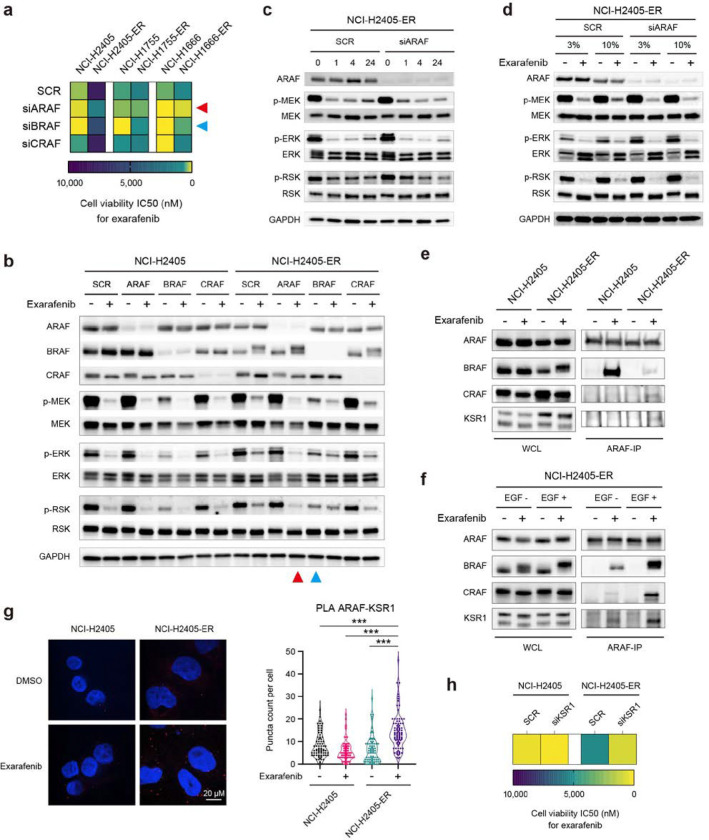 Figure 5
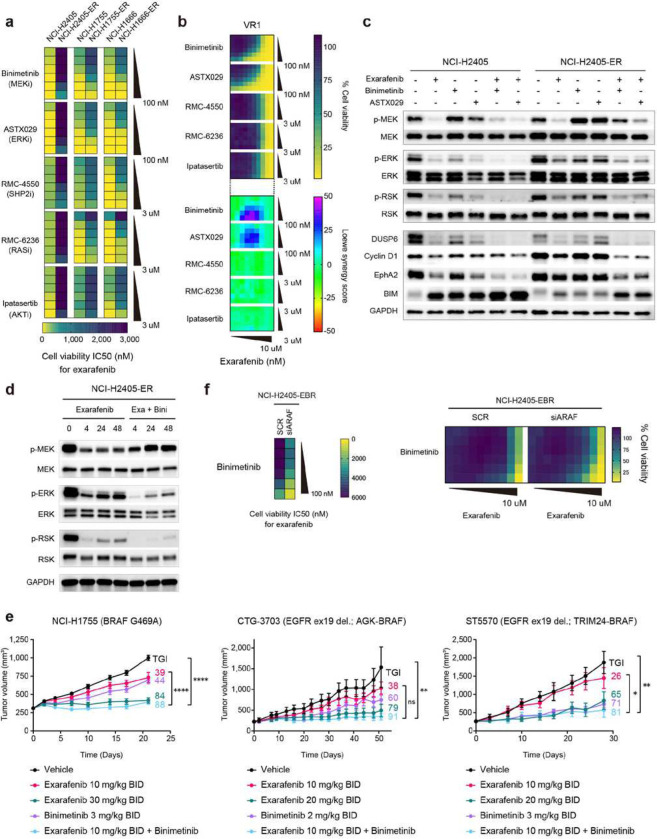 Figure 6
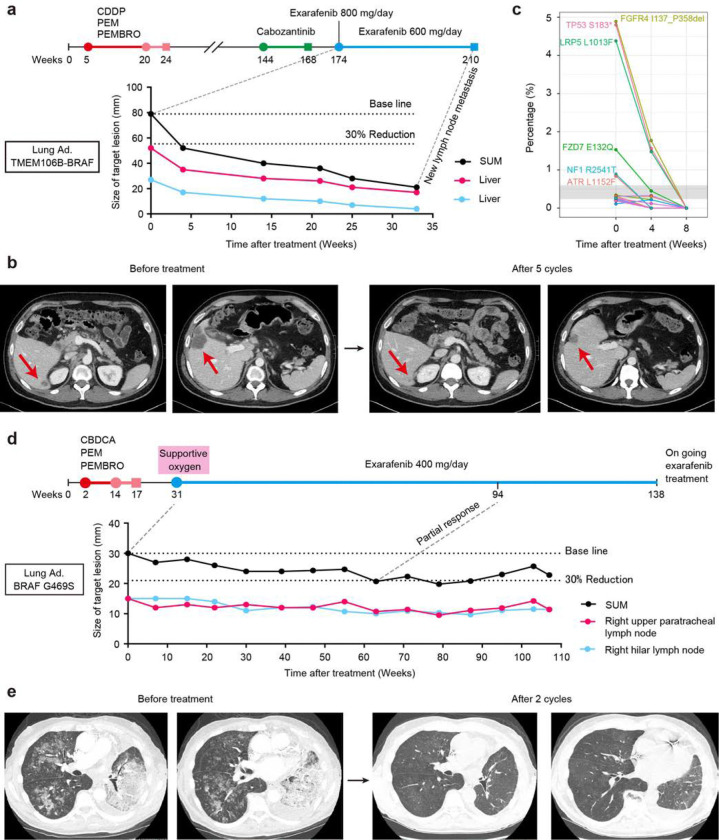 Figure 7
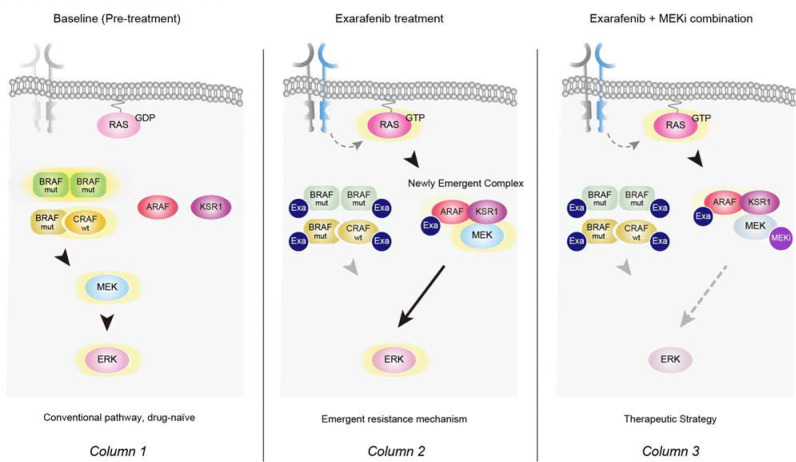 Figure 8
Peer Reviews
No public reviews on file for this paper yet. If you reviewed it on a platform where reviews are public (OpenReview, ICLR, NeurIPS, ICML), you can paste yours below so the community can read it here.
Videos
No videos yet. Explain this paper in a talk, walkthrough, or lecture? Add one.
Taxonomy
TopicsMelanoma and MAPK Pathways · Protein Kinase Regulation and GTPase Signaling · Synthesis and biological activity