Dynamic Brain Age Modeling Identifies Network-Specific Cognitive Deficits in Schizophrenia
Mohammad Sendi, Sabrina Edwards-Swart, Bradley Baker, Daniel Mathalon, Judith Ford, Adrian Preda, Theo van Erp, Godfrey Pearlson, Jessica Turner, Vince Calhoun

TL;DR
This study shows that dynamic brain connectivity can reveal cognitive issues in schizophrenia, particularly in attention and memory.
Contribution
The study introduces dynamic brain age modeling as a novel method to identify cognitive deficits in schizophrenia.
Findings
Dynamic brain age gaps (BAGs) are strongly linked to attention and working memory deficits in schizophrenia.
Network-specific BAGs in cognitive control and default mode networks are robust predictors of cognitive impairment.
Dynamic connectivity models outperform static models in predicting cognitive dysfunction.
Abstract
Schizophrenia is characterized by deficits in attention and working memory. The brain age gap (BAG), the difference between brain-predicted and chronological age, has emerged as a biomarker of brain dysfunction, but its association with dynamic brain function remains unclear. We developed brain age models using static (sFNC) and dynamic (dFNC) functional network connectivity from a large resting-state fMRI dataset (N = 22,569; UK Biobank, HCP-Young Adult, HCP-Aging) and validated them in an independent schizophrenia cohort (FBIRN; N = 153). Higher BAGs were significantly associated with lower attention and working memory performance (FDR p < 0.01), with dFNC-based models showing more potent effects than sFNC. Network-specific BAGs, particularly within cognitive control, default mode, and subcortical networks, were robust predictors of cognitive impairment. These findings establish…
Genes, proteins, chemicals, diseases, species, mutations and cell lines named across the full text — each resolved to its canonical identifier and authoritative record.
Click any figure to enlarge with its caption.
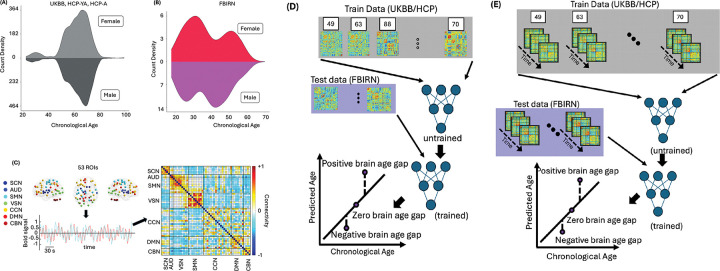 Figure 1
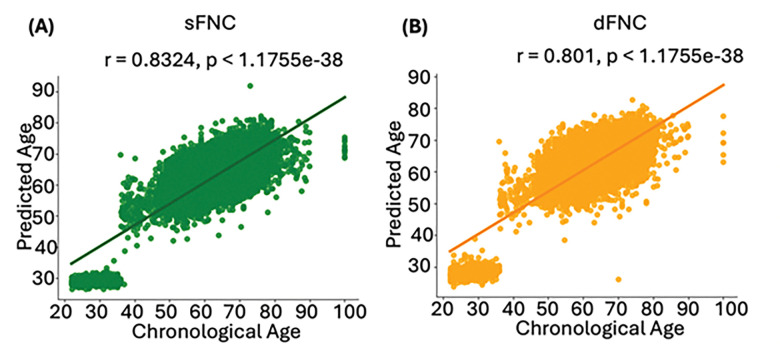 Figure 2
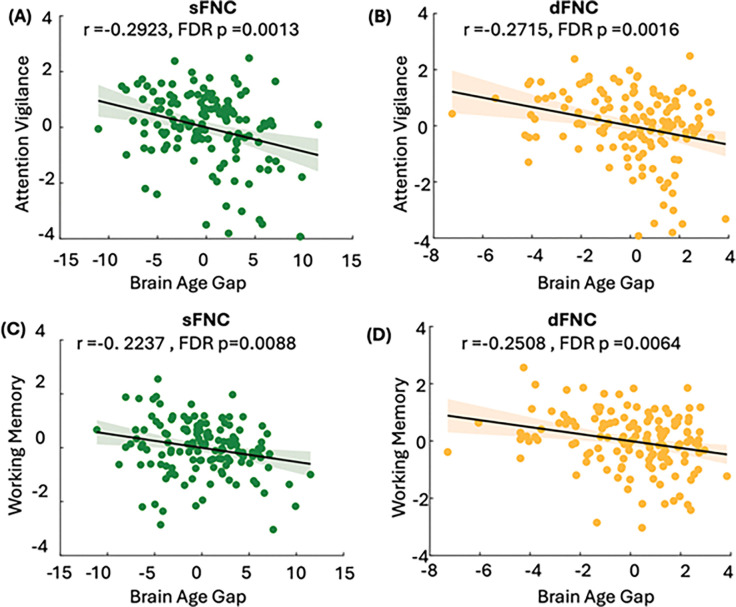 Figure 3
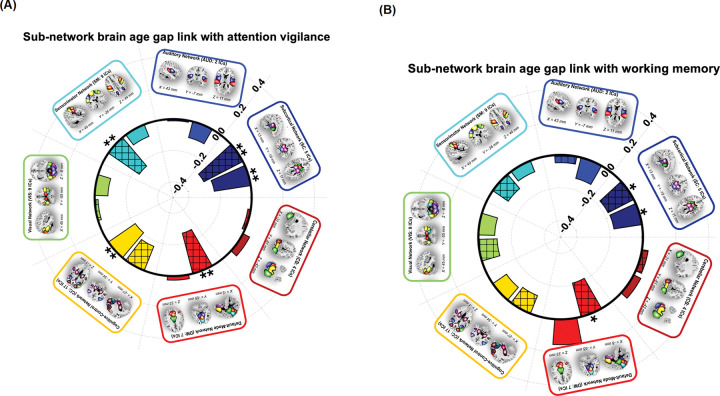 Figure 4
Peer Reviews
No public reviews on file for this paper yet. If you reviewed it on a platform where reviews are public (OpenReview, ICLR, NeurIPS, ICML), you can paste yours below so the community can read it here.
Videos
No videos yet. Explain this paper in a talk, walkthrough, or lecture? Add one.
Taxonomy
TopicsFunctional Brain Connectivity Studies · Mental Health Research Topics · Advanced Neuroimaging Techniques and Applications