Drosophila Pyruvate Kinase Links Metabolic State with Circadian Output via TARANIS and PDF
Sang Hyuk Lee, Oghenerukevwe Akpoghiran, So Who Kang, Eunjoo Cho, Min-Ji Kang, Kyunghee Koh, Eun Young Kim

TL;DR
This study shows how a key metabolic enzyme in fruit flies connects energy levels to daily biological rhythms, offering new insight into how metabolism affects circadian clocks.
Contribution
The paper identifies a novel regulatory pathway involving Pyruvate kinase, TARANIS, and PDF that links glycolytic activity to circadian output.
Findings
Pyruvate kinase knock-down in adult Drosophila shortens circadian period and reduces PDF levels.
TARANIS mediates the effect of Pyruvate kinase on circadian rhythm and PDF expression.
Overexpression of TARANIS rescues the circadian and PDF defects caused by Pyruvate kinase knock-down.
Abstract
The circadian clock generates approximately 24-hour rhythms in behavior and physiology enabling organisms to anticipate daily environmental fluctuations. Circadian clock and glucose metabolism are tightly interconnected, and their disruption commonly co-occurs in aging and disease. However, how glucose hypometabolism specifically impacts circadian rhythm remains unclear. Here, we investigated this relationship by genetically downregulating key glycolytic enzymes - Hexokinase-C (Hex-C), Phosphofructokinase (Pfk), and Pyruvate kinase (Pyk) - in Drosophila clock cells. Only Hex-C and Pyk knock-down (KD) altered circadian period in accordance with their mRNA reduction, inducing period lengthening and shortening, respectively. Notably, Pyk KD induced period shortening persisted in adult-specific KD (AKD), minimizing developmental confounds. Mechanistic analyses revealed that Pyk AKD reduced…
Genes, proteins, chemicals, diseases, species, mutations and cell lines named across the full text — each resolved to its canonical identifier and authoritative record.
Click any figure to enlarge with its caption.
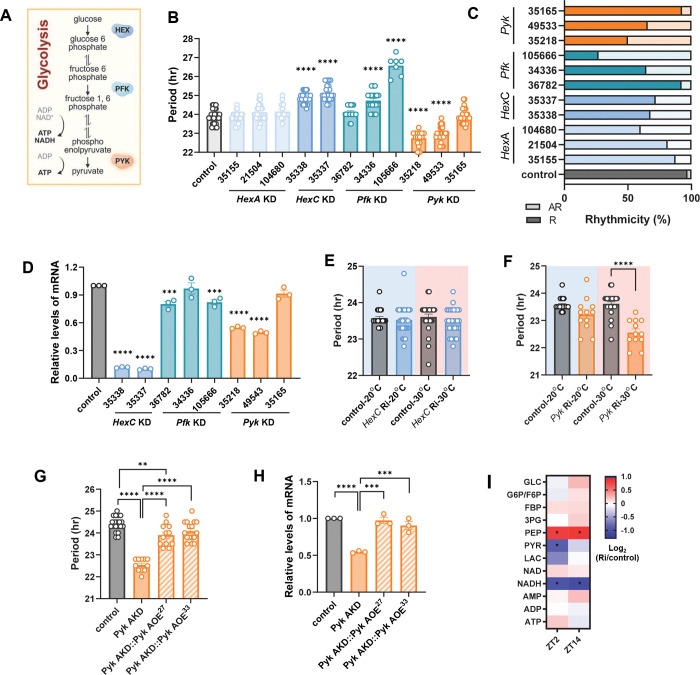 Figure 1
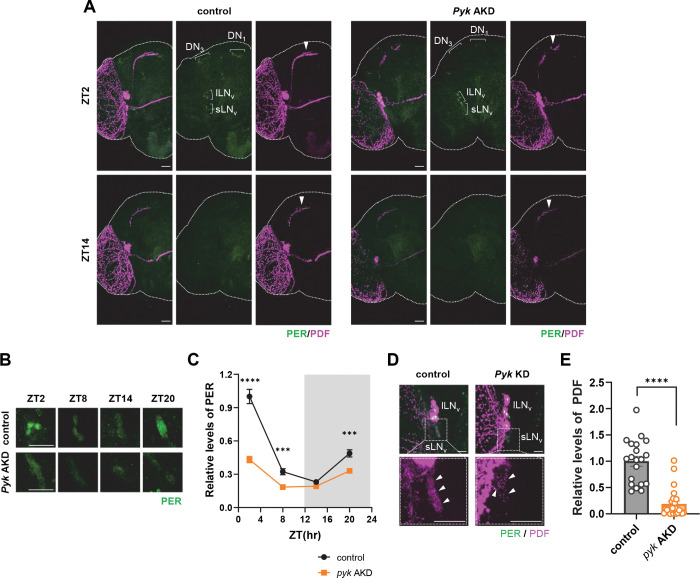 Figure 2
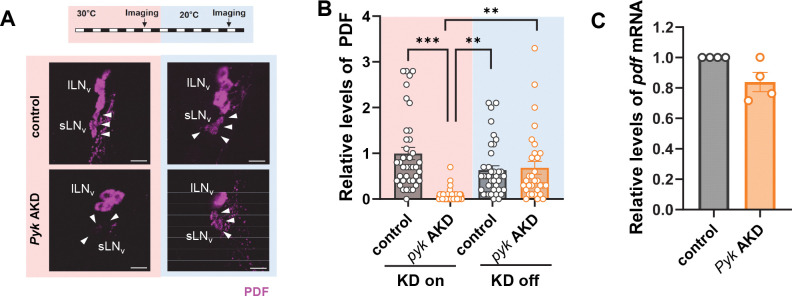 Figure 3
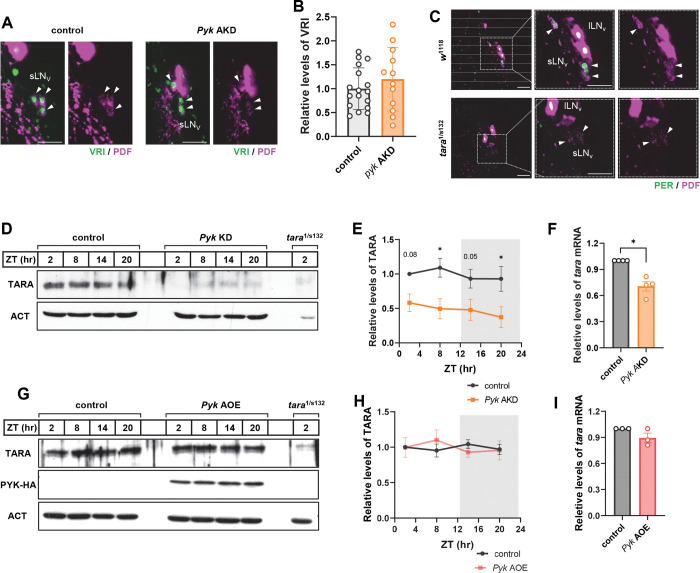 Figure 4
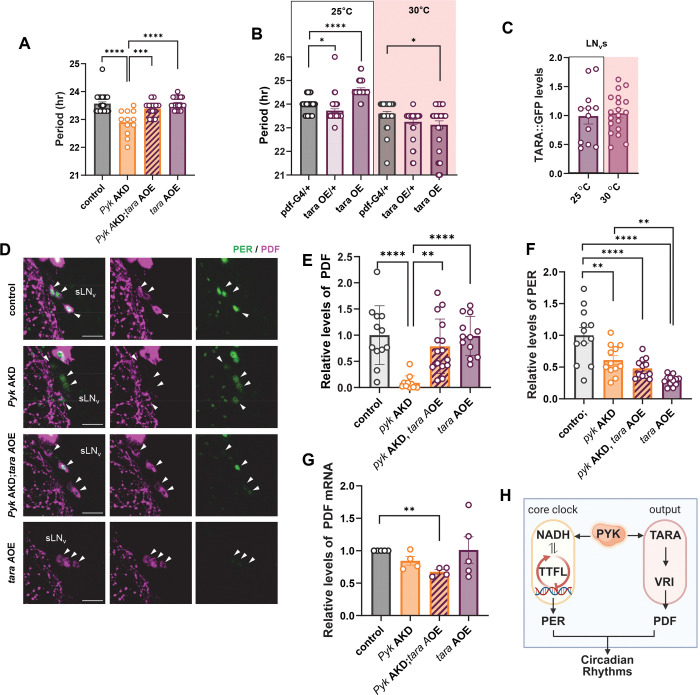 Figure 5
Peer Reviews
No public reviews on file for this paper yet. If you reviewed it on a platform where reviews are public (OpenReview, ICLR, NeurIPS, ICML), you can paste yours below so the community can read it here.
Videos
No videos yet. Explain this paper in a talk, walkthrough, or lecture? Add one.
Taxonomy
TopicsMetabolomics and Mass Spectrometry Studies · Microbial Metabolic Engineering and Bioproduction · Biochemical Acid Research Studies