Cross-tissue molecular responses in the liver and blood after toxicant exposures
Bo Zhang, Benpeng Miao, Shuhua Fu, Wanqing Shao, Cristian Coarfa, Ravindra Kumar1, Prashant Kuntala, Bongsoo Park, Sandra Grimm, Rahul Jangid, Laurie Svoboda, Xiaoyun Xing, Daofeng Li, Shaopeng Liu, Robert Hamanaka, Claudia Lalancette, Maureen Sartor, Christopher Krapp

TL;DR
The study examines how toxicant exposure affects molecular responses in the liver and blood, revealing tissue-specific and shared changes that could improve environmental health research.
Contribution
The study identifies shared regulatory elements and pathways in liver and blood after toxicant exposure, offering a strategy to interpret surrogate tissue data.
Findings
Most toxicant-induced molecular changes were tissue-specific.
Shared regulatory elements and pathways, such as immune-related processes, were affected in both liver and blood.
Transcription factors like Klf, Jun, Ets1, and Cebp were identified as shared regulators across tissues.
Abstract
Exposure to toxic substances, particularly early in life, can perturb epigenomic marks linked to disease susceptibility. Human studies of environmental exposures often rely on surrogate tissues such as blood, but toxicant accumulation differs across organs and results in tissue-specific responses. Thus, understanding whether exposure-induced epigenomic alterations in surrogate tissues such as blood reflect changes in toxicant target tissues, such as liver, is essential for designing and interpreting environmental epigenetic studies. To address this knowledge gap, we systematically analyzed 1,013 multi-omics data from the TaRGET II Consortium, comparing molecular responses in mouse liver and blood following perinatal exposure to arsenic, lead, bisphenol A, tributyltin, di-2-ethylhexyl phthalate, tetrachlorodibenzo-p-dioxin, or air pollution in the form of particulate matter < 2.5μm…
Genes, proteins, chemicals, diseases, species, mutations and cell lines named across the full text — each resolved to its canonical identifier and authoritative record.
Click any figure to enlarge with its caption.
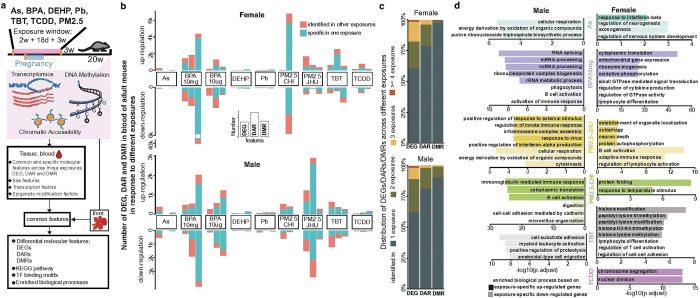 Figure 1
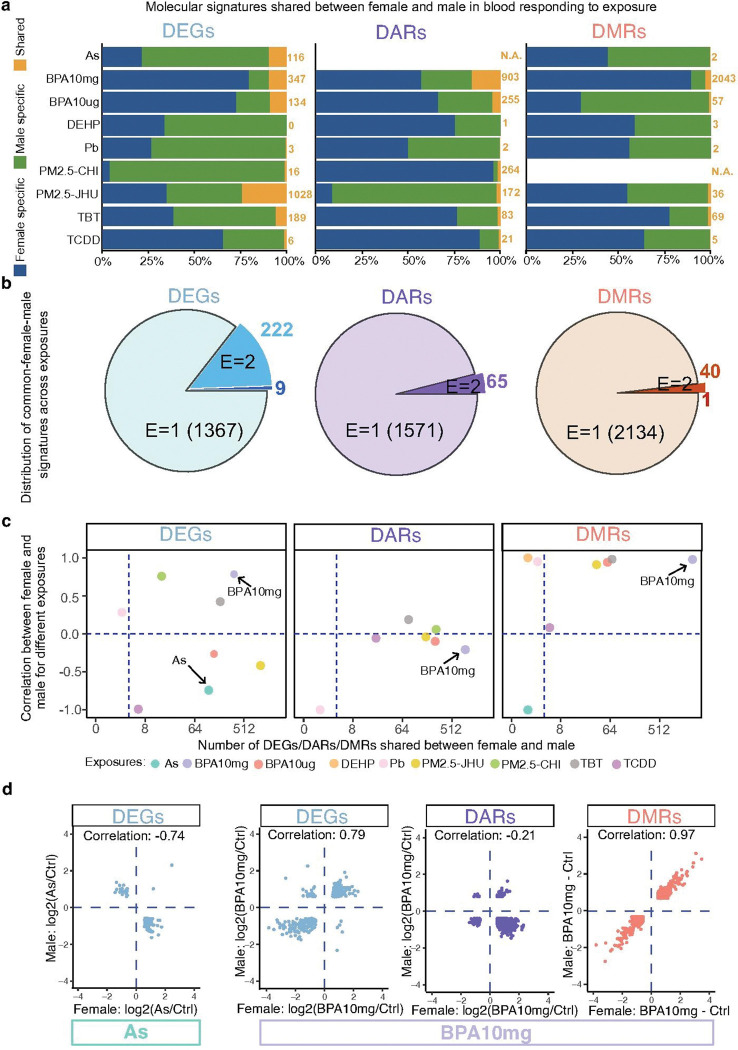 Figure 2
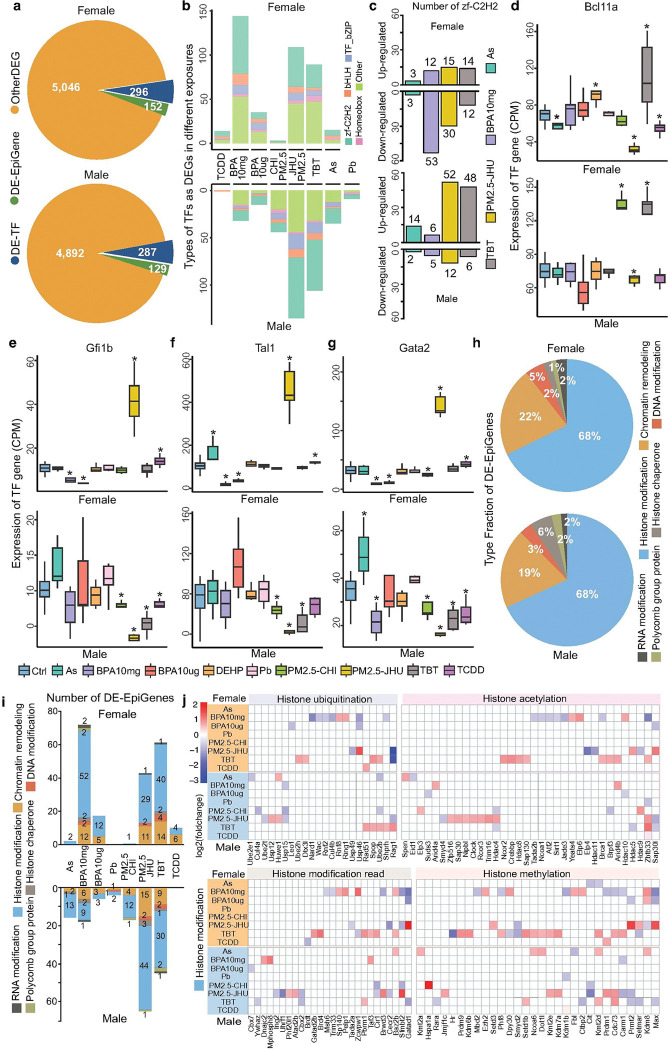 Figure 3
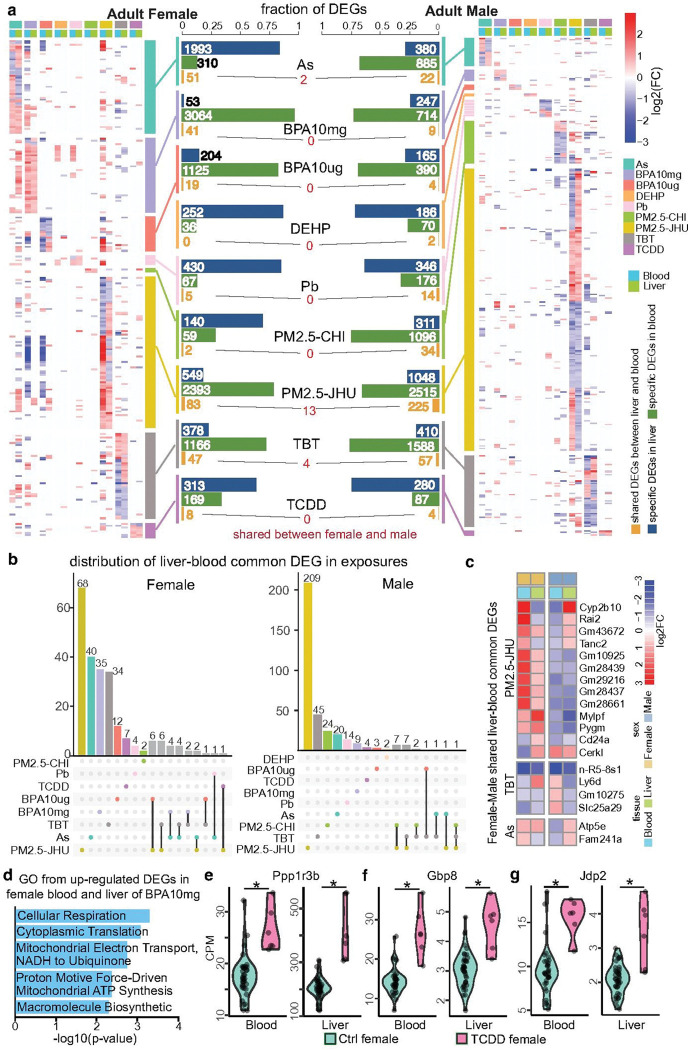 Figure 4
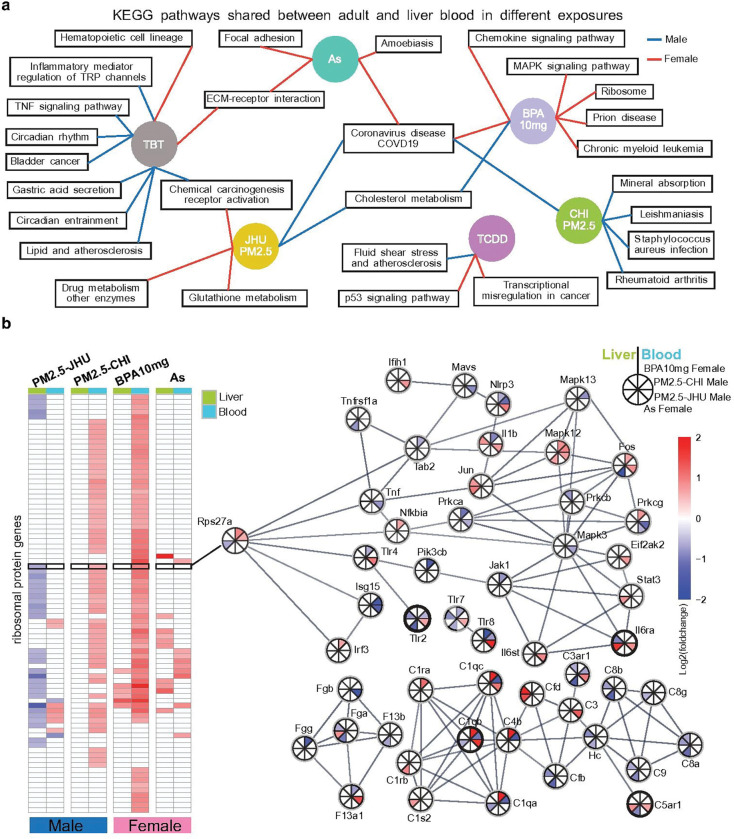 Figure 5
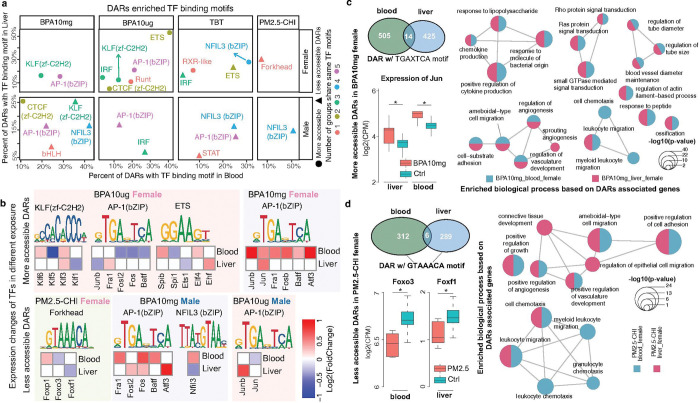 Figure 6
Peer Reviews
No public reviews on file for this paper yet. If you reviewed it on a platform where reviews are public (OpenReview, ICLR, NeurIPS, ICML), you can paste yours below so the community can read it here.
Videos
No videos yet. Explain this paper in a talk, walkthrough, or lecture? Add one.
Taxonomy
TopicsRNA Research and Splicing · Retinoids in leukemia and cellular processes · MicroRNA in disease regulation