Fetal monitoring using a wearable ultrasound patch for high-risk pregnancies
Geonho Park, Yizhou Bian, Hao Huang, Sai Zhou, Siyu Qin, Muyang Lin, Xinyi Yang, Aaron Lee, Anand Ramkumar, Mariana Tome, Jayne Lander, Xiangjun Chen, Shenghan Wang, Pranavi Bheemreddy, Liam Stanton, Mabel Shehada, Ruotao Wang, Alexa Roa, Chengchangfeng Lu, Wentong Yue

TL;DR
A wearable ultrasound patch enables continuous fetal monitoring for high-risk pregnancies, offering real-time data comparable to traditional clinical devices.
Contribution
The wearable ultrasound patch introduces autonomous, continuous fetal monitoring with real-time tracking of blood flow spectra during movement.
Findings
The UPatch provides signal quality comparable to handheld clinical ultrasound devices.
Real-time image segmentation enables autonomous tracking of target vessels during fetal and maternal movement.
Validation on 62 pregnancies showed alignment with various perinatal conditions, including high-risk cases.
Abstract
The rapid and complex nature of fetal development requires meticulous prenatal monitoring to ensure optimal pregnancy outcomes1. Cardiotocography, which continuously records the fetal heart rate and uterine contractions, often leads to inaccurate diagnoses and unnecessary interventions2. Ultrasonography is a cornerstone of fetal monitoring and diagnosis, but it is highly dependent on specialized sonographers, limiting its availability3. Additionally, current ultrasound methods provide only snapshot evaluations4. Even in very high-risk pregnancies, it is rare to have fetal ultrasound assessments more than once per day5. Here we report a wearable ultrasound patch (UPatch) for continuous and autonomous fetal monitoring. The UPatch can acquire anatomical structures and blood flow velocities, with signal qualities comparable to those of handheld clinical ultrasound devices. Real-time image…
Genes, proteins, chemicals, diseases, species, mutations and cell lines named across the full text — each resolved to its canonical identifier and authoritative record.
Click any figure to enlarge with its caption.
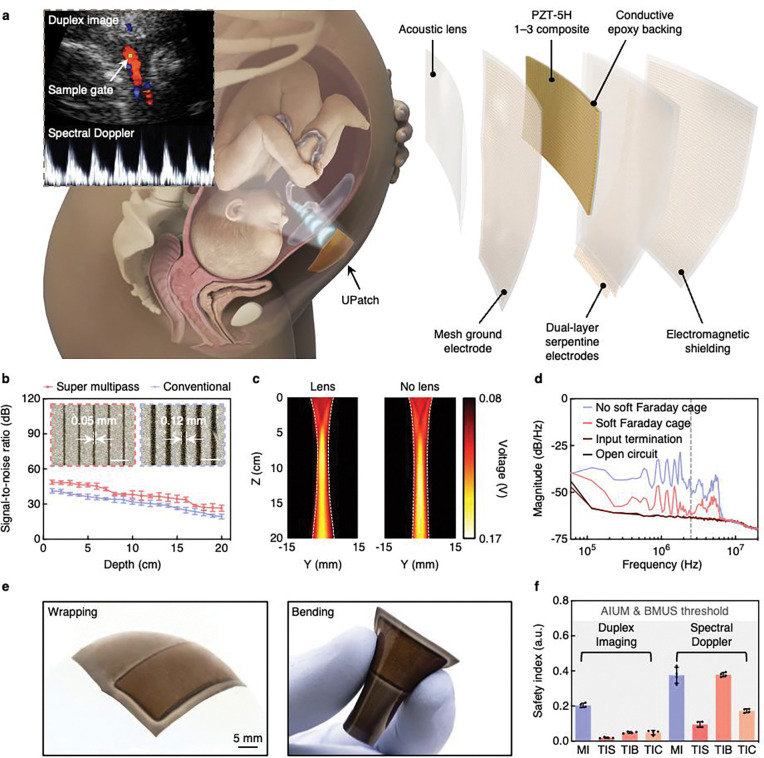 Figure 1
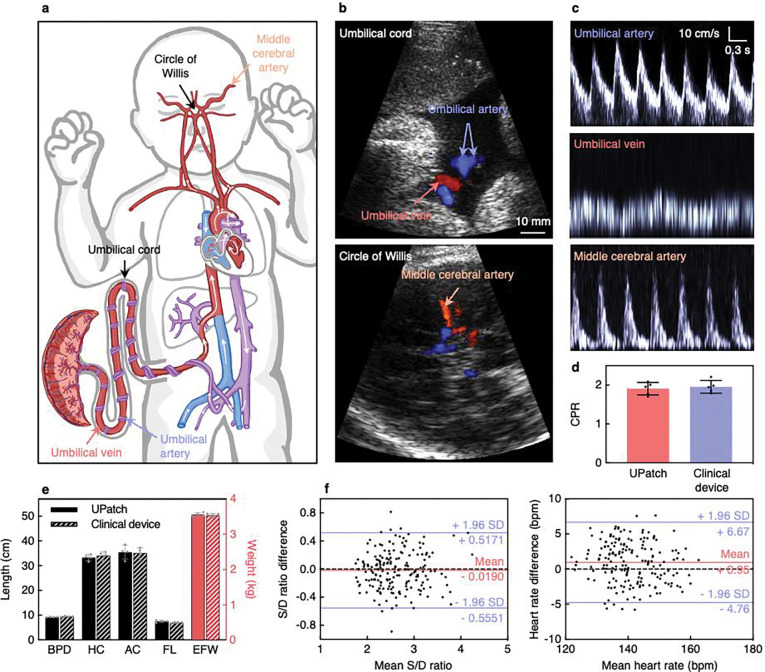 Figure 2
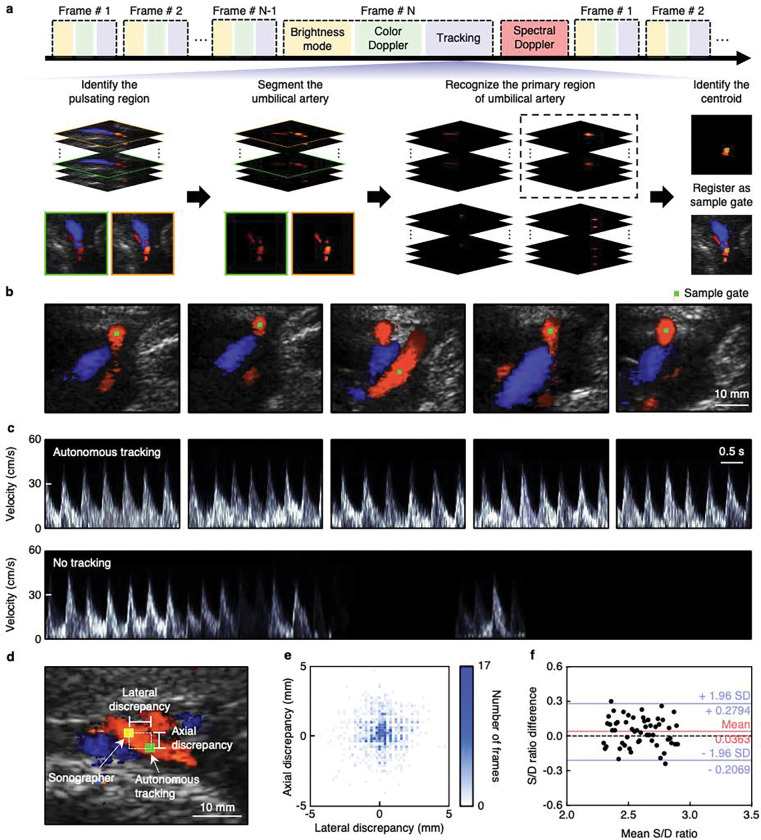 Figure 3
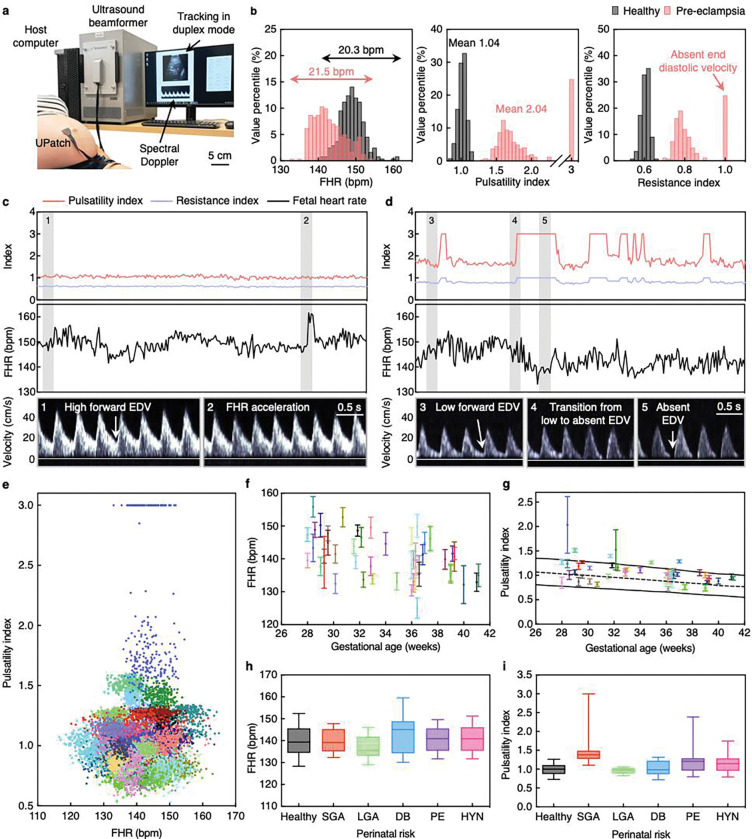 Figure 4
Peer Reviews
No public reviews on file for this paper yet. If you reviewed it on a platform where reviews are public (OpenReview, ICLR, NeurIPS, ICML), you can paste yours below so the community can read it here.
Videos
No videos yet. Explain this paper in a talk, walkthrough, or lecture? Add one.
Taxonomy
TopicsUltrasound and Hyperthermia Applications · Assisted Reproductive Technology and Twin Pregnancy · Neonatal Respiratory Health Research