Ultra‐Conserved Poison Exons Enable Rapid and Safe Splicing Factor Gene Expression Switches: A Hypothesis
Caroline Dalgliesh, Farimah Ghorbani, Adam J. M. Wollman, David J. Elliott

TL;DR
This paper proposes that poison exons in splicing factor genes help regulate their expression to prevent harmful protein levels.
Contribution
The paper introduces a hypothesis that poison exons enable rapid and safe regulation of splicing factor expression.
Findings
Ultra-conserved poison exons in splicing factor genes may prevent toxic protein accumulation.
Negative autoregulation via poison exons could allow rapid expression switches in response to transcription changes.
Abstract
Most vertebrate genes are split up into exons and introns, with exons being spliced together to make mRNA. Many of the proteins involved in splicing, called splicing factors, exert concentration‐dependent effects on gene expression through post‐transcriptional modification of mRNAs. These include the serine/arginine‐enriched (SR) proteins that have essential roles in normal development and physiology. All SR proteins (and many other splicing factors) regulate their own expression levels, often using negative feedback pathways involving alternative splicing of “poison exons” (PEs), which lead to mRNA degradation. The PEs within SR protein genes are encoded by ultra‐conserved genome sequences, suggesting they have been under extreme selective pressure despite not encoding protein sequences. Here, we discuss the hypothesis that PEs enable rapid switches in SR protein concentrations, yet…
Genes, proteins, chemicals, diseases, species, mutations and cell lines named across the full text — each resolved to its canonical identifier and authoritative record.
Click any figure to enlarge with its caption.
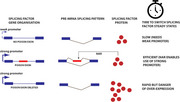 Figure 1
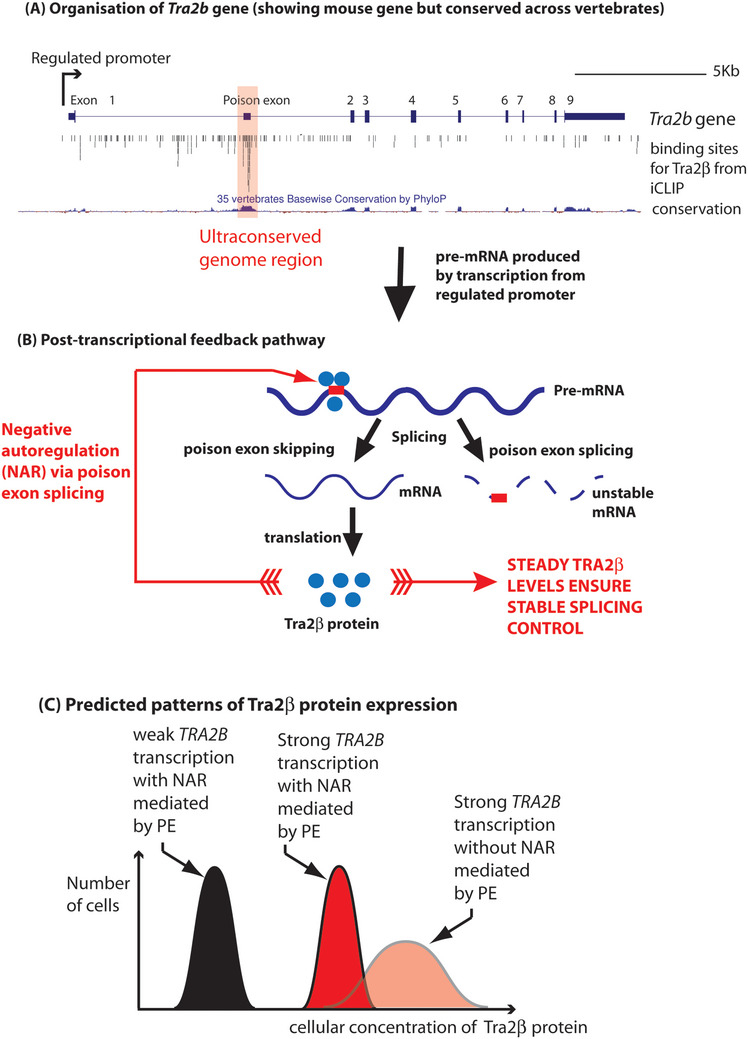 Figure 2
Peer Reviews
No public reviews on file for this paper yet. If you reviewed it on a platform where reviews are public (OpenReview, ICLR, NeurIPS, ICML), you can paste yours below so the community can read it here.
Videos
No videos yet. Explain this paper in a talk, walkthrough, or lecture? Add one.
Taxonomy
TopicsRNA Research and Splicing · Amyotrophic Lateral Sclerosis Research · Cancer-related gene regulation