The PA2803-encoded PcrP exhibits a novel non-catalytic function and contributes to polymyxin B resistance in P. aeruginosa
T. Salpadoru, S. Khanam, V. A. Borin, Ma. A. Achour, Denise Oh, M. Kanik, P. C. Gallage, A. Khanov, M. Hull, S. P. Pitre, P. K. Agarwal, M. J. Franklin, M. A. Patrauchan

TL;DR
This study identifies a new gene, PA2803, which helps Pseudomonas aeruginosa resist antibiotics in the presence of calcium and phosphate.
Contribution
The study reveals a novel non-catalytic function of the PA2803-encoded protein PcrP in mediating antibiotic resistance in Pseudomonas aeruginosa.
Findings
PcrP, encoded by PA2803, binds protein partners Acp3 and PA3518, revealing a non-catalytic role.
PcrP contributes to polymyxin B resistance in Pseudomonas aeruginosa under calcium and phosphate conditions.
PcrP supports oxidative stress responses and polyphosphate accumulation during phosphate starvation.
Abstract
The opportunistic human pathogen Pseudomonas aeruginosa (Pa), a leading cause of severe infections, becomes increasingly resistant to antibiotics, including the last resort antibiotic, polymyxin B (PMB). Previous studies have shown that calcium (Ca2+) at the levels encountered during infections increases Pa resistance to PMB. However, the mechanisms of this Ca2+ regulation are not known. Here, we identified three novel genes (PA2803, PA3237, and PA5317) that contribute to the Ca2+-dependent PMB resistance in Pa. PA2803, the focus of this work, encodes a putative phosphonatase and is a founding member of the PA2803 subfamily from the Haloacid Dehalogenase Superfamily. Since the transcription of this gene is regulated by both Ca2+ and inorganic phosphate (Pi), we named it “Pi and Ca2+-regulated protein, PcrP.” Congruent with sequence-based predictions, we showed that PcrP lacks catalytic…
Genes, proteins, chemicals, diseases, species, mutations and cell lines named across the full text — each resolved to its canonical identifier and authoritative record.
Click any figure to enlarge with its caption.
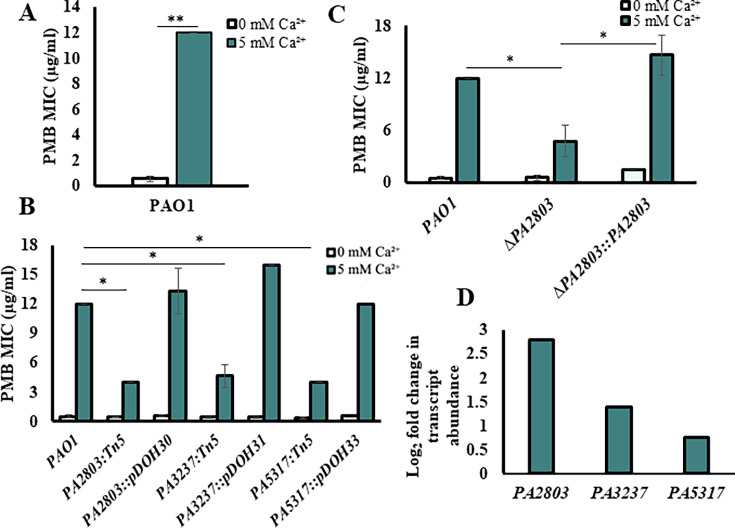 Figure 1
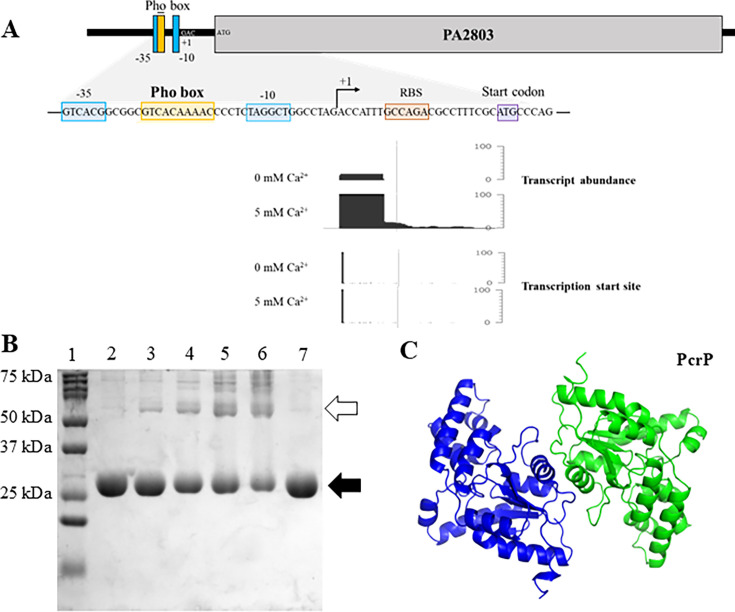 Figure 2
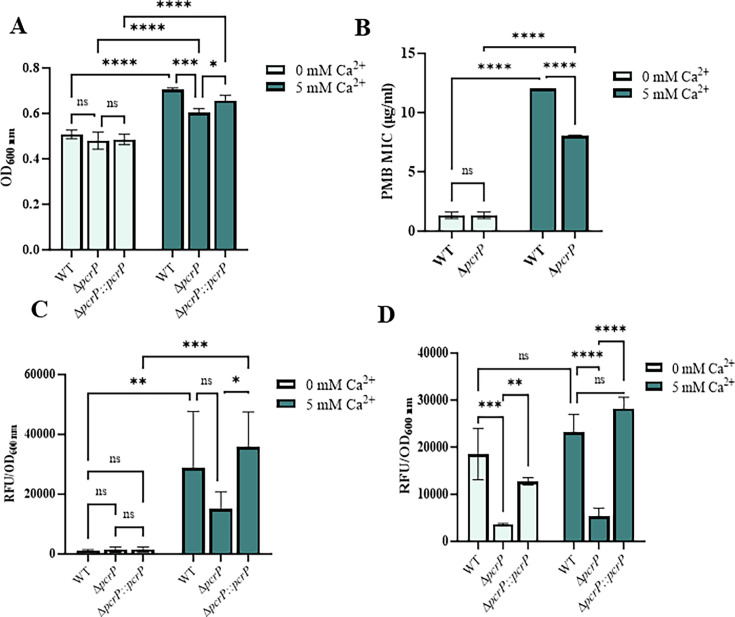 Figure 3
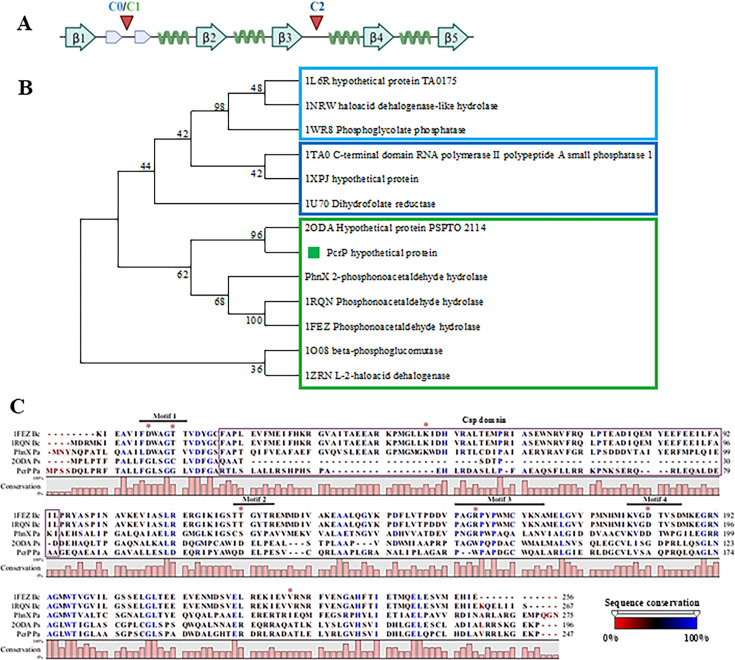 Figure 4
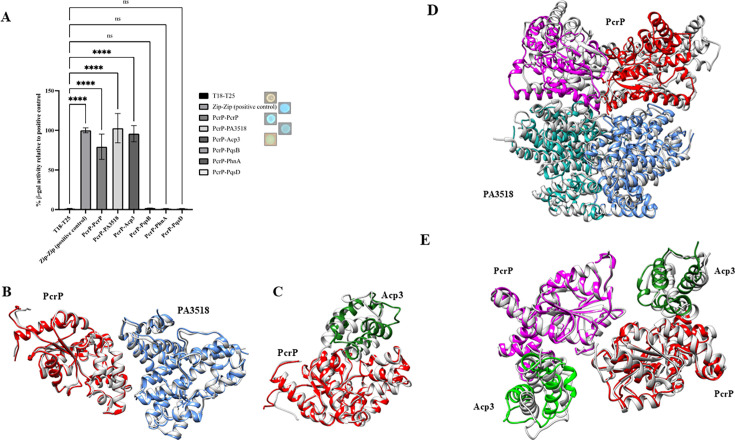 Figure 5
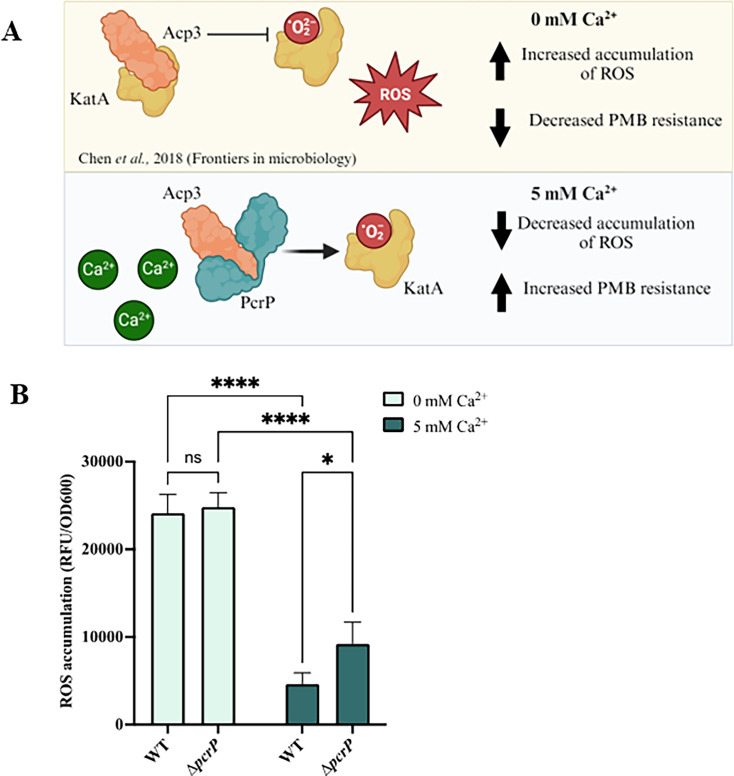 Figure 6
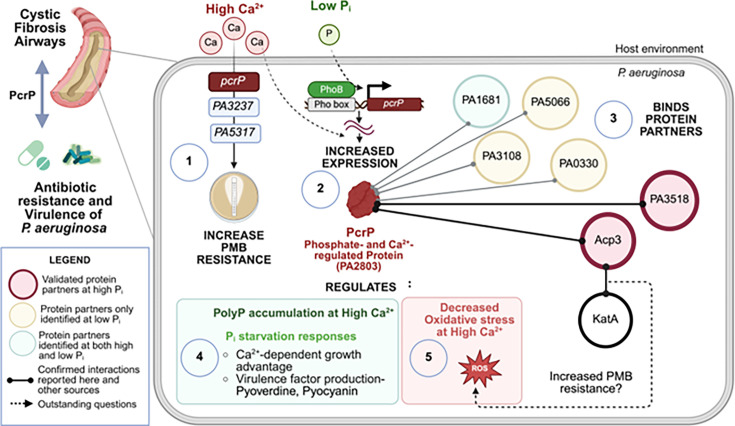 Figure 7
 Figure 8
 Figure 9
 Figure 10
 Figure 11
Peer Reviews
No public reviews on file for this paper yet. If you reviewed it on a platform where reviews are public (OpenReview, ICLR, NeurIPS, ICML), you can paste yours below so the community can read it here.
Videos
No videos yet. Explain this paper in a talk, walkthrough, or lecture? Add one.
Taxonomy
TopicsAntibiotic Resistance in Bacteria · Bacterial biofilms and quorum sensing · Bacterial Genetics and Biotechnology