Pseudomonas aeruginosa differentially influences antibiotic-resistant Staphylococcus aureus emergence and expansion in hyperglycemic environments
Benjamin P. Darwitz, Zachary J. Lifschin, Claire M. Miller, Christopher J. Genito, Casei A. Gossett, Kyla E. Augustine, Lance R. Thurlow

TL;DR
In diabetic infections, Pseudomonas aeruginosa affects how Staphylococcus aureus becomes resistant to antibiotics, but this effect is less clear in real infections.
Contribution
The study reveals that P. aeruginosa inhibits Rif-r S. aureus emergence in vitro under hyperglycemic conditions but not in diabetic mice during co-infection.
Findings
P. aeruginosa exoproducts inhibit Rif-r S. aureus emergence in vitro under glucose-replete conditions.
Diabetic mice show similar Rif-r S. aureus burdens during mono- and co-infection with P. aeruginosa.
The diabetic infection microenvironment supports Rif-r S. aureus emergence despite P. aeruginosa's influence.
Abstract
Individuals with poorly controlled diabetes mellitus often develop multispecies skin and soft tissue infections, with Staphylococcus aureus and Pseudomonas aeruginosa among the most prevalent bacteria isolated from infection sites worldwide. Diabetic infections are recalcitrant to conventional antibiotic regimens and may be a reservoir for emergent antibiotic-resistant bacterial strains. Supporting this, we have previously shown that rifampicin treatment elicits the emergence and expansion of rifampicin-resistant (Rif-r) S. aureus only in diabetic mice, potentially due to greater bacterial outgrowth increasing the frequency of resistance-conferring mutations. However, whether S. aureus exhibits altered resistance outcomes during multispecies diabetic infections is unclear. During co-infection with P. aeruginosa under normoglycemic conditions, S. aureus exhibits reduced growth and…
Genes, proteins, chemicals, diseases, species, mutations and cell lines named across the full text — each resolved to its canonical identifier and authoritative record.
Click any figure to enlarge with its caption.
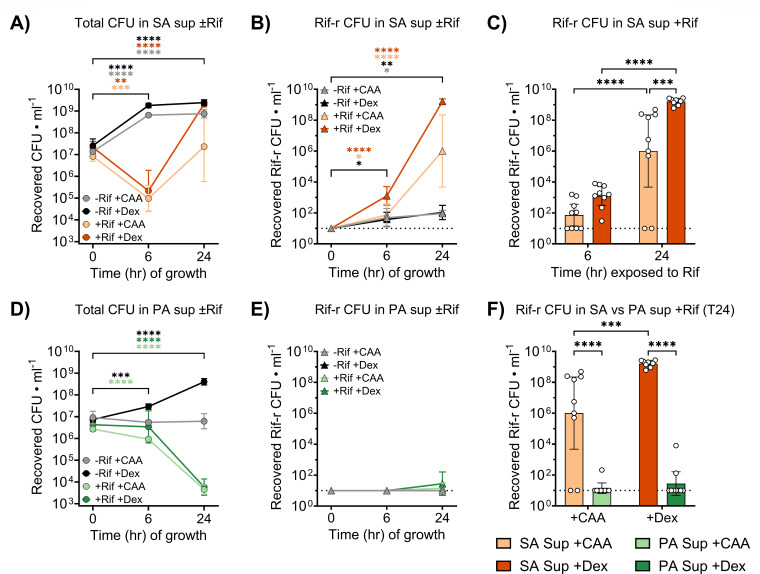 Figure 1
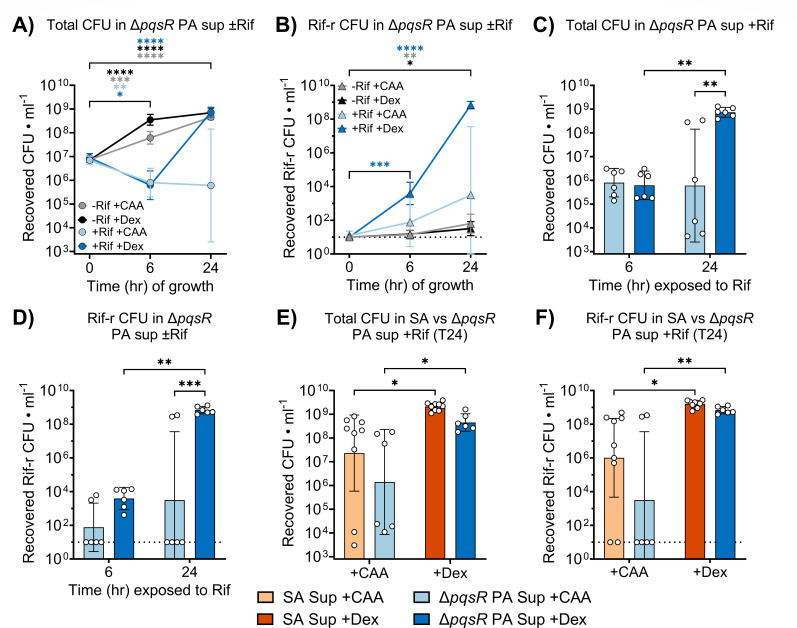 Figure 2
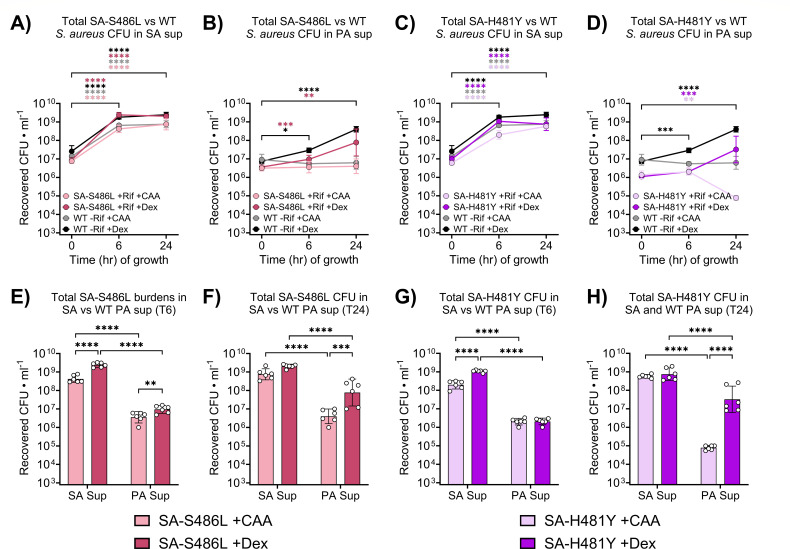 Figure 3
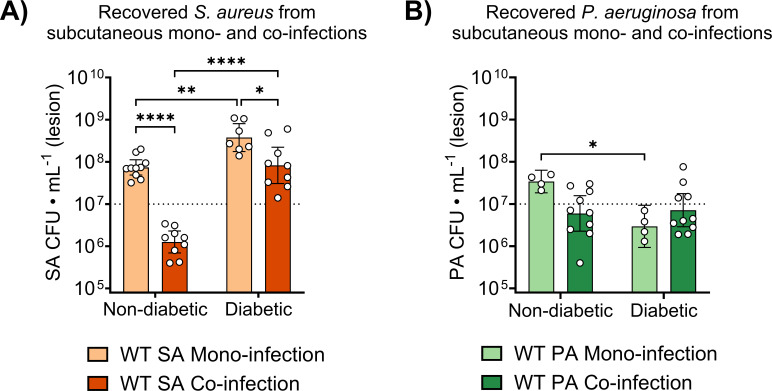 Figure 4
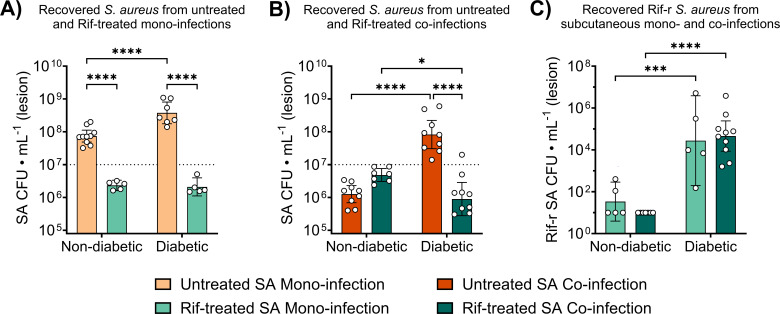 Figure 5
Peer Reviews
No public reviews on file for this paper yet. If you reviewed it on a platform where reviews are public (OpenReview, ICLR, NeurIPS, ICML), you can paste yours below so the community can read it here.
Videos
No videos yet. Explain this paper in a talk, walkthrough, or lecture? Add one.
Taxonomy
TopicsBacterial biofilms and quorum sensing · Antimicrobial Resistance in Staphylococcus · Oral microbiology and periodontitis research