An effective response to respiratory inhibition by a Pseudomonas aeruginosa excreted quinoline promotes Staphylococcus aureus fitness and survival in co-culture
Franklin Roman-Rodriguez, Nupur Tyagi, Jisun Kim, Dane Parker, Jeffrey M. Boyd

TL;DR
Pseudomonas aeruginosa produces a toxin that inhibits Staphylococcus aureus respiration, but S. aureus adapts by switching to fermentation, improving its survival in co-culture.
Contribution
The study identifies how S. aureus uses regulatory systems to adapt to P. aeruginosa toxins, promoting survival through fermentation.
Findings
P. aeruginosa's HQNO inhibits S. aureus respiration and reduces SrrAB transcriptional output.
S. aureus uses SrrAB and Rex to sense redox changes and increase fermentative pathways for survival.
Strains with poor redox homeostasis show reduced fitness and survival when challenged with P. aeruginosa.
Abstract
Pseudomonas aeruginosa and Staphylococcus aureus are primary bacterial pathogens frequently isolated from the airways of cystic fibrosis patients. P. aeruginosa produces secondary metabolites that negatively impact the fitness of S. aureus, allowing P. aeruginosa to become the most prominent bacterium when the species are co-cultured. Some of these metabolites inhibit S. aureus respiration. SrrAB is a staphylococcal two-component regulatory system (TCRS) that responds to alterations in respiratory status to help S. aureus transition between fermentative and respiratory metabolisms. Using P. aeruginosa mutant strains and chemical genetics, we established that P. aeruginosa secondary metabolites, 2-heptyl-4-quinolone N-oxide (HQNO) in particular, inhibit S. aureus respiration, resulting in decreased SrrAB transcriptional output. Metabolomic analyses demonstrated that the ratio of NAD+ to…
Genes, proteins, chemicals, diseases, species, mutations and cell lines named across the full text — each resolved to its canonical identifier and authoritative record.
Click any figure to enlarge with its caption.
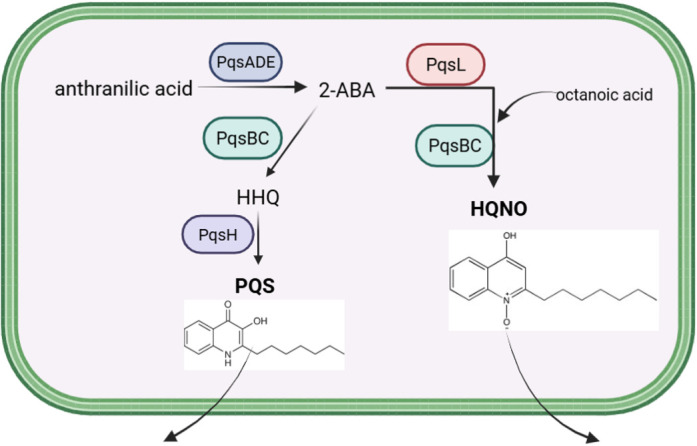 Figure 1
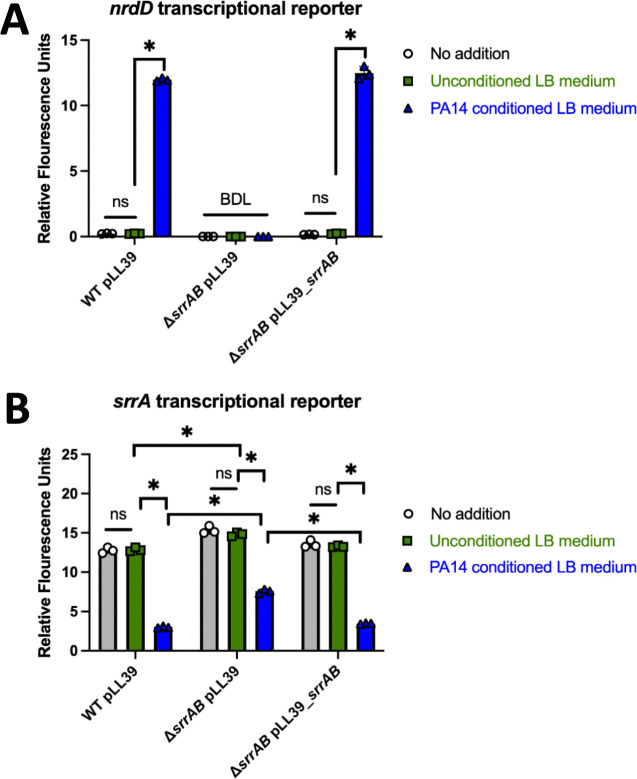 Figure 2
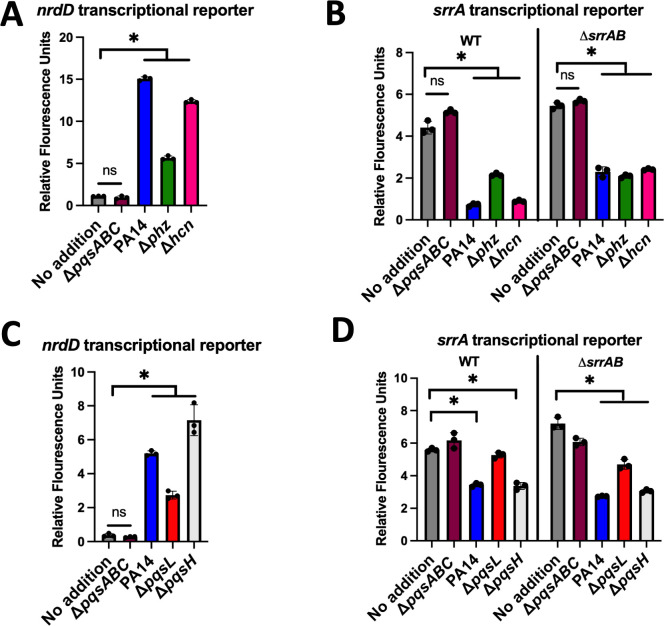 Figure 3
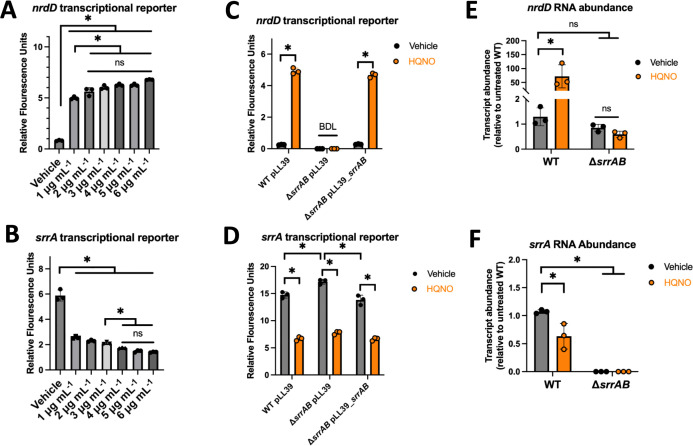 Figure 4
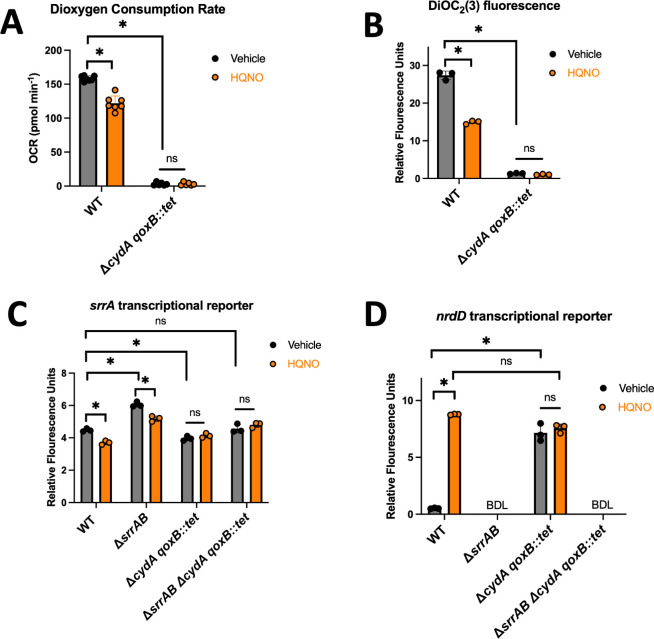 Figure 5
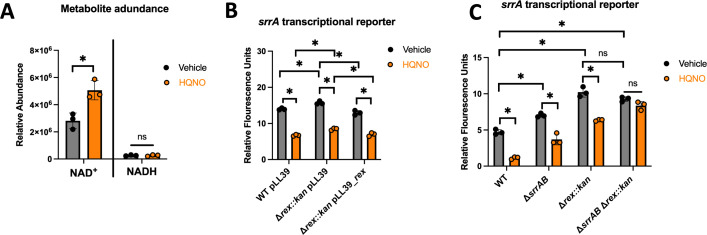 Figure 6
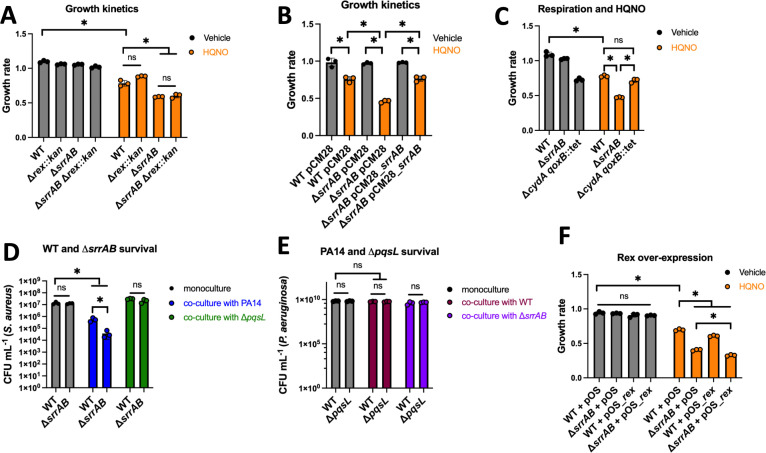 Figure 7
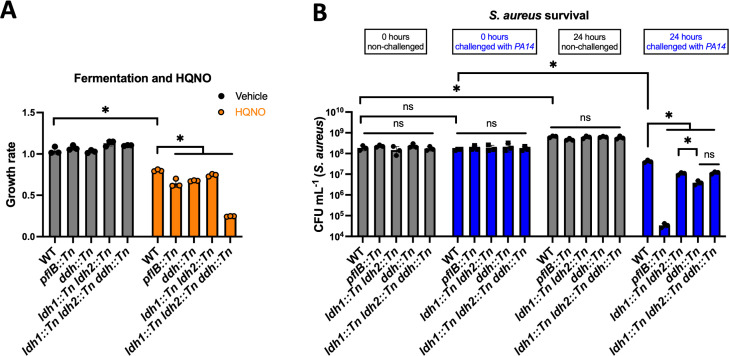 Figure 8
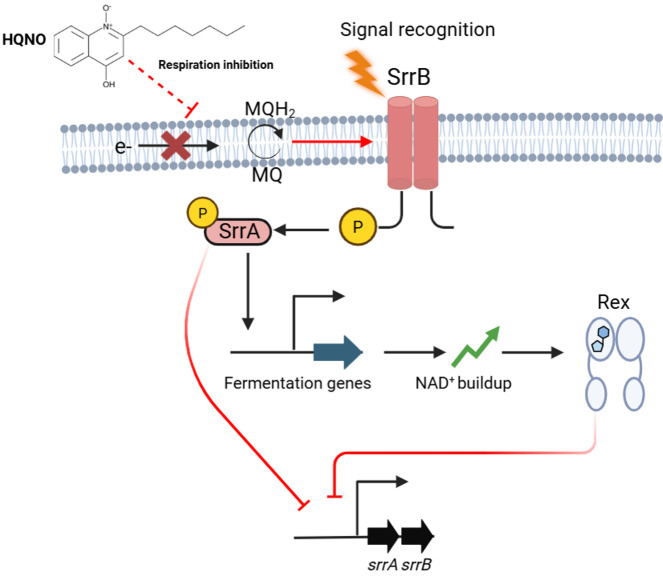 Figure 9
 Figure 10
Peer Reviews
No public reviews on file for this paper yet. If you reviewed it on a platform where reviews are public (OpenReview, ICLR, NeurIPS, ICML), you can paste yours below so the community can read it here.
Videos
No videos yet. Explain this paper in a talk, walkthrough, or lecture? Add one.
Taxonomy
TopicsBacterial biofilms and quorum sensing · Bacterial Genetics and Biotechnology · Antimicrobial Peptides and Activities