Functional analysis of thiamine pyrophosphate-responsive riboswitches in human bacterial pathogens of the ESKAPE group using a dual-luciferase reporter gene assay
Anna Hübenthal, Vipul Panchal, Ruth Brenk, Matthias Mack

TL;DR
This study explores how TPP riboswitches in dangerous bacteria can be targeted for new antibiotics, using a reporter gene assay to test their function and response to molecules like pyrithiamine.
Contribution
The paper introduces a dual-luciferase reporter gene assay to functionally analyze TPP riboswitches in ESKAPE pathogens and identifies structural reasons for pyrithiamine resistance.
Findings
Most predicted TPP riboswitches in ESKAPE bacteria are functional and respond to TPP.
Pyrithiamine does not block all TPP riboswitches, unlike in Escherichia coli.
Site-directed mutagenesis revealed structural bases for pyrithiamine resistance in K. pneumoniae.
Abstract
Thiamine pyrophosphate (TPP)-responsive riboswitches are genetic elements in bacteria that regulate the expression of genes coding for proteins involved in the biosynthesis and transport of thiamine (vitamin B1). Following uptake, cytoplasmic thiamine is converted to TPP, which serves as a cofactor for enzymes of central metabolic pathways such as glycolysis, the tricarboxylic acid cycle, and the pentose phosphate pathway, and it is the level of TPP (and not thiamine) that is sensed by TPP riboswitches. TPP riboswitches are the most widespread riboswitches in bacteria. Their key roles in metabolism combined with their absence in humans make them potential targets for antibiotics, whereby the focus of the present study was pathogenic bacteria of the ESKAPE group: Enterococcus faecium, Staphylococcus aureus, Klebsiella pneumoniae, Acinetobacter baumannii, Pseudomonas aeruginosa, and…
Genes, proteins, chemicals, diseases, species, mutations and cell lines named across the full text — each resolved to its canonical identifier and authoritative record.
Click any figure to enlarge with its caption.
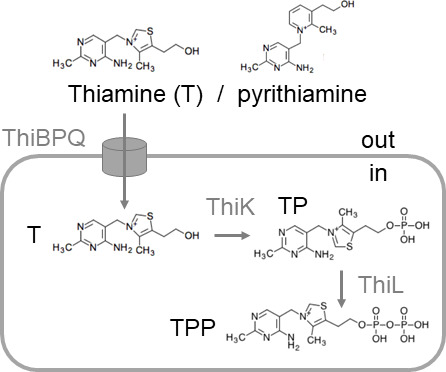 Figure 1
 Figure 2
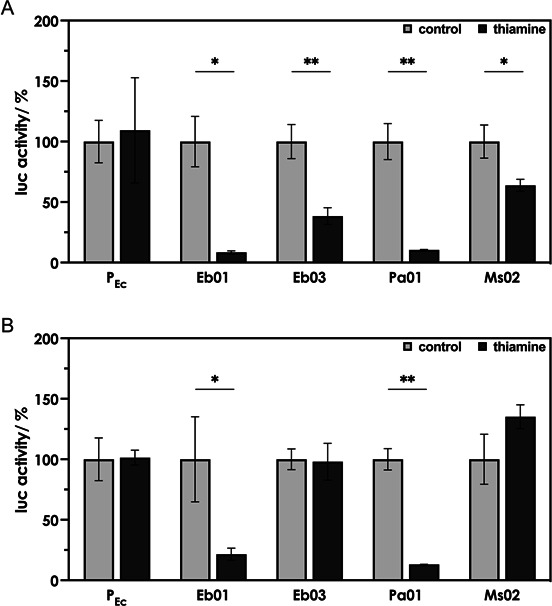 Figure 3
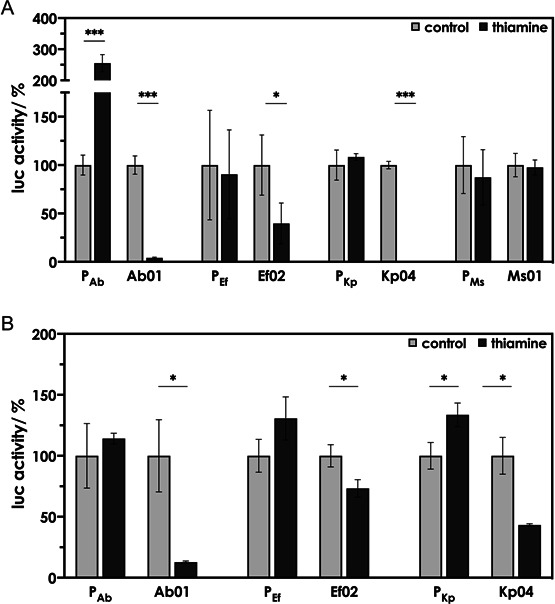 Figure 4
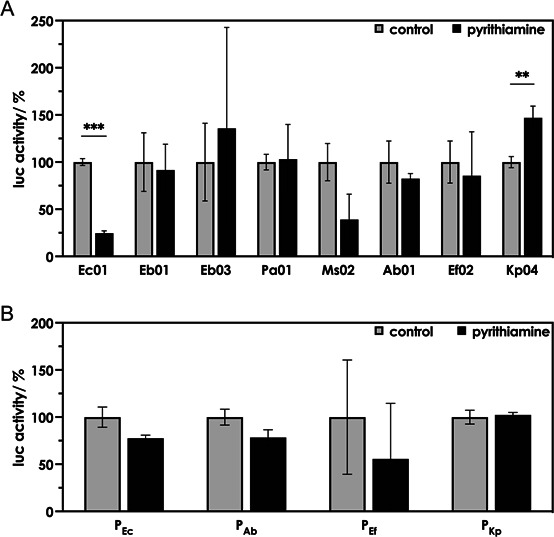 Figure 5
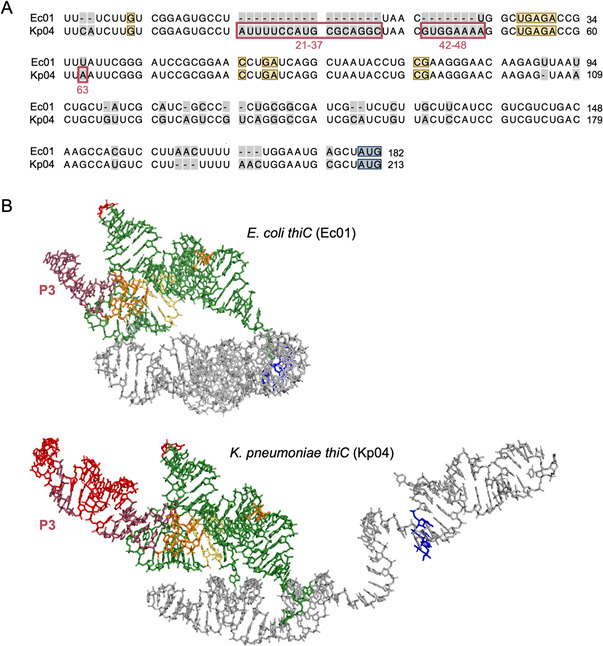 Figure 6
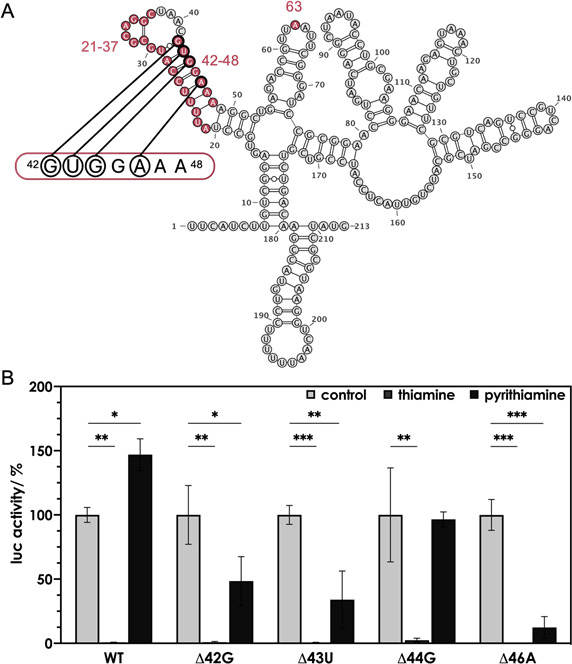 Figure 7
Peer Reviews
No public reviews on file for this paper yet. If you reviewed it on a platform where reviews are public (OpenReview, ICLR, NeurIPS, ICML), you can paste yours below so the community can read it here.
Videos
No videos yet. Explain this paper in a talk, walkthrough, or lecture? Add one.
Taxonomy
TopicsRNA and protein synthesis mechanisms · RNA modifications and cancer · Enzyme Structure and Function