Staphylococcus aureus encodes four differentially regulated pyruvate transporters
Jennifer L. Endres, Cleofes Sarmiento, William Xiao, Marat R. Sadykov, Kenneth W. Bayles, McKenzie K. Lehman

TL;DR
Staphylococcus aureus uses four different transporters to import pyruvate under various conditions, supporting its metabolic flexibility during infection.
Contribution
Identification of three new pyruvate transporters in S. aureus, revealing a regulated network for pyruvate acquisition.
Findings
LctP and LldP, previously annotated as lactate transporters, were confirmed to function as pyruvate transporters.
B7H15_13955 was identified as a fourth pyruvate transporter through 3-FP resistance analysis.
Inactivation of all four transporters eliminated pyruvate uptake, indicating they are the primary systems for pyruvate import.
Abstract
The success of Staphylococcus aureus as a pathogen is attributable, in part, to its ability to exploit the diverse nutrient sources available during infection. Critical to this success are the pathways involving pyruvate that serve as a nexus for energy production, oxidative metabolism, and biosynthetic processes. When available, bacteria acquire pyruvate from the environment to fuel growth. Recently, LrgAB was identified as a pyruvate transporter under microaerobic conditions, leading us to speculate that S. aureus encodes other pyruvate transporters that are active during aerobic growth. In this study, we used the toxic pyruvate analog, 3-fluoropyruvic acid (3-FP), to isolate mutants with impaired pyruvate uptake. Whole-genome sequencing (WGS) of these mutants revealed mutations in two genes, lctP and lldP. Pyruvate uptake was significantly delayed when both lctP and lldP were…
Genes, proteins, chemicals, diseases, species, mutations and cell lines named across the full text — each resolved to its canonical identifier and authoritative record.
Click any figure to enlarge with its caption.
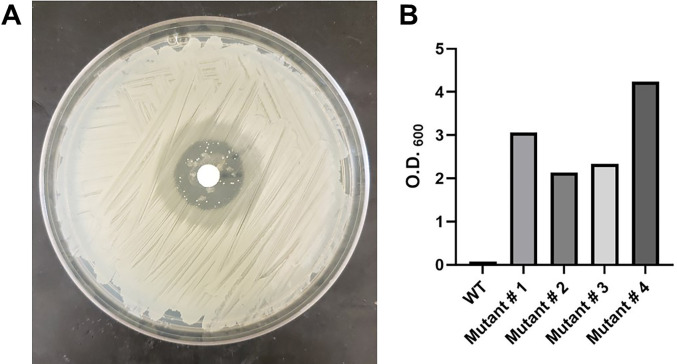 Figure 1
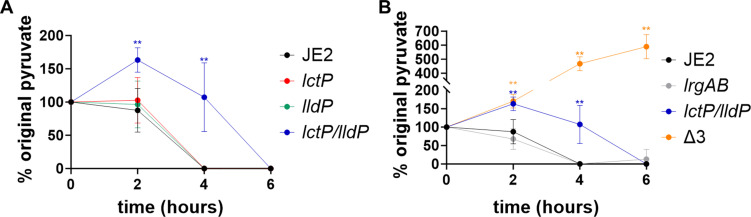 Figure 2
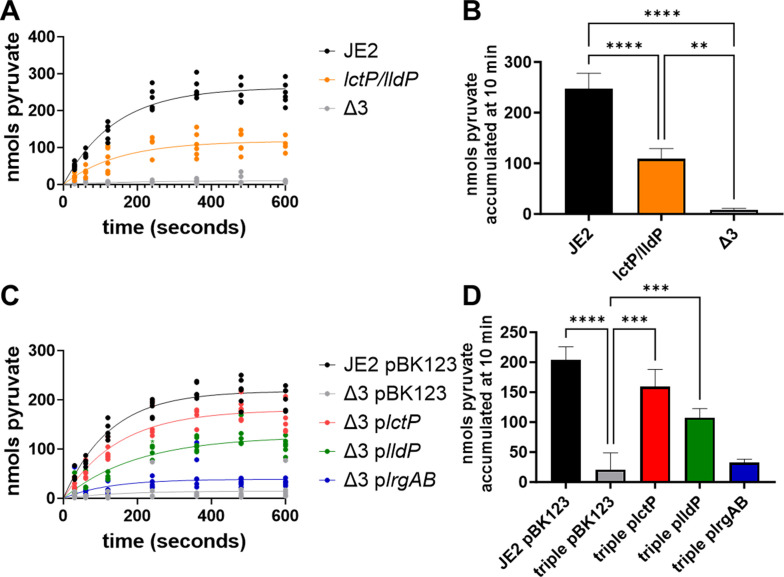 Figure 3
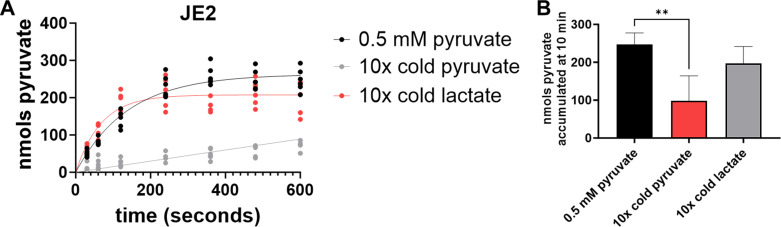 Figure 4
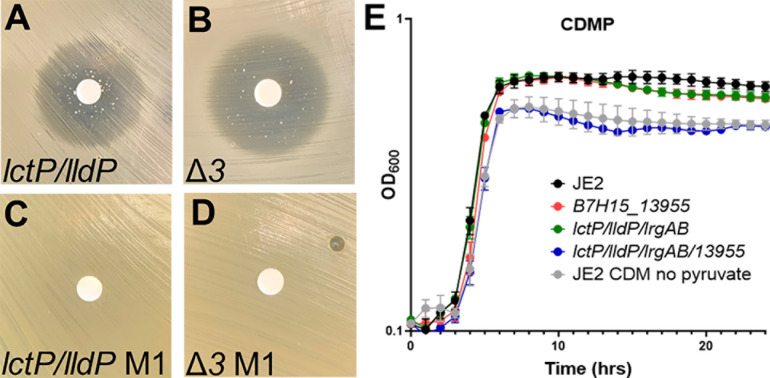 Figure 5
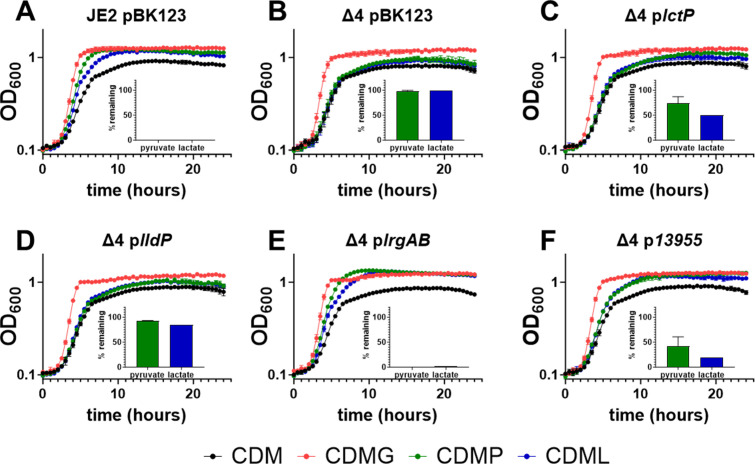 Figure 6
 Figure 7
Peer Reviews
No public reviews on file for this paper yet. If you reviewed it on a platform where reviews are public (OpenReview, ICLR, NeurIPS, ICML), you can paste yours below so the community can read it here.
Videos
No videos yet. Explain this paper in a talk, walkthrough, or lecture? Add one.
Taxonomy
TopicsBacterial Genetics and Biotechnology · Antimicrobial Resistance in Staphylococcus · Bacteriophages and microbial interactions