Lessons from the model gut Bacteroidales Bacteroides fragilis and Bacteroides thetaiotaomicron and future opportunities
Laurie E. Comstock

TL;DR
This paper reviews what we've learned from two gut bacteria species and why current research now includes more diverse Bacteroidales species.
Contribution
The paper highlights the historical significance of Bacteroides fragilis and Bacteroides thetaiotaomicron as model organisms and explains the shift toward studying a broader range of gut Bacteroidales species.
Findings
Bacteroidales species colonize the human gut early and evolve over time, becoming highly personalized.
Studies of B. fragilis and B. thetaiotaomicron have revealed generalizable biological processes in gut symbionts.
The diversity of gut Bacteroidales has expanded from one genus to over 50 species across multiple genera and families.
Abstract
Bacteroidales is an order of bacteria that includes members that colonize the human gut, oral cavity, cow rumen, and other host-associated environments. Most humans become colonized with gut Bacteroidales species relatively soon after birth and later become colonized at high density with numerous diverse species. Bacteroidales strains often persist in the human gut for decades where they extensively evolve, acquiring point mutations, prophage, mobile plasmids, and integrative conjugal elements, making each person’s gut Bacteroidales strains highly personalized. Much of what we have learned about basic biological properties of gut Bacteroidales comes from analyses of two species, Bacteroides fragilis and Bacteroides thetaiotaomicron, which were studied for different reasons. Three decades ago, there was only one human gut Bacteroidales genus recognized, the Bacteroides, into which all…
Genes, proteins, chemicals, diseases, species, mutations and cell lines named across the full text — each resolved to its canonical identifier and authoritative record.
Click any figure to enlarge with its caption.
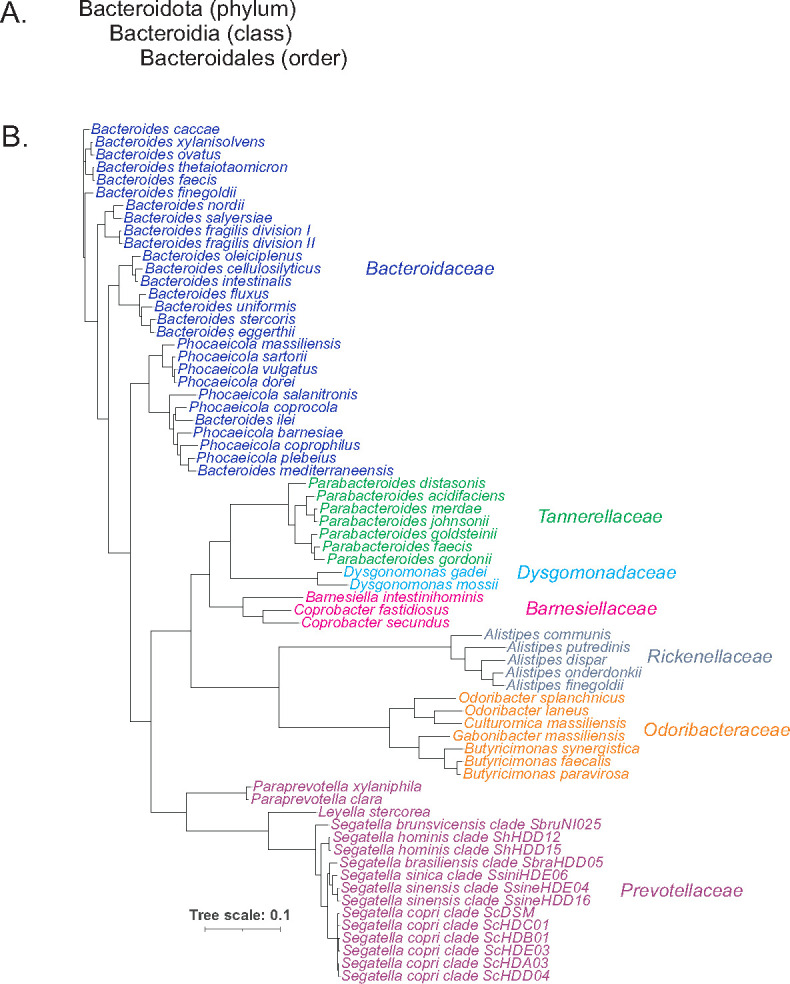 Figure 1
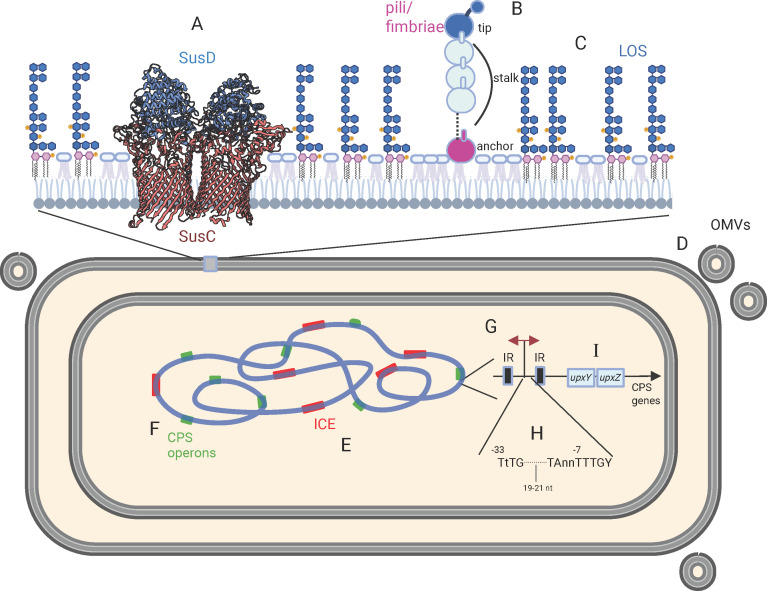 Figure 2
Peer Reviews
No public reviews on file for this paper yet. If you reviewed it on a platform where reviews are public (OpenReview, ICLR, NeurIPS, ICML), you can paste yours below so the community can read it here.
Videos
No videos yet. Explain this paper in a talk, walkthrough, or lecture? Add one.
Taxonomy
TopicsGut microbiota and health · Clostridium difficile and Clostridium perfringens research · Bacterial Identification and Susceptibility Testing