Multiple effects of the bacterial DNA-binding protein SarA on the life cycle of Staphylococcus aureus phages
Ronja Dobritz, Carina Rohmer, Elena Niepoth, Valentin Egle, Natalya Korn, Vittoria Bisanzio, Martin Saxtorph Bojer, Hanne Ingmer, Christiane Wolz

TL;DR
This study shows how the SarA protein in Staphylococcus aureus influences the life cycle of two phages, promoting their propagation through different mechanisms.
Contribution
The study reveals SarA's dual role in promoting phage propagation and protecting bacteria from phage induction.
Findings
SarA promotes Φ11 phage propagation by repressing TarM, altering the phage receptor's glycosylation.
SarA dampens the DNA damage response, inhibiting Φ11 inducibility and SOS gene expression.
For Φ13, SarA promotes replication rather than inhibiting induction, with replication-deficient variants being SarA-insensitive.
Abstract
Staphylococcus aureus is a major opportunistic pathogen in humans and animals. More than 90% of human nasal S. aureus isolates carry Sa3int-phages that integrate into the bacterial hlb gene coding for a sphingomyelinase. Sa3int-phages encode highly human-specific virulence factors that enable S. aureus to adapt to the human host. Thus, balancing mechanisms are necessary for the phage-bacteria coexistence. However, the factors that coordinate these interactions have yet to be discovered. Here, we elucidate the impact of the DNA-binding protein SarA on the life cycle of two prototypic S. aureus phages, Sa3int Φ13 and Sa5int Φ11. SarA promotes the propagation of both phages, albeit via different mechanisms. SarA promotes Φ11 propagation by repressing the glycosyltransferase TarM, which affects the glycosylation pattern of the phage receptor, wall teichoic acid, thereby improving phage…
Genes, proteins, chemicals, diseases, species, mutations and cell lines named across the full text — each resolved to its canonical identifier and authoritative record.
Click any figure to enlarge with its caption.
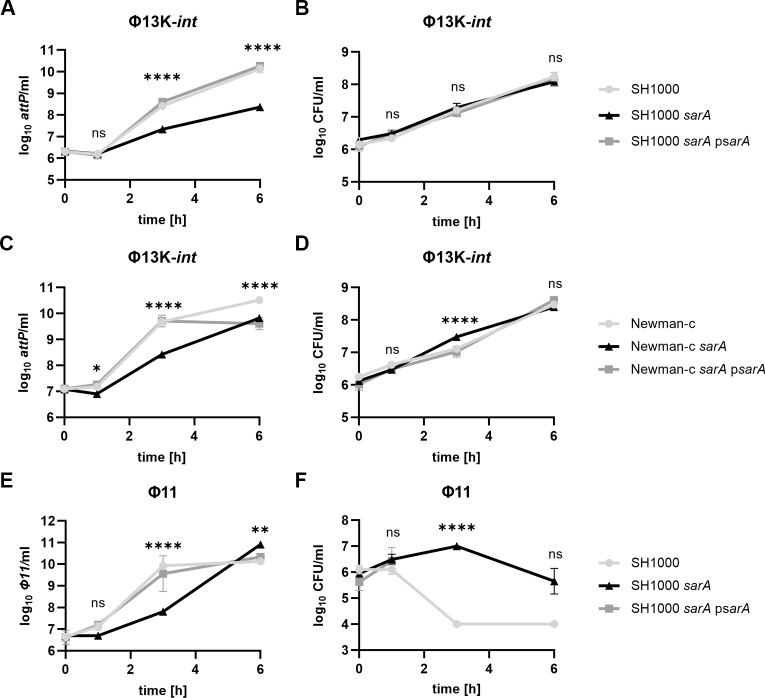 Figure 1
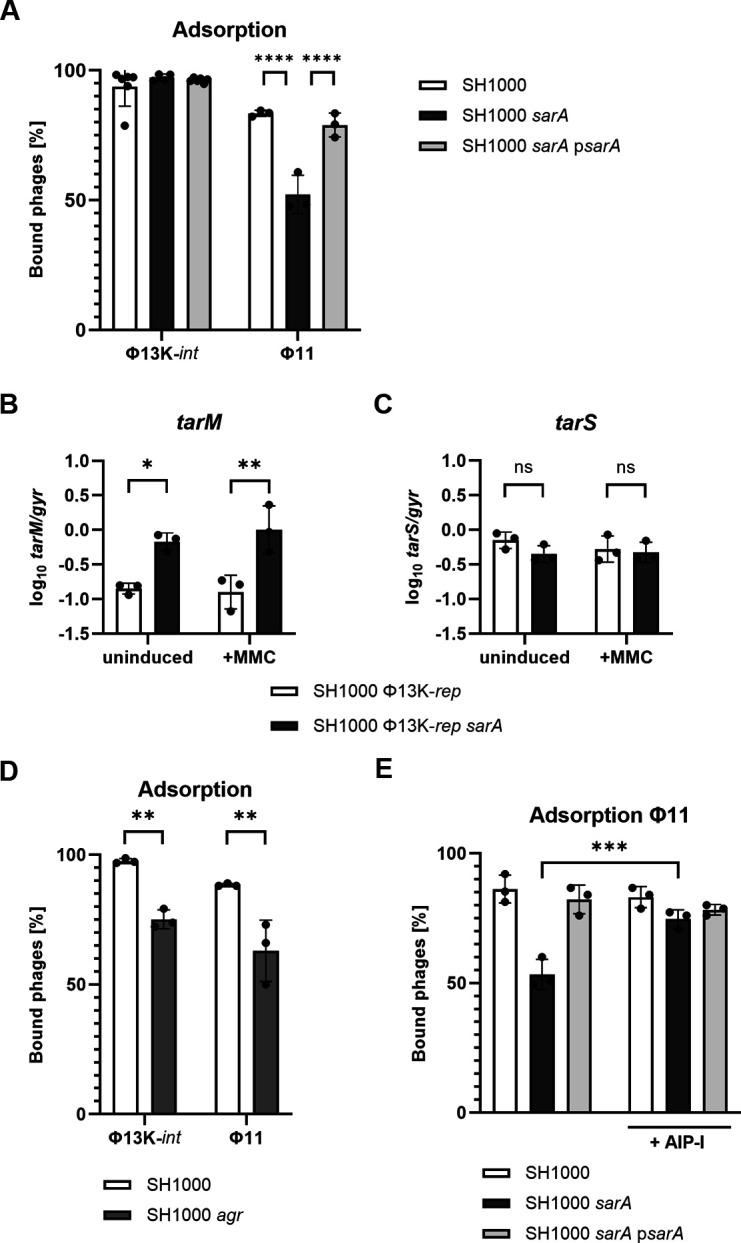 Figure 2
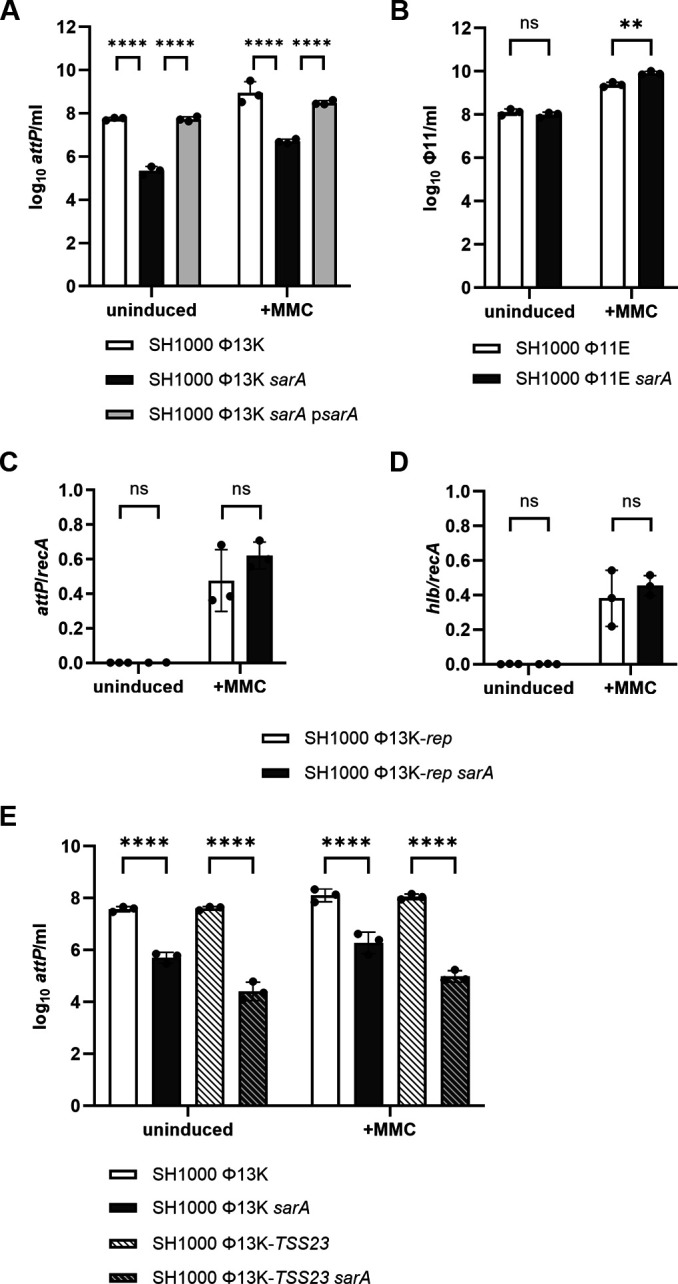 Figure 3
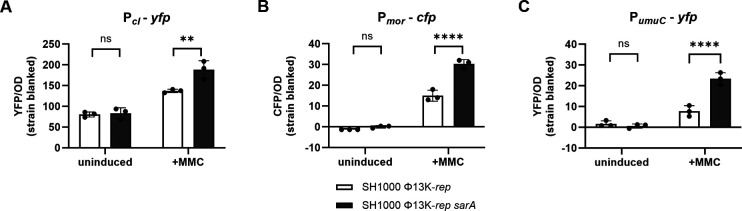 Figure 4
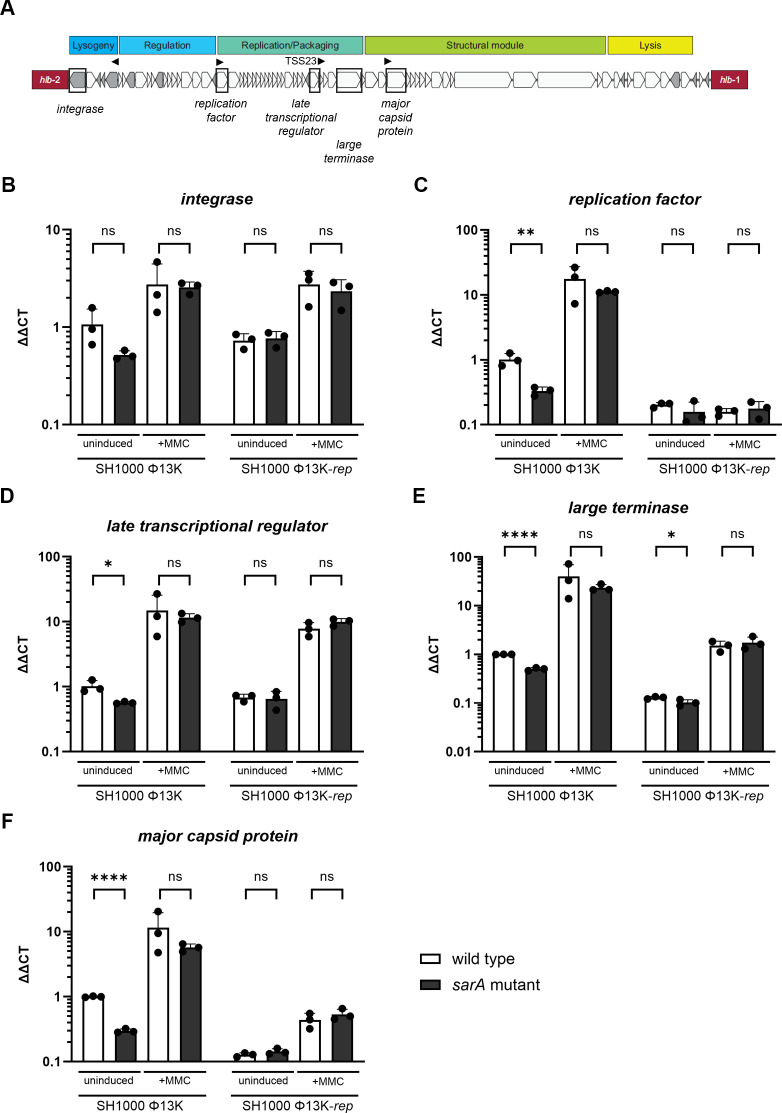 Figure 5
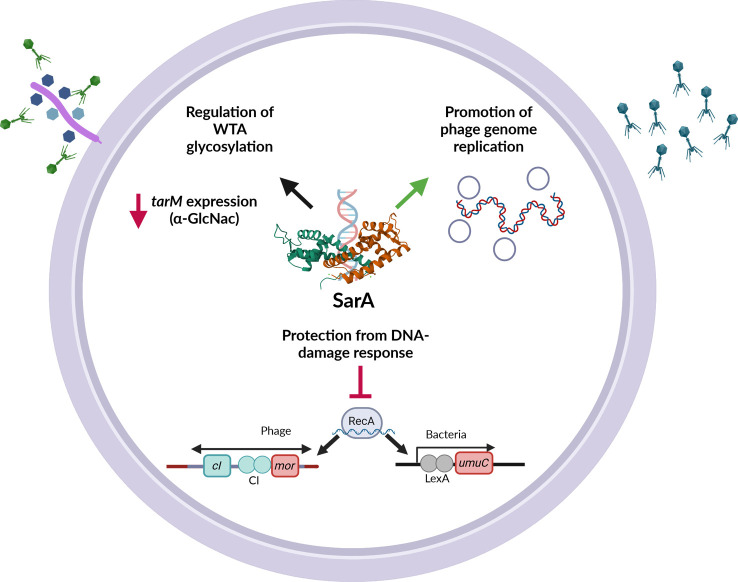 Figure 6
Peer Reviews
No public reviews on file for this paper yet. If you reviewed it on a platform where reviews are public (OpenReview, ICLR, NeurIPS, ICML), you can paste yours below so the community can read it here.
Videos
No videos yet. Explain this paper in a talk, walkthrough, or lecture? Add one.
Taxonomy
TopicsBacteriophages and microbial interactions · Microbial infections and disease research · Antimicrobial Resistance in Staphylococcus