Scanning Electrochemical Impedance Microscopy-Based Assessment of Glucose Biosensors
Antanas Zinovicius, Timas Merkelis, Juste Rozene, Sigita Bendinskaite, Inga Morkvenaite, Sheng-Tung Huang, Arunas Ramanavicius

TL;DR
Researchers used a scanning electrochemical method to assess glucose biosensors, finding that even tiny amounts of an enzyme can reliably detect glucose levels.
Contribution
The study demonstrates the use of SEIM for localized glucose detection with low enzyme concentrations on nonconductive surfaces.
Findings
Glucose oxidase activity was reliably detected at surface concentrations as low as 50 fg/mm².
Localized impedance measurements enabled glucose detection on nonconductive substrates.
SEIM detected glucose concentrations between 2–20 mM using 10 Hz AC perturbation.
Abstract
Scanning electrochemical impedance microscopy (SEIM) was assessed as an electrochemical method for developing glucose biosensors based on glucose oxidase (GOx). To determine the lowest detectable GOx activity, scanning electrochemical microscopy (SECM) in the feedback mode (FB-SECM) was applied. During the measurement procedure, an ultramicroelectrode (UME) was moved vertically over the surface modified by immobilized GOx. A positive feedback response of the FB-SECM mode was determined during the assessment of surfaces modified by 5 fg/mm2 to 20 μg/mm2 surface concentration of GOx. The lowest surface concentration of GOx, which still provided reliable measurement results, was 50 fg/mm2. The approach curves registered using the FB-SECM mode were assessed using a mathematical model adapted for the calculation of reaction kinetics by SECM. According to this model, the reaction kinetics…
Genes, proteins, chemicals, diseases, species, mutations and cell lines named across the full text — each resolved to its canonical identifier and authoritative record.
Click any figure to enlarge with its caption.
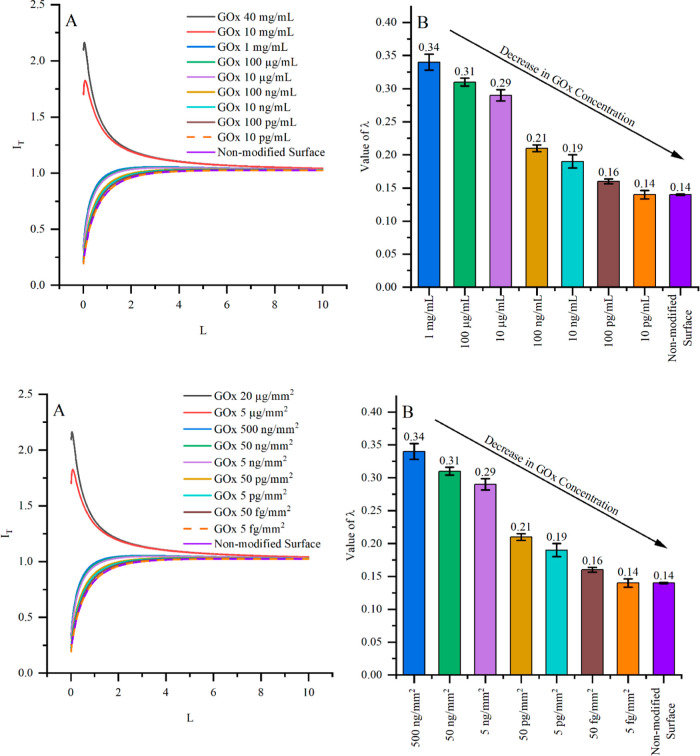 Figure 1
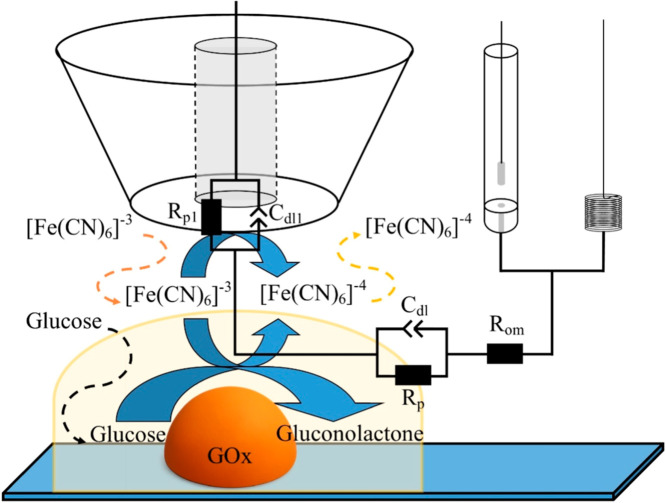 Figure 2
 Figure 3
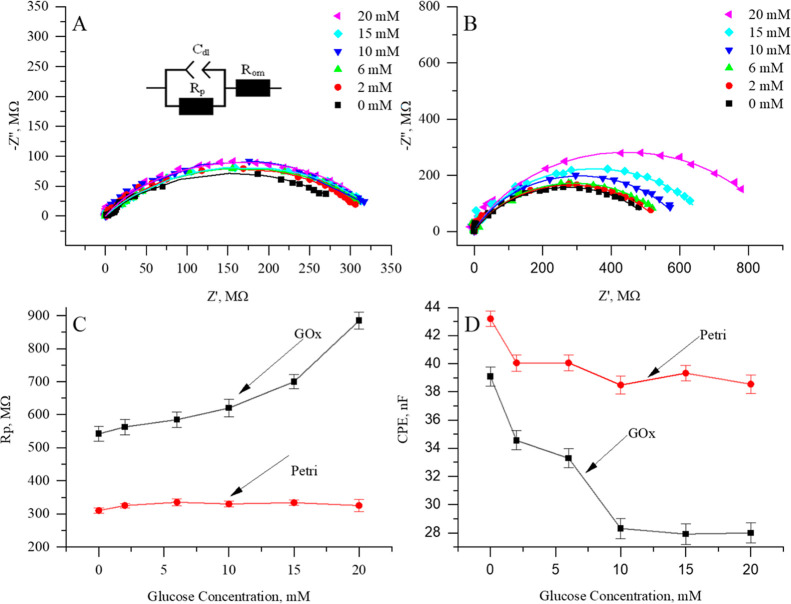 Figure 4
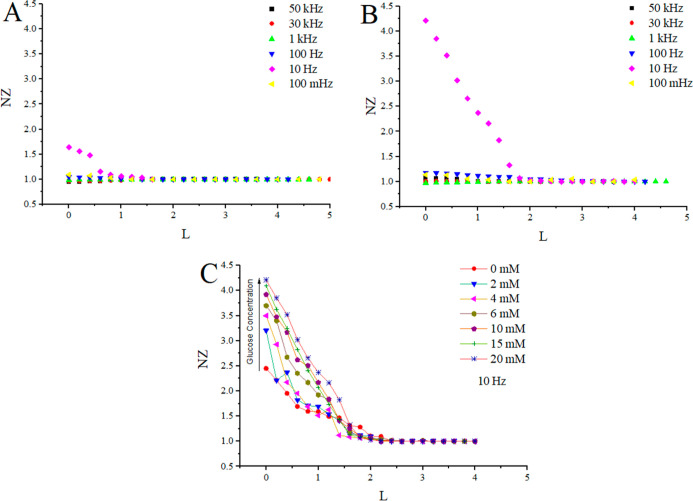 Figure 5
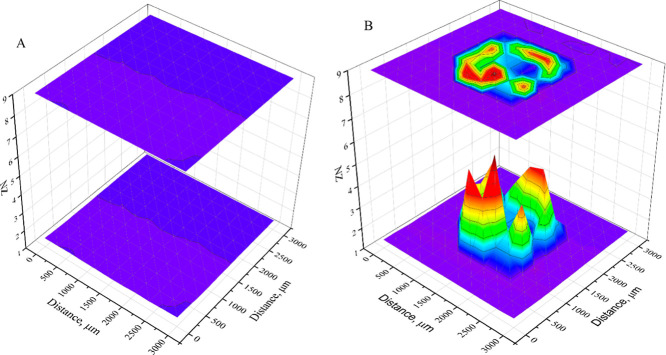 Figure 6
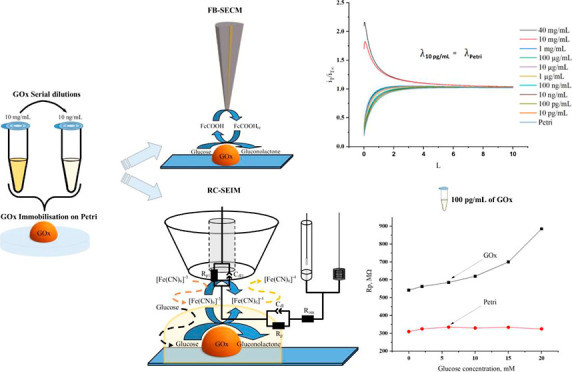 Figure 7
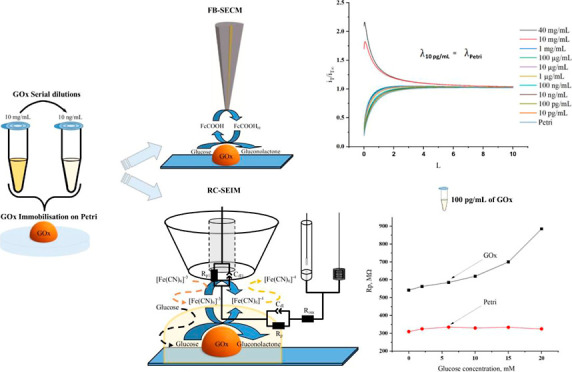 Figure 8
 Figure 9
 Figure 10
 Figure 11
 Figure 12
 Figure 13
 Figure 14
 Figure 15
 Figure 16
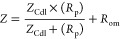 Figure 17
 Figure 18
 Figure 19
 Figure 20
Peer Reviews
No public reviews on file for this paper yet. If you reviewed it on a platform where reviews are public (OpenReview, ICLR, NeurIPS, ICML), you can paste yours below so the community can read it here.
Videos
No videos yet. Explain this paper in a talk, walkthrough, or lecture? Add one.
Taxonomy
TopicsElectrochemical sensors and biosensors · Electrochemical Analysis and Applications · Analytical Chemistry and Sensors