Intracompartmental 3D Printing of Enzymatically Active Organelle Mimics
Yiğitcan Sümbelli, Anna C. Jäkel, Madelief A. M. Verwiel, Nadia A. Erkamp, Alexander F. Mason, Friedrich C. Simmel, Jan C. M. van Hest, Alexander B. Cook

TL;DR
Researchers created 3D-printed subcellular compartments in artificial cells that can localize and perform enzymatic reactions.
Contribution
A method for intracompartmental 3D printing of enzymatically active organelle mimics in artificial cells.
Findings
3D-printed subcellular compartments were successfully created within coacervate-based artificial cells.
The compartments could uptake and concentrate His6-tagged proteins despite increased viscosity.
Enzymatic reactions were localized within specific regions of the artificial cells.
Abstract
Introducing subcellular structures in artificial cells is a key step in mimicking the structure and role of organelles, which are instrumental in compartmentalizing cellular reaction networks. Despite the variety of strategies to include subcellular features within artificial cell models, achieving spatial and morphological control over these compartments remains challenging. In this study, we engineered 3D-printed subcellular compartments within terpolymer-stabilized coacervate-based artificial cells. Coacervate-forming charged polymers were functionalized with methacrylate moieties, enabling the fabrication of a variety of architectures within droplets through photoinitiated radical polymerization. The addition of a Ni-NTA functional methacrylate monomer to the coacervates led to its sequestration upon polymerization in these subcellular regions. As a result, the compartments were…
Genes, proteins, chemicals, diseases, species, mutations and cell lines named across the full text — each resolved to its canonical identifier and authoritative record.
Click any figure to enlarge with its caption.
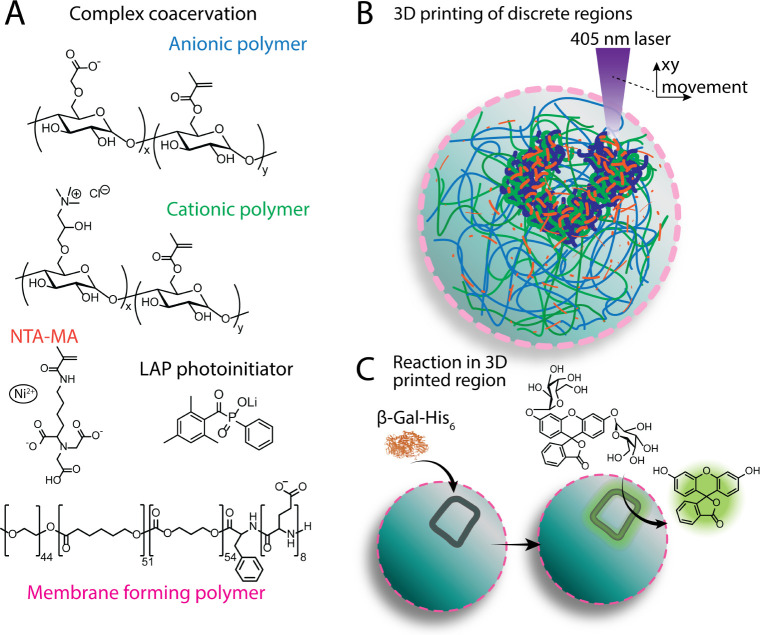 Figure 1
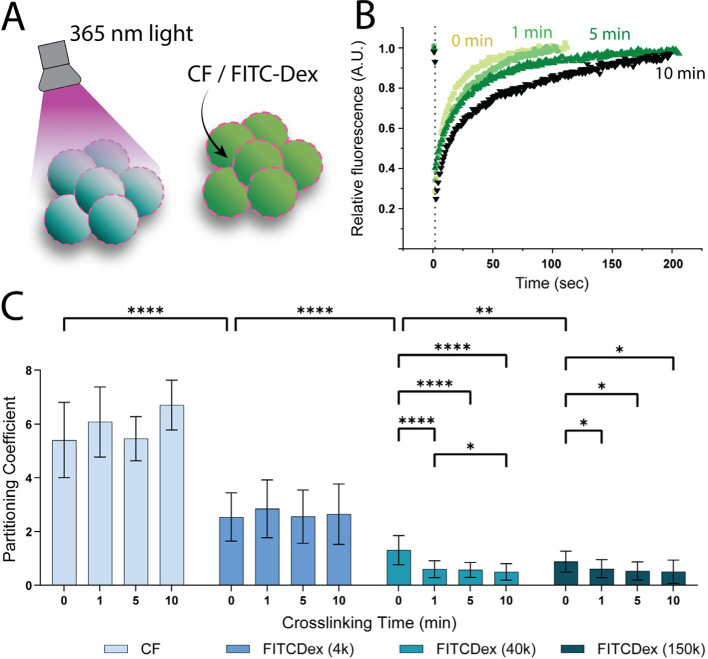 Figure 2
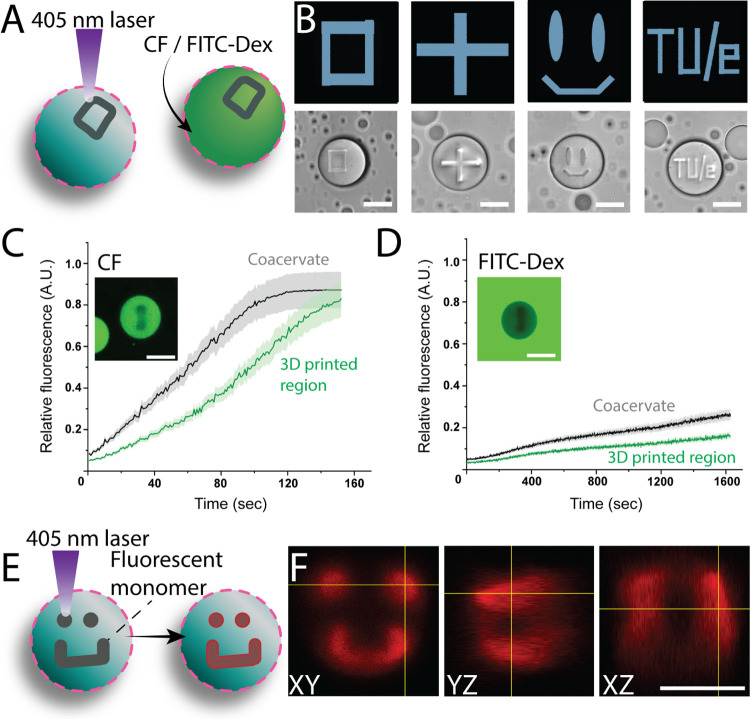 Figure 3
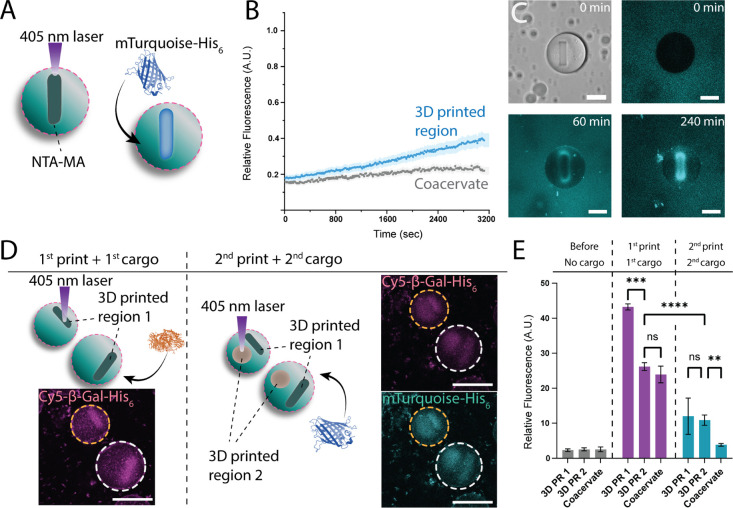 Figure 4
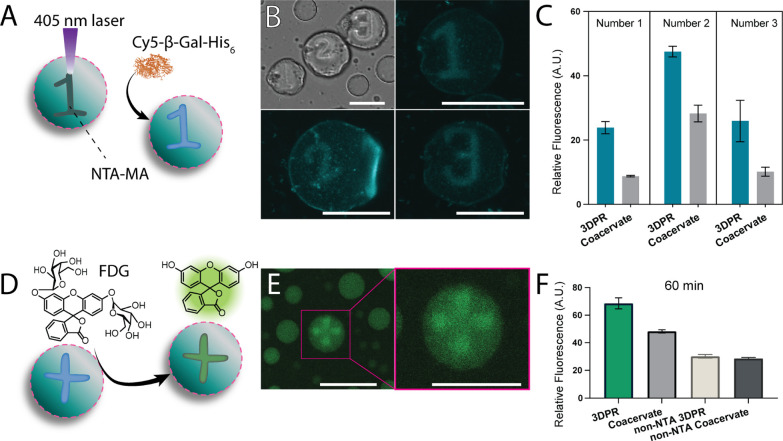 Figure 5
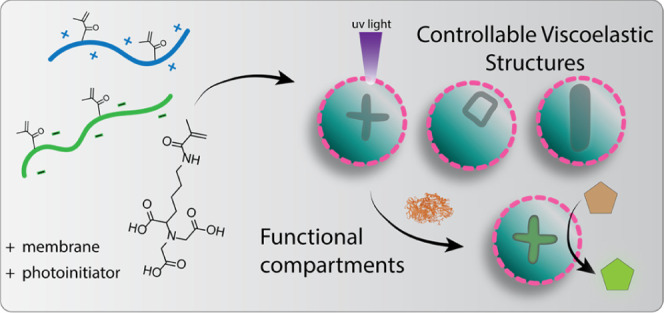 Figure 6
 Figure 7
 Figure 8
 Figure 9
 Figure 10
 Figure 11
Peer Reviews
No public reviews on file for this paper yet. If you reviewed it on a platform where reviews are public (OpenReview, ICLR, NeurIPS, ICML), you can paste yours below so the community can read it here.
Videos
No videos yet. Explain this paper in a talk, walkthrough, or lecture? Add one.
Taxonomy
TopicsAdvanced Polymer Synthesis and Characterization · Polymer Surface Interaction Studies · Hydrogels: synthesis, properties, applications