A quarter of young Japanese women are underweight: thin-ideal internalization and self-esteem mediate exercise habits and body satisfaction, but different mechanisms with normal-range weight
Yuka Murofushi, Shinji Yamaguchi, Yasuyo Yoshizawa, Yoshifumi Tamura

TL;DR
Regular exercise helps underweight Japanese women improve body satisfaction by reducing thin-ideal beliefs and boosting self-esteem, but effects differ for normal-weight women.
Contribution
Identifies distinct psychological mechanisms through which exercise affects body satisfaction in underweight versus normal-weight young women.
Findings
Exercise reduces thin-ideal internalization and improves self-esteem, leading to better body satisfaction in underweight women.
For normal-weight women, exercise improves body satisfaction without significantly affecting self-esteem.
The study reveals different pathways for body satisfaction based on weight status.
Abstract
In Japan, approximately 20–25% of young women are underweight, highlighting a significant social issue with considerable future health risks. This generation is strongly influenced by the internalization of thin ideals, leading to a belief that being thin equates to beauty and a misconception that it equates to health. Recent studies have revealed that young women with insufficient physical activity and low dietary intake exhibit metabolic profiles similar to those of obese individuals, putting them at increased risk for developing diabetes in the future. Addressing these issues requires a multifaceted approach, with stable exercise habits crucial for enhancing body satisfaction by reducing the internalization of thin ideals and improving self-esteem. Given this context, it is essential to investigate the effects of exercise habits, particularly in underweight women. Therefore, this…
Genes, proteins, chemicals, diseases, species, mutations and cell lines named across the full text — each resolved to its canonical identifier and authoritative record.
Click any figure to enlarge with its caption.
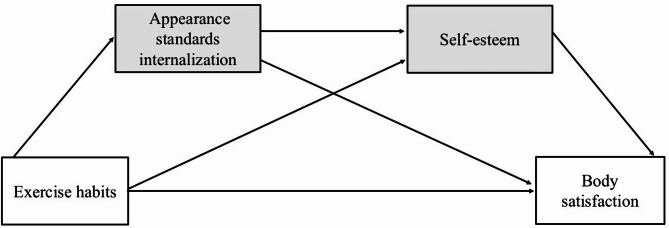 Figure 1
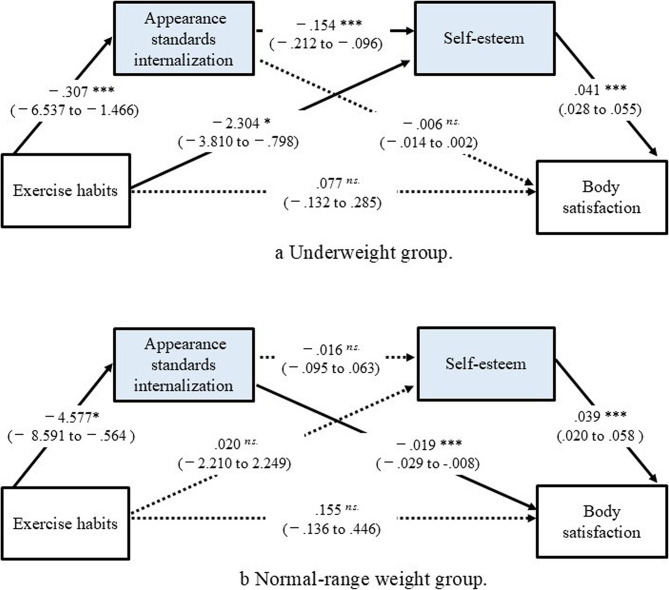 Figure 2
Peer Reviews
No public reviews on file for this paper yet. If you reviewed it on a platform where reviews are public (OpenReview, ICLR, NeurIPS, ICML), you can paste yours below so the community can read it here.
Videos
No videos yet. Explain this paper in a talk, walkthrough, or lecture? Add one.
Taxonomy
TopicsEating Disorders and Behaviors · Obesity and Health Practices · Physical Activity and Health