Rare disease education in medical schools: patient-centered and innovative strategies
Sharon Huynh, Eric L. Wan, Angelette Pham, Robin Yoon, Scott Dorris, Nada Yazigi, Jessica M. Jones

TL;DR
This paper explores how medical schools can better educate students about rare diseases through patient panels and other innovative methods to improve future care.
Contribution
The study introduces a patient and caregiver panel as an innovative strategy to enhance medical students' understanding of rare diseases.
Findings
Student attitudes, knowledge, and confidence in caring for rare disease patients improved significantly after participating in the patient panel.
A scoping review revealed diverse educational interventions for rare diseases, but most lacked input from patients and caregivers.
Effective methods included lectures, case studies, role-playing simulations, and artificial intelligence.
Abstract
Globally, approximately 300 million people live with a rare disease, while in the United States, nearly 30 million, or 1 in 10 Americans, have a rare disease or disorder (RD) (The Lancet Global Health. Lancet Glob Health 2024. 10.1016/S2214-109X(24)00244-0; National Center for Advancing Translational Sciences. Rare disease day at NIH 2024; 2024). Despite the prevalence of RDs, many physicians do not have adequate awareness of RDs or training to care for RD patients. RD advocates are focusing on undergraduate medical education to improve timely and quality care for RD patients. Thus, in 2023, the authors conducted an RD patient panel at their medical school and a scoping review of global medical schools’ approaches to integrating RD education into their curricula. While the panel was implemented in a U.S. context, the scoping review revealed diverse approaches applicable worldwide,…
Genes, proteins, chemicals, diseases, species, mutations and cell lines named across the full text — each resolved to its canonical identifier and authoritative record.
Click any figure to enlarge with its caption.
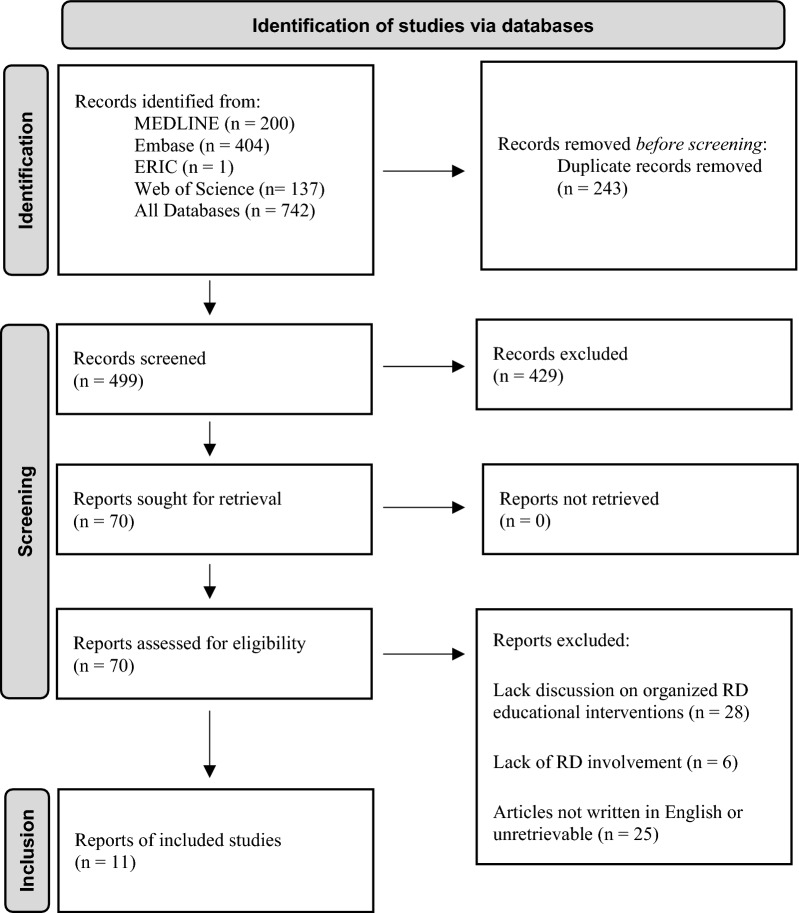 Figure 1
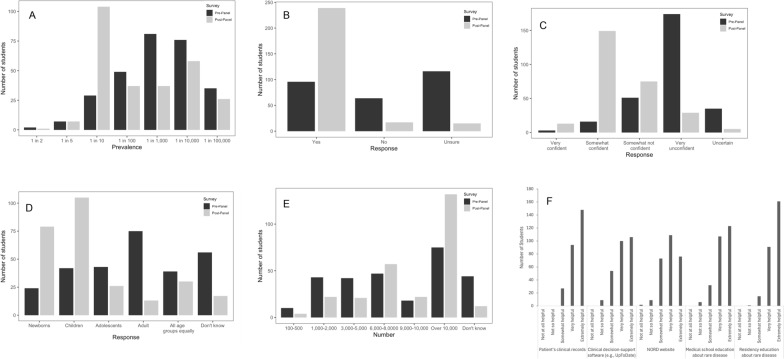 Figure 2
Peer Reviews
No public reviews on file for this paper yet. If you reviewed it on a platform where reviews are public (OpenReview, ICLR, NeurIPS, ICML), you can paste yours below so the community can read it here.
Videos
No videos yet. Explain this paper in a talk, walkthrough, or lecture? Add one.
Taxonomy
TopicsGenomics and Rare Diseases · Artificial Intelligence in Healthcare and Education · Chronic Disease Management Strategies