Inactivation of Acetyl-CoA Acyltransferase 1 enhances the proliferation and motility of nasopharyngeal carcinoma cells
Wanqi Wei, Limei Li, Weilin Zhao, Shixing Zheng, Xiaoying Zhou, Haili Liang, Wen Wang, Feng He, Yushan Liang, Guangwu Huang, Zhe Zhang, Xue Xiao

TL;DR
This study shows that lower levels of ACAA1 in nasopharyngeal cancer cells are linked to worse outcomes and suggests ACAA1 could be a new target for treatment.
Contribution
The study identifies ACAA1 as a tumor-suppressor gene and links it to immune evasion in nasopharyngeal carcinoma.
Findings
ACAA1 is downregulated in nasopharyngeal carcinoma and correlates inversely with Epstein-Barr virus gene expression.
Overexpression of ACAA1 inhibits cancer cell proliferation, migration, and invasion.
ACAA1 is associated with immune cell infiltration and immune checkpoint-related genes in the tumor microenvironment.
Abstract
Acetyl-CoA acyltransferase 1 (ACAA1), encoding the peroxisomal 3-ketoacyl-CoA thiolase (POT1), plays a pivotal role in the fatty acid beta-oxidation pathway. Accumulating evidence has linked this enzyme to the onset and development of diverse human malignancies. Here, we observed a marked downregulation of ACAA1 in nasopharyngeal carcinoma (NPC), which displayed an inverse correlation with the expression genes coded by Epstein-Barr virus (EBV). Receiver operating characteristic (ROC) curve and Kaplan-Meier survival analysis highlighted the potential of ACAA1 as a valuable diagnostic and prognostic biomarker for NPC. Next, gain-of- function experiments were conducted, and the results vividly illustrated that overexpression of ACAA1 potently impeded the proliferation, migration, and invasion of NPC cells. The inhibitory effect was further verified by the reduced Ki−67 staining intensity…
Genes, proteins, chemicals, diseases, species, mutations and cell lines named across the full text — each resolved to its canonical identifier and authoritative record.
Click any figure to enlarge with its caption.
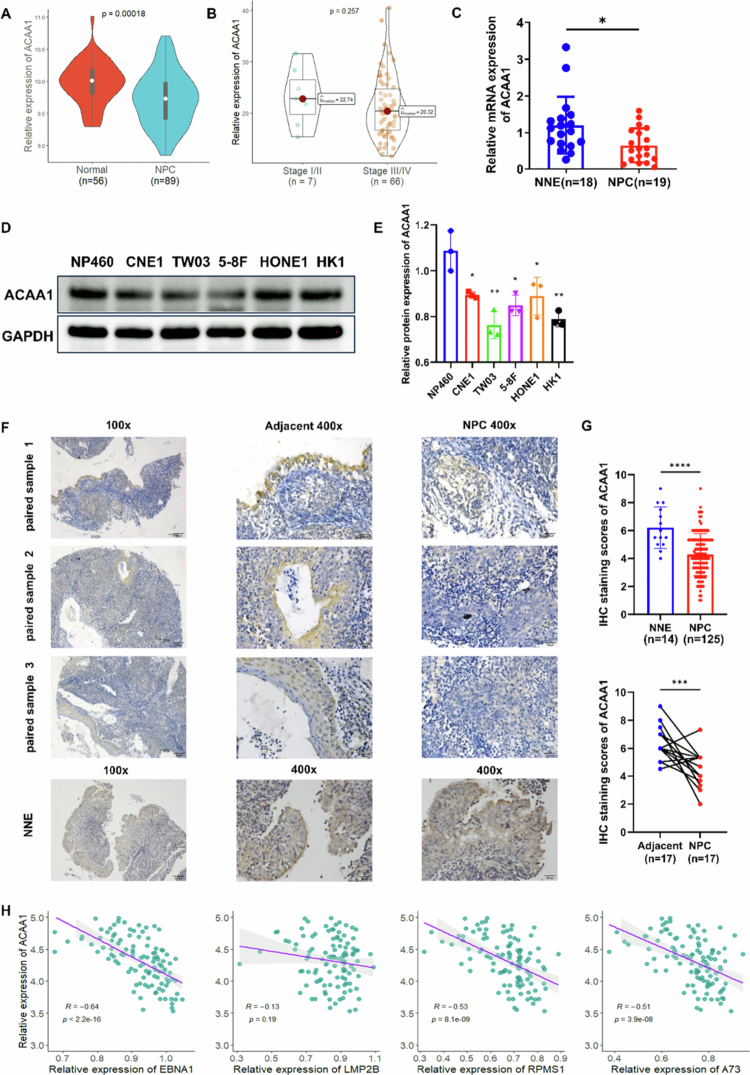 Figure 1
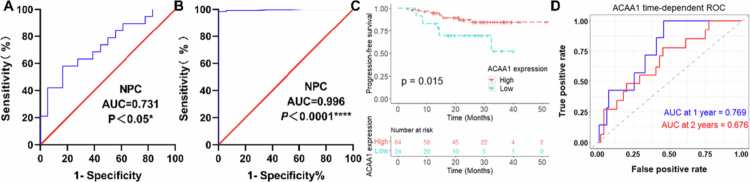 Figure 2
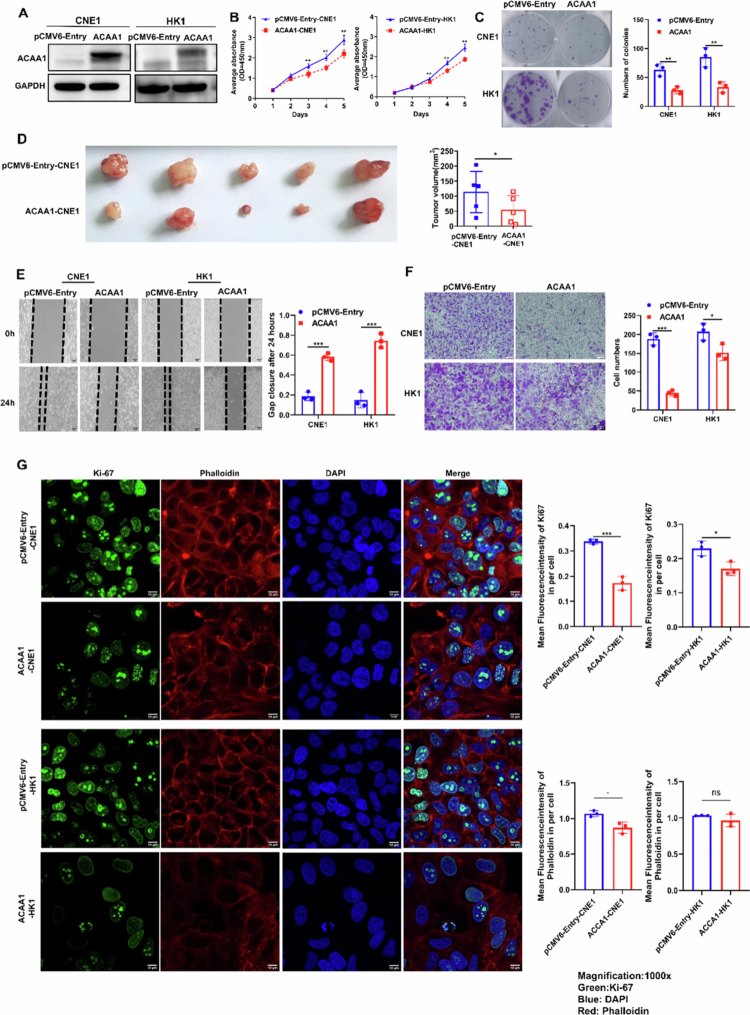 Figure 3
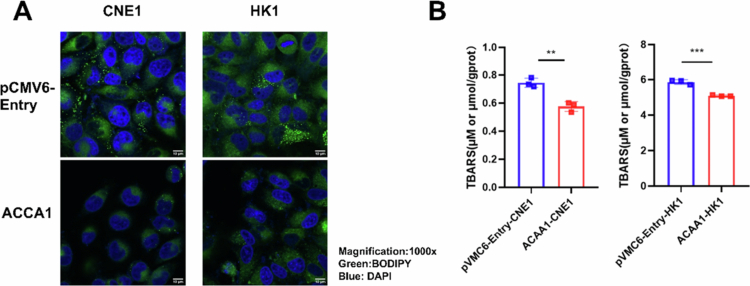 Figure 4
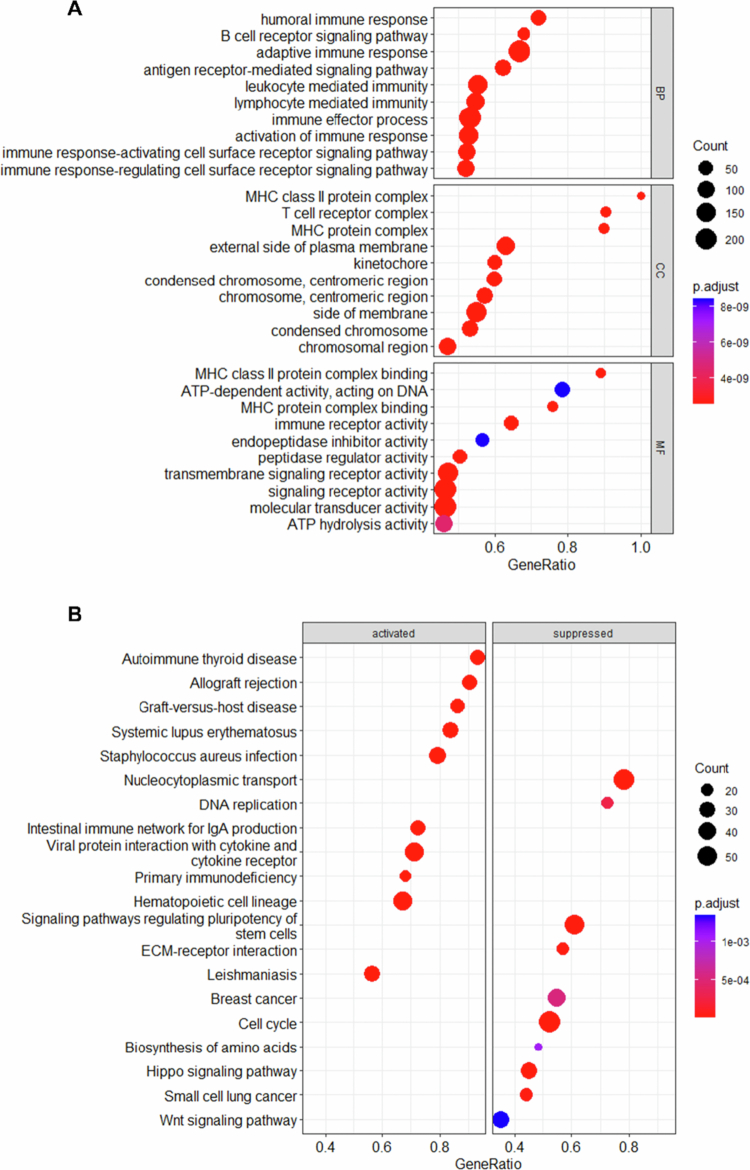 Figure 5
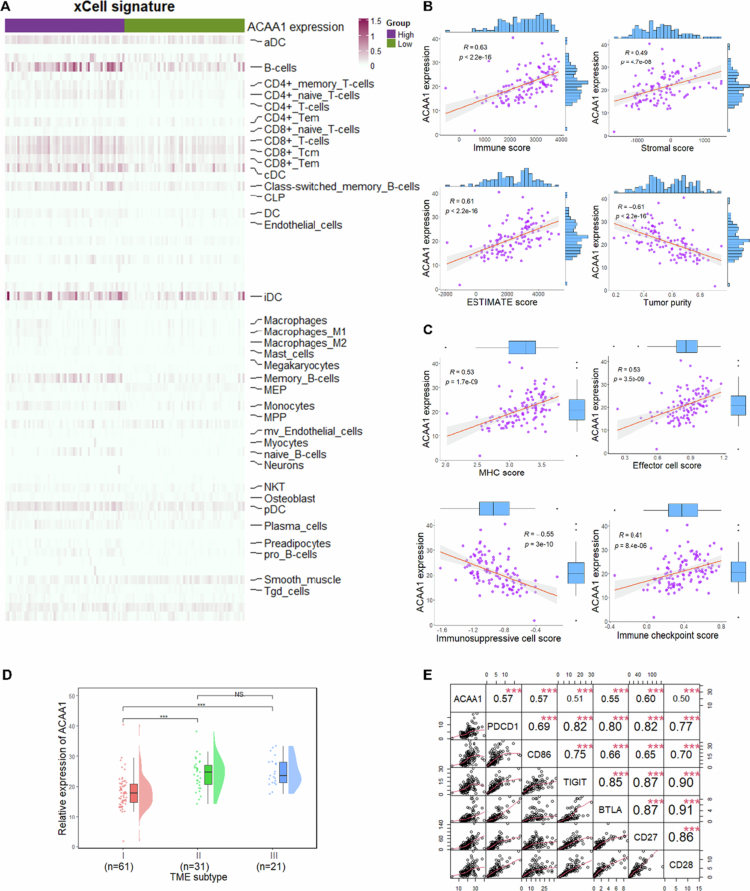 Figure 6
Peer Reviews
No public reviews on file for this paper yet. If you reviewed it on a platform where reviews are public (OpenReview, ICLR, NeurIPS, ICML), you can paste yours below so the community can read it here.
Videos
No videos yet. Explain this paper in a talk, walkthrough, or lecture? Add one.
Taxonomy
TopicsPeroxisome Proliferator-Activated Receptors · Ferroptosis and cancer prognosis · Cancer, Lipids, and Metabolism