Dual‐Terminal Molecular Strategy for Robust and Reversible Supramolecular Adhesion
Shiru Wang, Liang Meng, Feng Li, Yuru Wang, Yongri Liang, Guangming Lu, Keju Sun, Yingdan Liu, Jingyue Yang

TL;DR
A new adhesive design uses a small molecule with two functional ends to create strong, reversible adhesion that works on many surfaces and is stable in harsh conditions.
Contribution
A dual-terminal molecule enables robust and reversible supramolecular adhesion through synergistic noncovalent interactions.
Findings
The adhesive achieves a lap-shear strength of up to 4.6 MPa on polyethylene terephthalate (PET).
It shows excellent resistance to solvents, humidity, and low temperatures.
The system allows fully reversible adhesion and closed-loop recyclability.
Abstract
Achieving strong yet reversible adhesion via minimalist molecular design remains a critical challenge for next‐generation supramolecular materials. Here, a dual‐end modular adhesion strategy is presented based on a small organic molecule incorporating carboxylic acid and triphenylphosphonium terminals linked by a flexible alkyl spacer. This design enables synergistic noncovalent interactions—including hydrogen bonding, dipole–dipole interactions, and electrostatic forces—to construct a thermally reconfigurable supramolecular network. Upon mild heating, the system transitions from ordered to amorphous states, facilitating dynamic cohesion and interfacial adaptability across both hydrophilic and hydrophobic substrates. The resulting adhesive achieves high lap‐shear strength (up to 4.6 MPa on polyethylene terephthalate (PET)), rapid curing, and exceptional resistance to solvents, humidity,…
Genes, proteins, chemicals, diseases, species, mutations and cell lines named across the full text — each resolved to its canonical identifier and authoritative record.
Click any figure to enlarge with its caption.
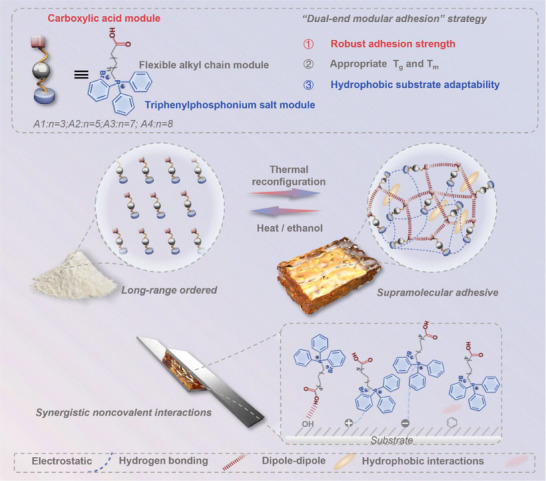 Figure 1
 Figure 2
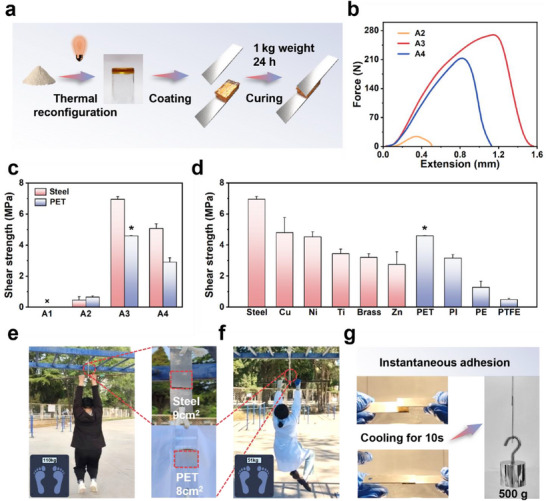 Figure 3
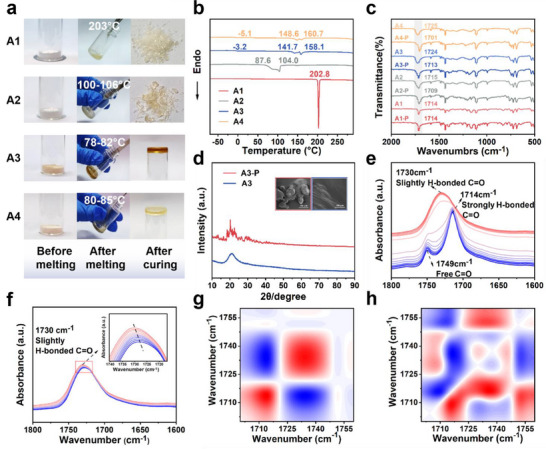 Figure 4
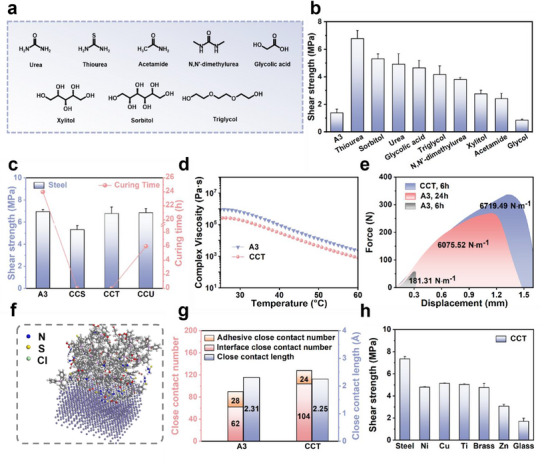 Figure 5
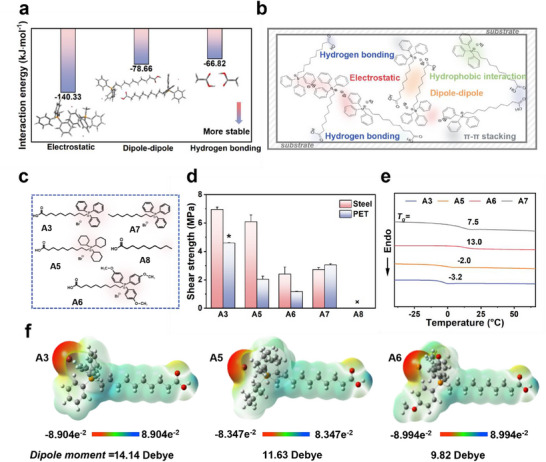 Figure 6
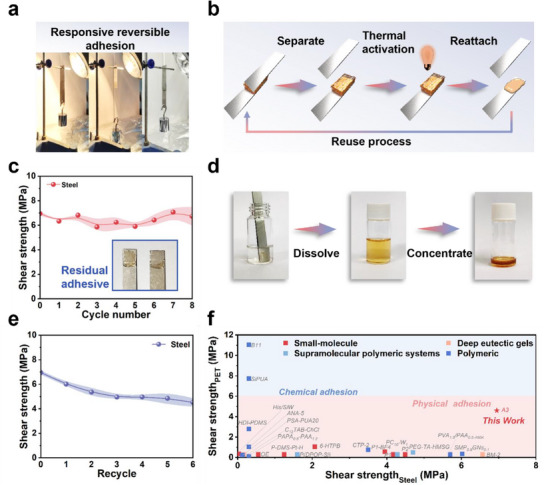 Figure 7
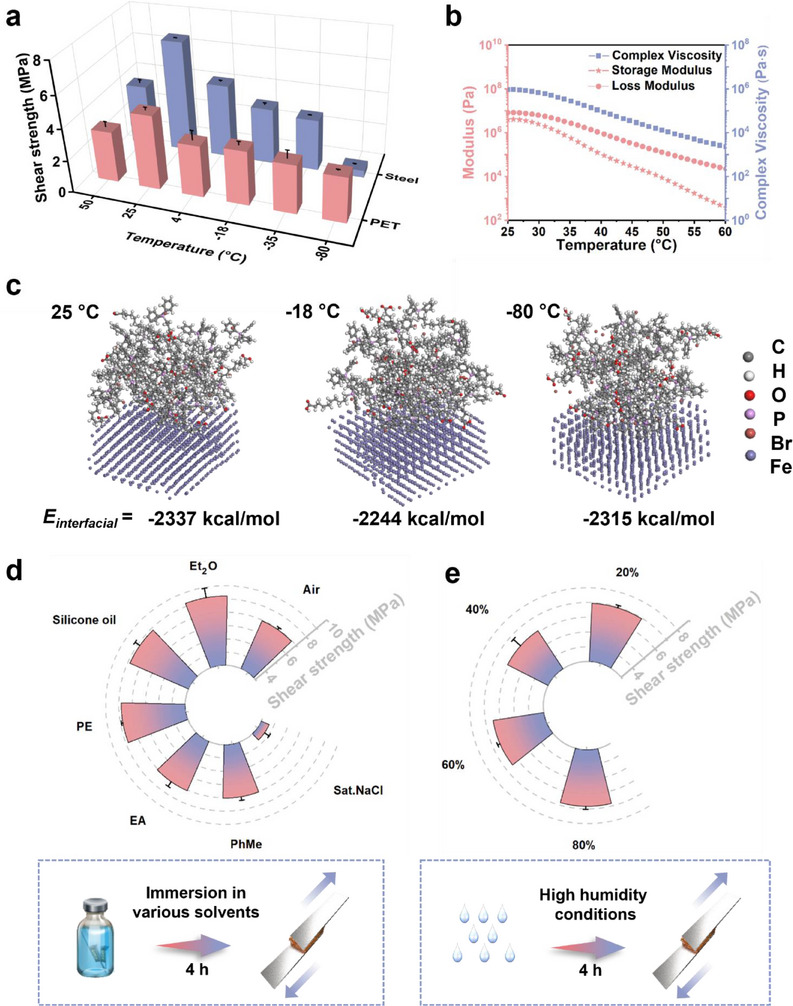 Figure 8
Peer Reviews
No public reviews on file for this paper yet. If you reviewed it on a platform where reviews are public (OpenReview, ICLR, NeurIPS, ICML), you can paste yours below so the community can read it here.
Videos
No videos yet. Explain this paper in a talk, walkthrough, or lecture? Add one.
Taxonomy
TopicsSupramolecular Self-Assembly in Materials · Polydiacetylene-based materials and applications · Polymer composites and self-healing