An Automated Lab‐On‐A‐Chip Approach for Pollen Tube Growth Manipulation in a Controlled Chemical Environment
Jiawei Zhu, Marta Belloli, João P. Vale, Vitaly Pustovalov, Peter Fischer, Hannes Vogler, Tiago S. Mayor, Salvador Pané, Semih Sevim, Ueli Grossniklaus, Bradley J. Nelson

TL;DR
A microfluidic lab-on-a-chip device automates the study of pollen tube growth in controlled chemical environments, improving precision and efficiency.
Contribution
An automated, closed-loop lab-on-a-chip system for precise manipulation of pollen tube growth under chemical gradients is introduced.
Findings
The device enables tailored chemical gradients around pollen tube tips with high precision.
The closed-loop system reduces time and costs compared to manual experiments.
It streamlines data collection and analysis for single-cell research.
Abstract
Laboratory automation is successfully implemented across a wide range of applications, from space exploration to oceanic research, facilitating data collection and analysis while improving precision in biological and medical fields. The future of robotic laboratory automation is closely tied to advancements in miniaturization. Thus, automation of lab‐on‐a‐chip (LoC) systems–integrating complex laboratory tasks onto a small chip–holds great potential for scientific research, including the study of model organisms and cells. Here, an automated continuous‐flow‐based LoC device designed to investigate and manipulate the growth of pollen tubes (PTs)–fastest‐growing cells in nature–within controlled chemical environments is presented. The automated LoC approach allows for the generation of tailored chemical gradients (e.g., of Ca2+) around the PT tip, offering unprecedented precision and…
Genes, proteins, chemicals, diseases, species, mutations and cell lines named across the full text — each resolved to its canonical identifier and authoritative record.
Click any figure to enlarge with its caption.
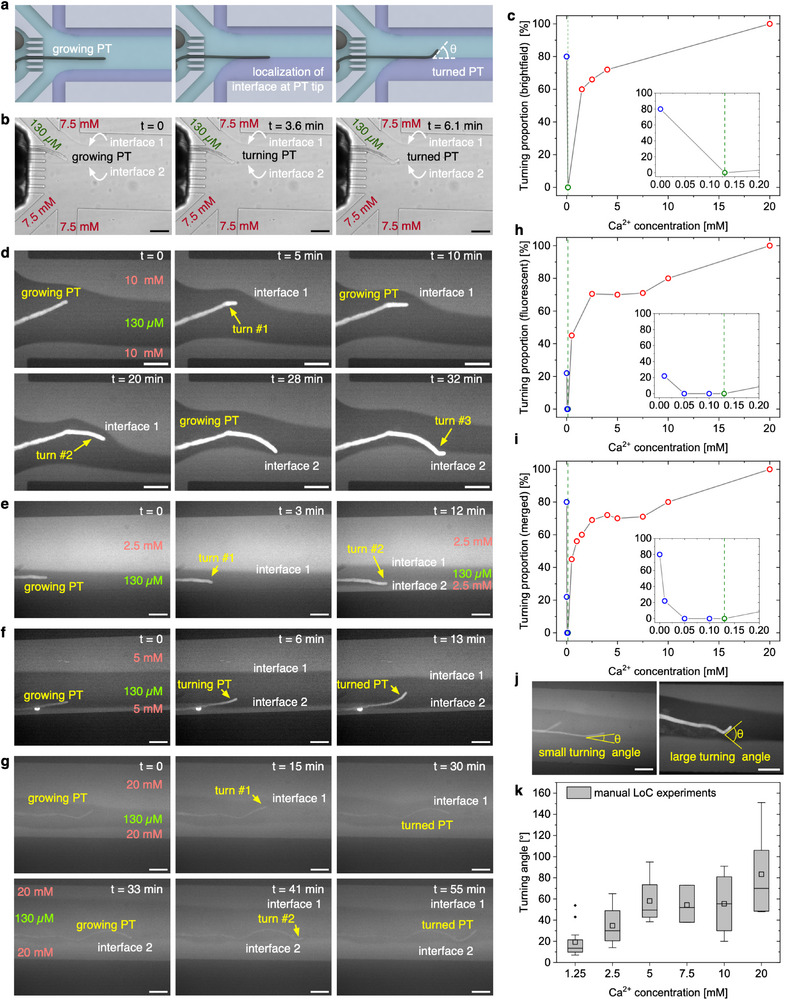 Figure 1
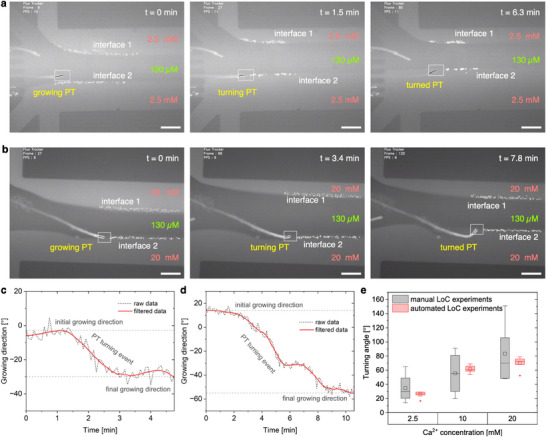 Figure 2
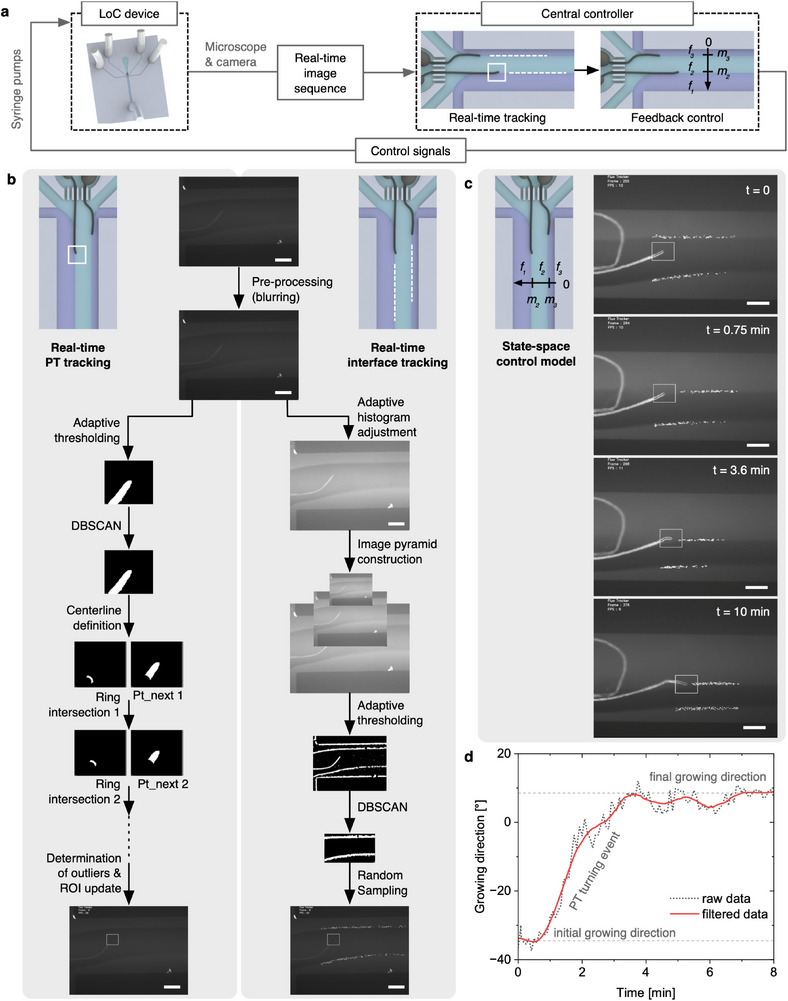 Figure 3
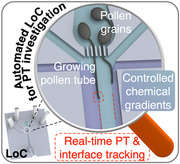 Figure 4
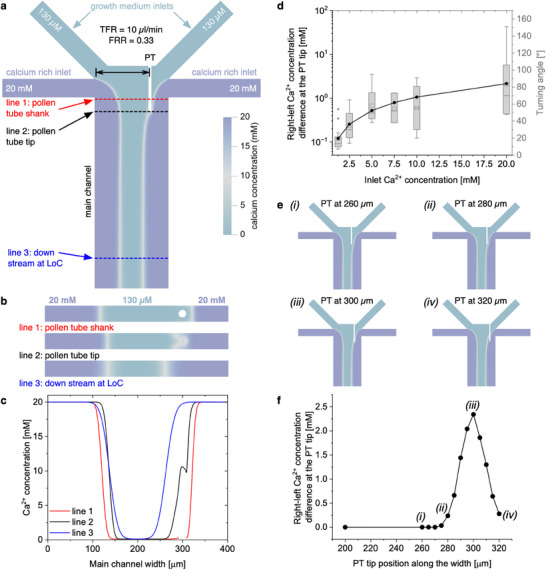 Figure 5
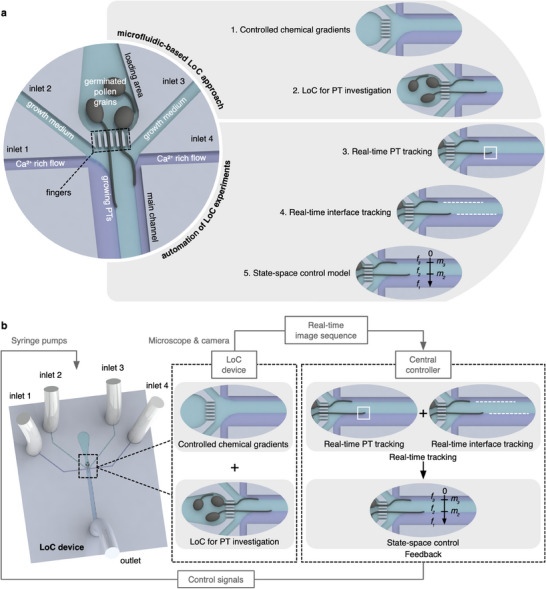 Figure 6
Peer Reviews
No public reviews on file for this paper yet. If you reviewed it on a platform where reviews are public (OpenReview, ICLR, NeurIPS, ICML), you can paste yours below so the community can read it here.
Videos
No videos yet. Explain this paper in a talk, walkthrough, or lecture? Add one.
Taxonomy
TopicsMicrofluidic and Bio-sensing Technologies · Electrowetting and Microfluidic Technologies · Microfluidic and Capillary Electrophoresis Applications