Micro‐Architected Lithium Cobalt Oxide
Yuchun Sun, Julia R. Greer

TL;DR
A new 3D printing method creates micro-structured lithium-ion battery cathodes with better performance and flexibility.
Contribution
A gel infusion AM technique enables high-resolution, binder-free micro-architected cathodes with tunable properties.
Findings
The method produces free-standing LCO electrodes with beam diameters below 50 µm.
The electrodes show a reversible capacity of 122–142 mAh g−1 at high current densities.
The technique is adaptable to a broad range of cathode materials.
Abstract
Advancements in additive manufacturing (AM) enable the precise engineering of micro‐architected electrodes with enhanced electrochemical and mechanical properties. Existing AM approaches for fabricating lithium‐ion battery cathodes rely on extrusion‐based direct ink‐writing, which is usually limited to 150–200 µm resolution, or vat photopolymerization (VP) 3D printing with metal salt solution, which is limited in material choices due to the complicated photoresin design and printing parameter optimization. A gel infusion AM technique is introduced to fabricate micro‐architected cathodes, using lithium cobalt oxide (LCO) as a model prototype, which utilizes VP 3D printing with a “blank” photoresin to circumvent these limitations. The synthesized micro‐architected LCO electrodes are free‐standing and binder‐free, with beam diameters below 50 µm and tunable microstructure and mechanical…
Genes, proteins, chemicals, diseases, species, mutations and cell lines named across the full text — each resolved to its canonical identifier and authoritative record.
Click any figure to enlarge with its caption.
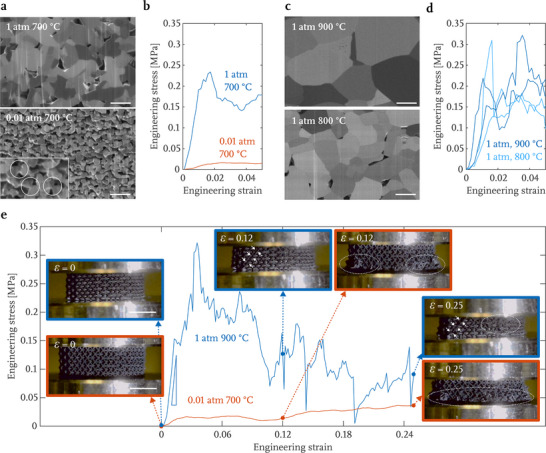 Figure 1
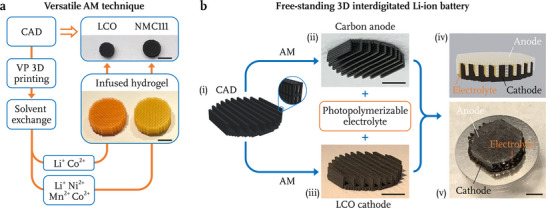 Figure 2
 Figure 3
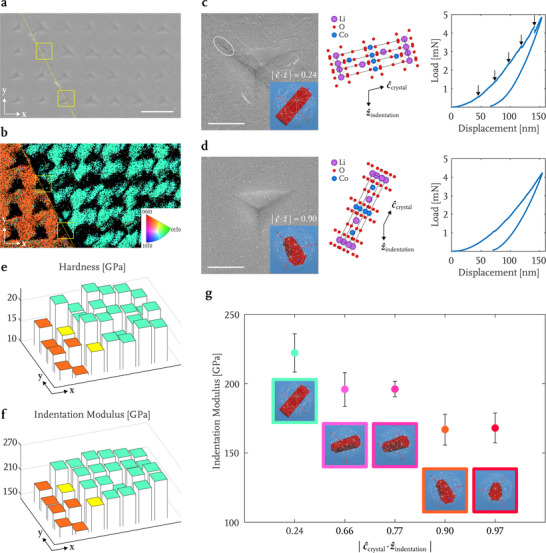 Figure 4
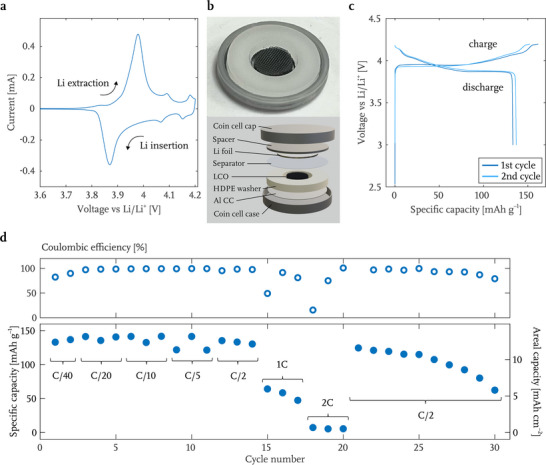 Figure 5
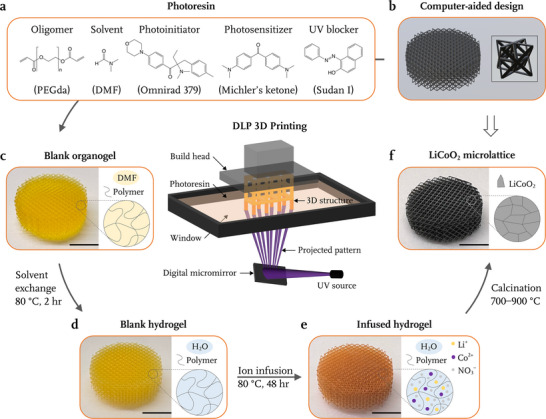 Figure 6
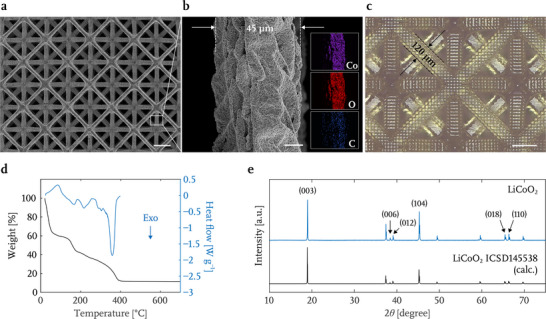 Figure 7
Peer Reviews
No public reviews on file for this paper yet. If you reviewed it on a platform where reviews are public (OpenReview, ICLR, NeurIPS, ICML), you can paste yours below so the community can read it here.
Videos
No videos yet. Explain this paper in a talk, walkthrough, or lecture? Add one.
Taxonomy
TopicsAdvancements in Battery Materials · Advanced Sensor and Energy Harvesting Materials · Advanced Memory and Neural Computing