Preservation of ALYREF Phase Separation Mitigates Doxorubicin‐Induced Cardiomyocyte DNA Damage and Cardiotoxicity
Xinlu Gao, Yifu Shen, Zhihui Xiao, Zhenbo Han, Xu Liu, Ao Cai, Yanan Tian, Guang Lian, Wenya Ma, Yining Liu, Rui Gong, Hanjing Li, Xiuxiu Wang, Zhongyu Ren, Naufal Zagidullin, Lei Yu, Ye Tian, Yu Liu, Zhenwei Pan, Baofeng Yang, Benzhi Cai

TL;DR
A protein called ALYREF helps protect heart cells from DNA damage caused by the chemotherapy drug doxorubicin by maintaining its phase-separated state.
Contribution
This study reveals a new mechanism by which ALYREF phase separation protects against doxorubicin-induced cardiotoxicity.
Findings
ALYREF expression is reduced in a mouse model of doxorubicin-induced cardiotoxicity.
Disruption of ALYREF's phase separation leads to DNA damage and apoptosis in cardiomyocytes.
ALYREF's condensate state is crucial for maintaining the NARC1 complex.
Abstract
The clinical utility of the anticancer agent doxorubicin (DOX) is limited by its dose‐dependent cardiotoxicity. ALYREF, a nuclear protein that preserves genomic stability through interactions with intranuclear components or as an m⁵C‐binding regulator of mRNA maturation and export, has not been previously implicated in DOX‐induced cardiotoxicity (DIC). Here, the role and underlying mechanisms of ALYREF in the pathogenesis of DIC are investigated. The findings demonstrate that ALYREF expression is markedly reduced in a murine model of DIC. Myocardial‐specific overexpression of ALYREF attenuates DOX‐induced DNA damage and cardiomyocyte apoptosis, whereas cardiac‐specific knockout of ALYREF (ALYREF CKO) exacerbates DOX‐induced cardiac dysfunction. Mechanistically, it is identified that nuclear DOX directly binds to the aspartate residue (D171) within the intrinsically disordered regions…
Genes, proteins, chemicals, diseases, species, mutations and cell lines named across the full text — each resolved to its canonical identifier and authoritative record.
Click any figure to enlarge with its caption.
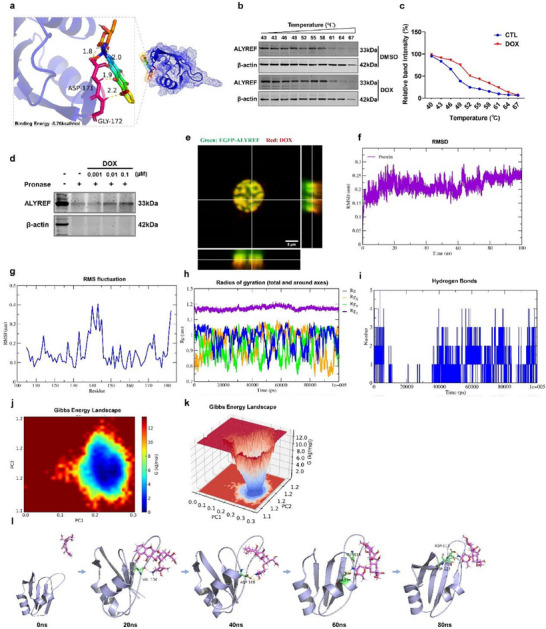 Figure 1
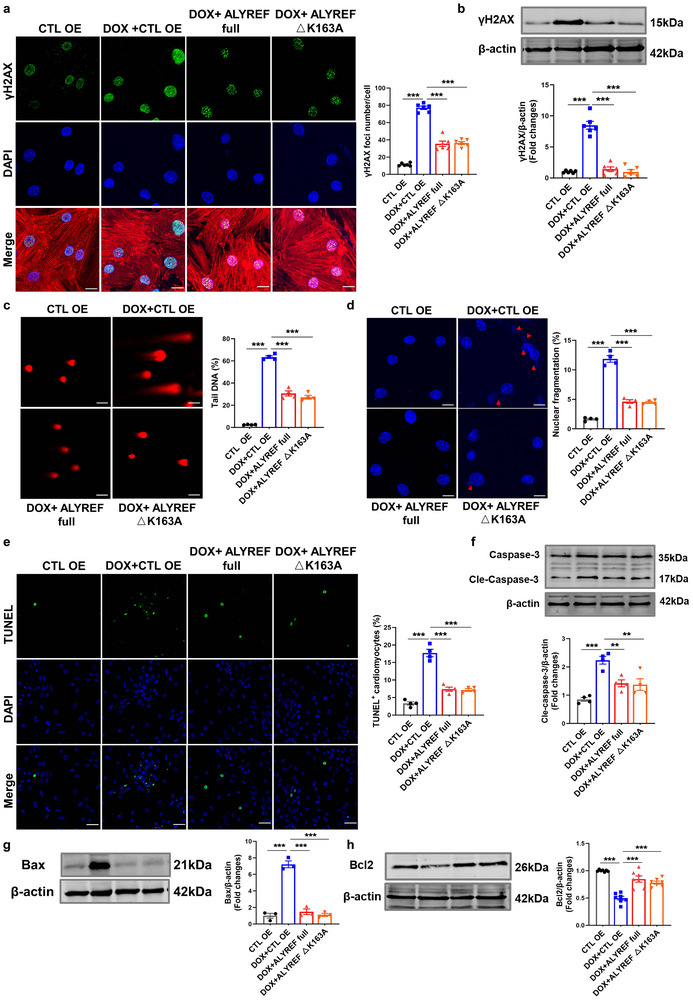 Figure 2
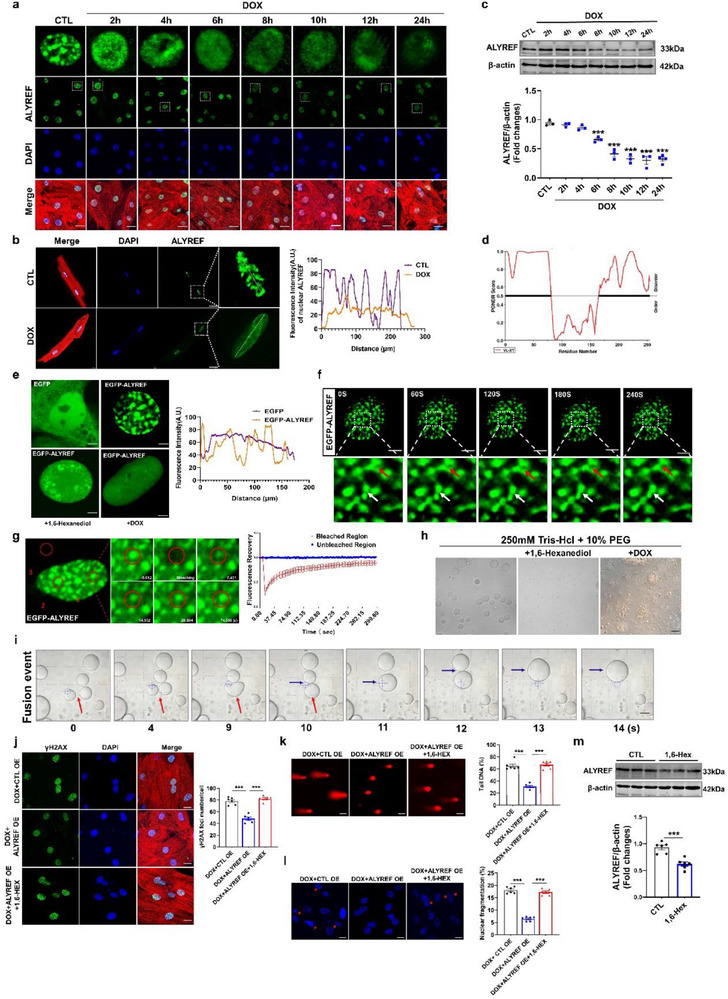 Figure 3
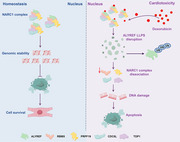 Figure 4
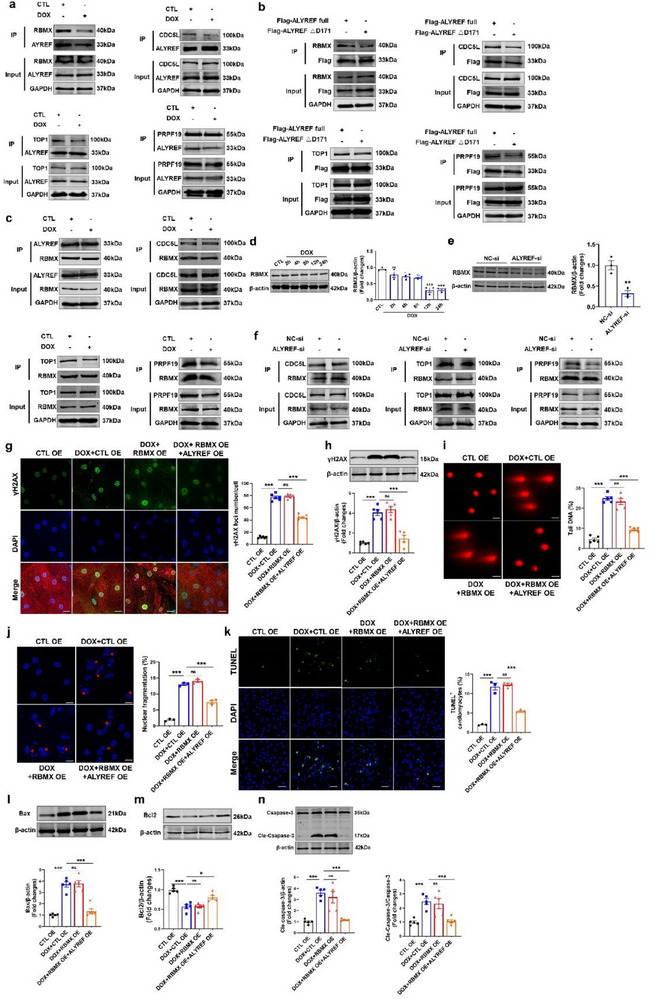 Figure 5
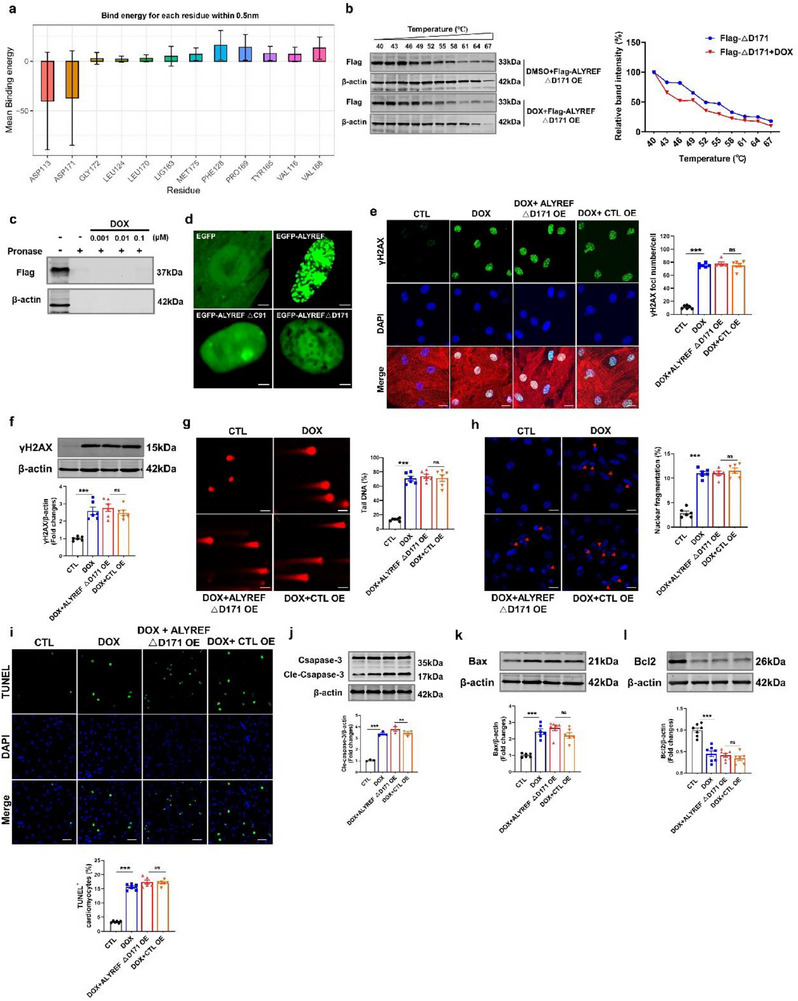 Figure 6
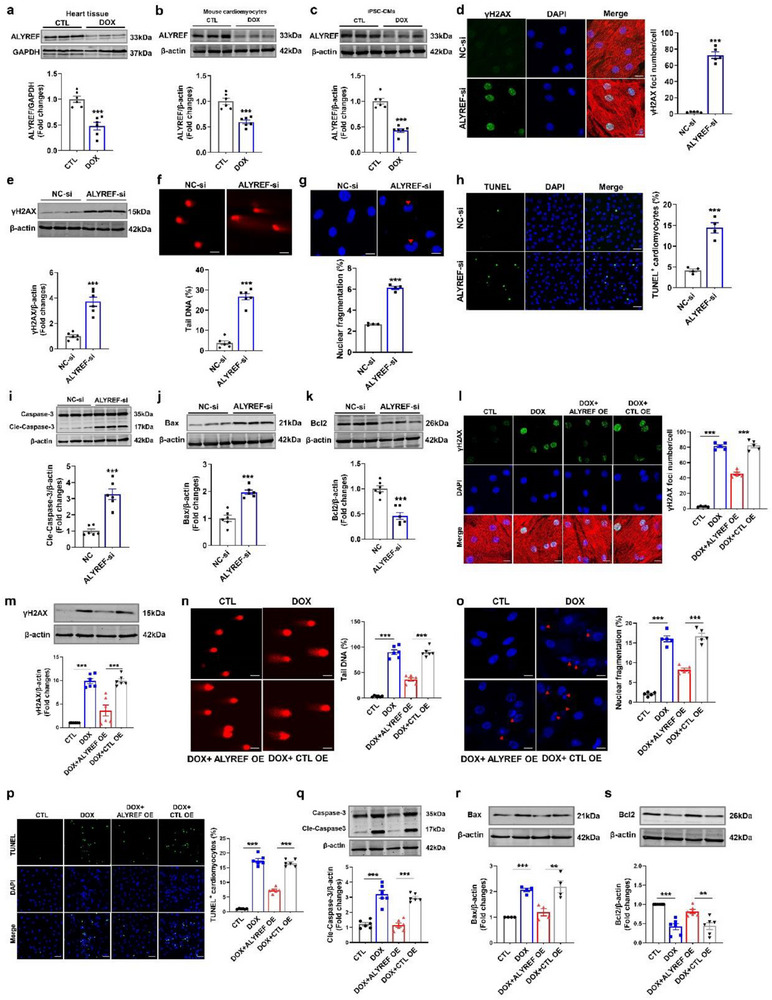 Figure 7
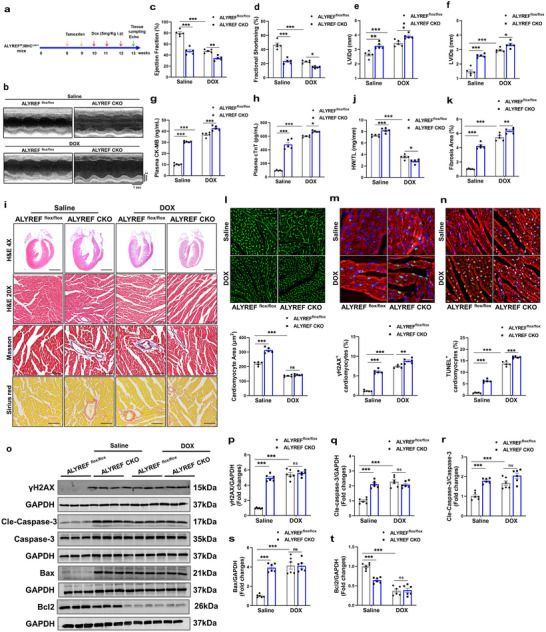 Figure 8
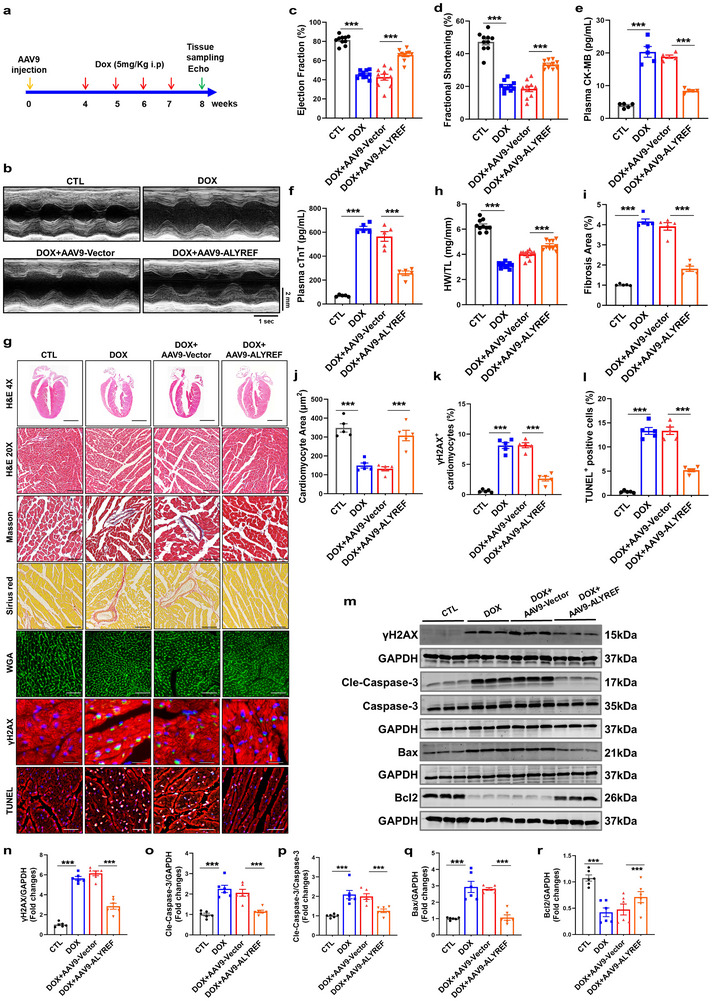 Figure 9
Peer Reviews
No public reviews on file for this paper yet. If you reviewed it on a platform where reviews are public (OpenReview, ICLR, NeurIPS, ICML), you can paste yours below so the community can read it here.
Videos
No videos yet. Explain this paper in a talk, walkthrough, or lecture? Add one.
Taxonomy
TopicsChemotherapy-induced cardiotoxicity and mitigation · Electron Spin Resonance Studies · Advanced NMR Techniques and Applications