Broad Redox Density of States and S–O Functionalities Drive Stable Pseudocapacitive Behavior in Sulfurized Polyacrylonitrile (SPAN) Cathodes
Sajib Kumar Mohonta, Nawraj Sapkota, Ramakrishna Podila

TL;DR
This study explains how sulfurized polyacrylonitrile (SPAN) cathodes work better in lithium-sulfur batteries due to stable chemical groups and unique charge storage behavior.
Contribution
The paper identifies stable S–O functionalities and a broad redox density of states as key to SPAN's pseudocapacitive behavior.
Findings
Higher sulfur content in SPAN leads to sharper redox peaks and increased capacity.
S–O functionalities like sulfone and sulfonate groups are newly identified in SPAN and evolve during cycling.
SPAN's charge storage is pseudocapacitive, not diffusion-limited, and increases with sulfur content.
Abstract
Sulfurized polyacrylonitrile (SPAN) cathodes offer a promising route for improving Li–S batteries by eliminating polysulfide shuttling and enabling stable, high‐rate performance. Here, a comprehensive mechanistic study of SPAN cathodes with varying sulfur content (0–35 wt.%), revealing how structural and electronic factors that govern charge storage is presented. Cyclic voltammetry shows that SPAN exhibits distinct redox features without soluble polysulfides, and that higher sulfur content leads to sharper redox peaks and increased capacity. In situ Raman spectroscopy reveals that electrochemical cycling induces the formation of nanocrystalline sp 2 carbon domains and a decline in φ‐S x species. X‐ray photoelectron spectroscopy shows the presence of stable S– O functionalities, including sulfone and sulfonate groups, which are previously unreported in SPAN. These S–O motifs evolve with…
Genes, proteins, chemicals, diseases, species, mutations and cell lines named across the full text — each resolved to its canonical identifier and authoritative record.
Click any figure to enlarge with its caption.
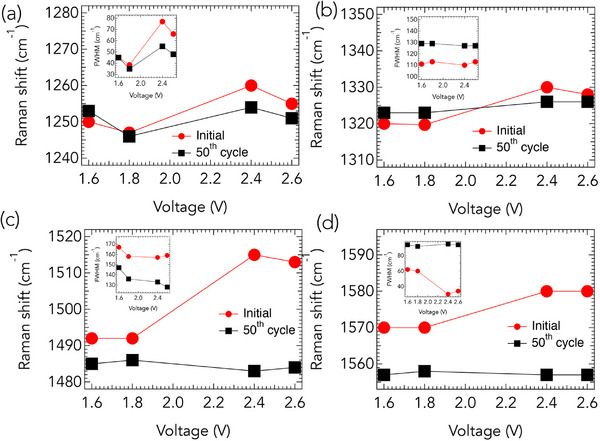 Figure 1
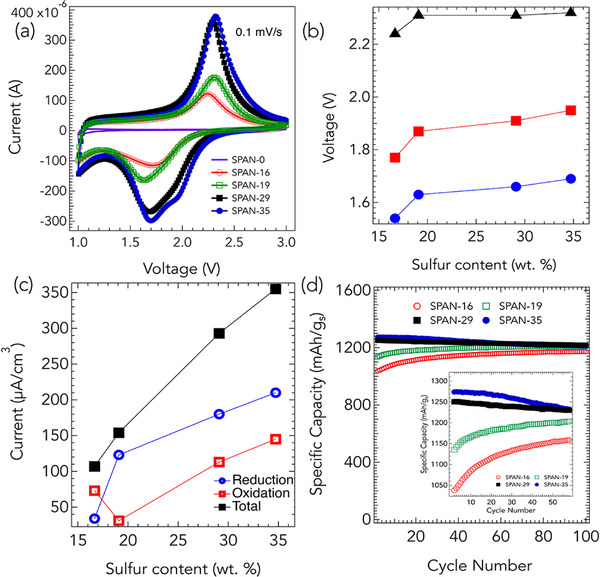 Figure 2
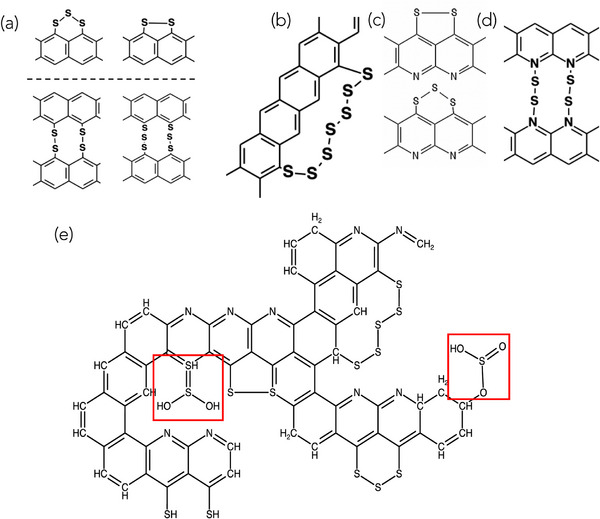 Figure 3
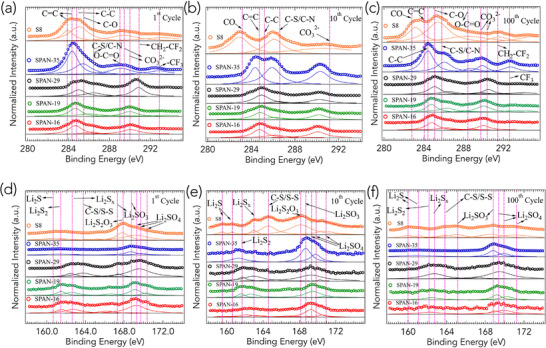 Figure 4
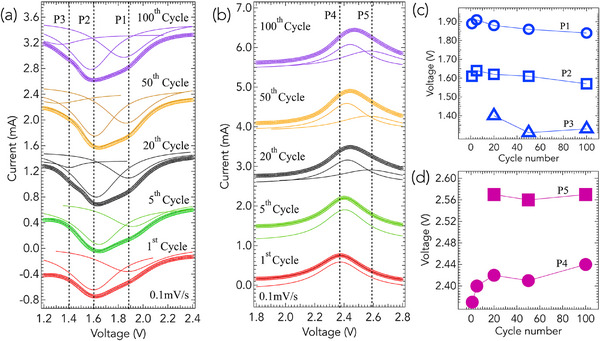 Figure 5
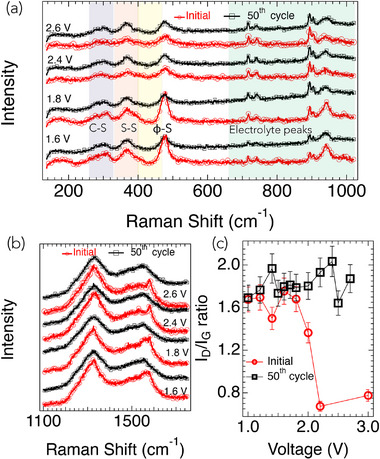 Figure 6
 Figure 7
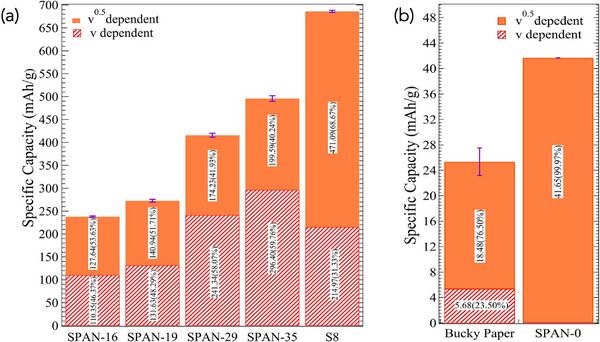 Figure 8
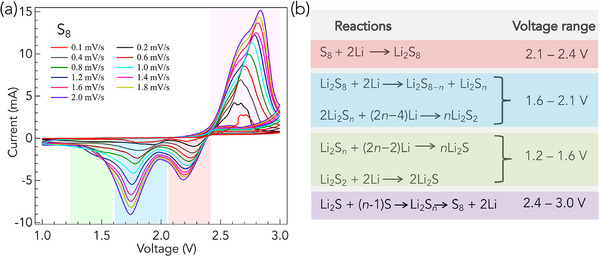 Figure 9
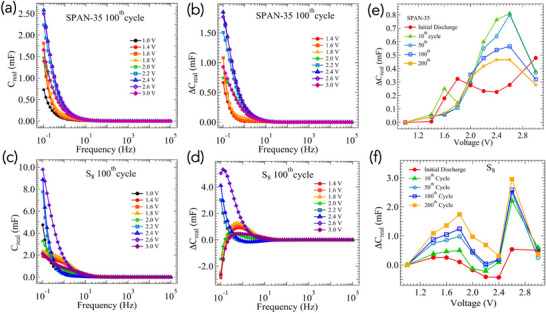 Figure 10
Peer Reviews
No public reviews on file for this paper yet. If you reviewed it on a platform where reviews are public (OpenReview, ICLR, NeurIPS, ICML), you can paste yours below so the community can read it here.
Videos
No videos yet. Explain this paper in a talk, walkthrough, or lecture? Add one.
Taxonomy
TopicsAdvanced Battery Materials and Technologies · Advancements in Battery Materials · Conducting polymers and applications