Mesenchymal Stromal Cells Play an Analgesic Role Through a Npy2r Sensory Neuron‐Mediated Lung‐to‐Brain Axis
Jing Huang, Taihe Zhou, Yueming Sun, Yuanchen Ma, Yiwen Deng, Keyu Chen, Ruijie Li, Yuan Qiu, Tao Wang, Xiaoyong Chen, Li Huang, Lu Zhu, Xueyi Tu, Ying Wang, Zheming Liu, Rouchen Lin, Yunli Tong, Yuantao Li, Heshe Li, Lin Nie, Rui Fang, Jianqi Feng, Xuhong Wei, Xia Feng

TL;DR
Mesenchymal stromal cells reduce neuropathic pain by activating a lung-to-brain pathway involving specific sensory neurons.
Contribution
The study identifies a novel lung-to-brain pathway mediated by Npy2r sensory neurons as the mechanism of MSC analgesia.
Findings
MSC alleviate pain via Npy2r-expressing vagal sensory neurons projecting to brain regions involved in pain processing.
MSC-derived ATP activates Npy2r neurons through P2rx2 receptors, contributing to analgesic effects.
Inhalation of a P2rx2 agonist mimics MSC analgesia in neuropathic pain models.
Abstract
Mesenchymal stromal cells (MSC) have emerged as a promising therapeutic option for neuropathic pain (NP), but the mechanisms remain elusive. Using murine pain models, it is demonstrated that MSC effectively alleviates pain, with efficacy comparable to dexmedetomidine, a moderate analgesic. Mechanistically, peripheral delivery of MSC‐activated pulmonary Npy2r‐expressing vagal sensory neurons, which project to the nucleus tractus solitarius and ventral lateral periaqueductal gray area, drives analgesia via the vagal lung‐to‐brain pathway. Chemogenetic activation of Npy2r sensory neurons similarly ameliorates spared nerve injury (SNI)‐induced mechanical allodynia and thermal hyperalgesia. Furthermore, it is found that MSC‐derived extracellular ATP, released via pannexin1, activates Npy2r sensory neurons through purinergic receptor P2X2 (P2rx2). Strikingly, inhalation of a P2rx2 agonist…
Genes, proteins, chemicals, diseases, species, mutations and cell lines named across the full text — each resolved to its canonical identifier and authoritative record.
Click any figure to enlarge with its caption.
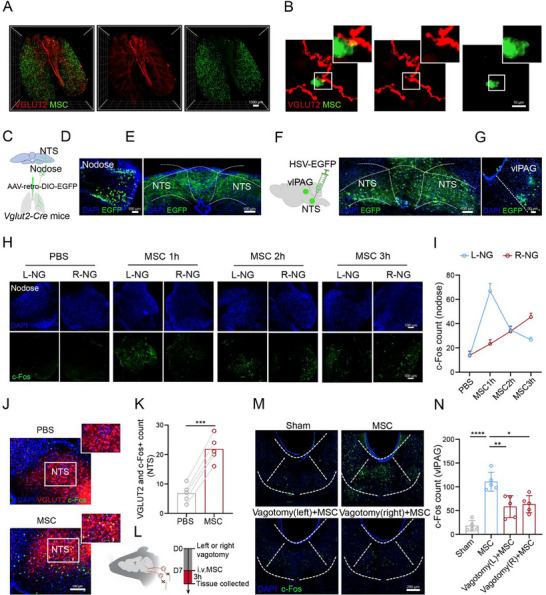 Figure 1
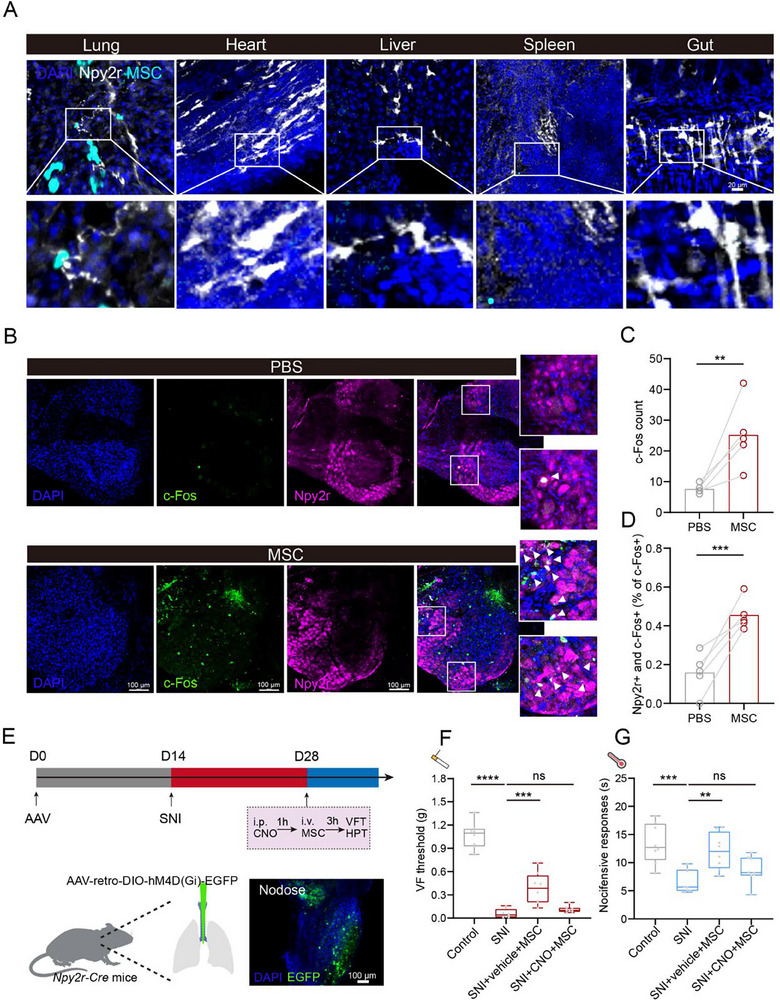 Figure 2
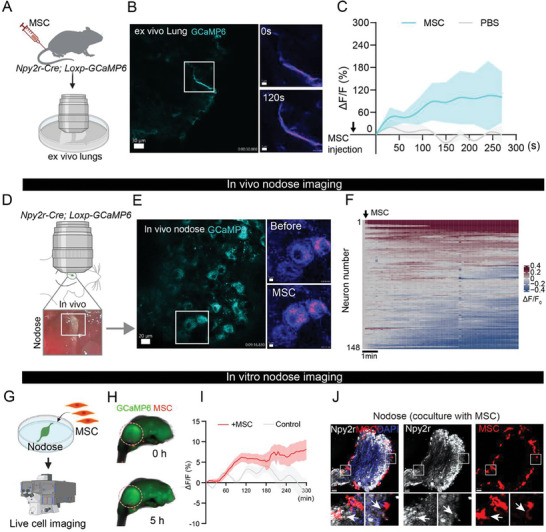 Figure 3
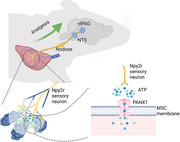 Figure 4
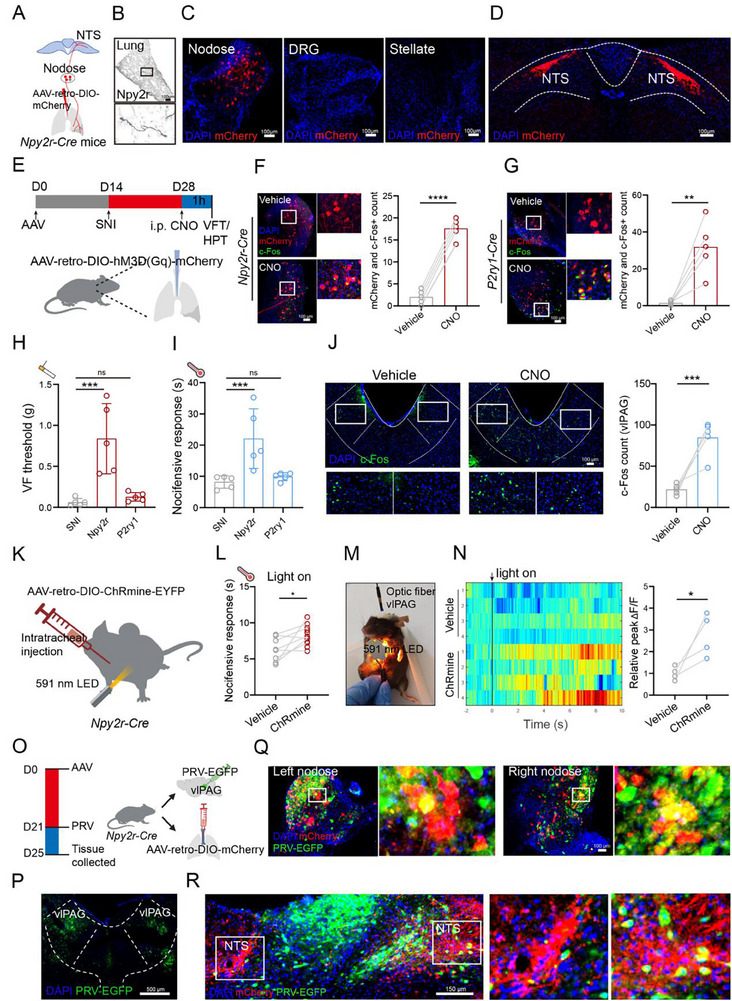 Figure 5
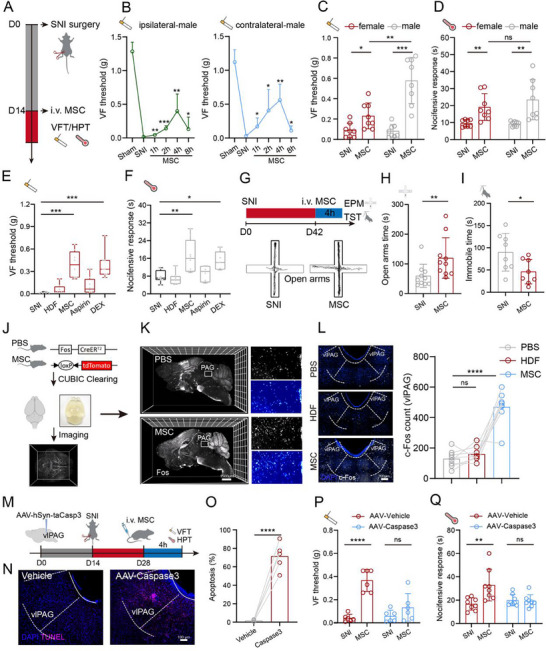 Figure 6
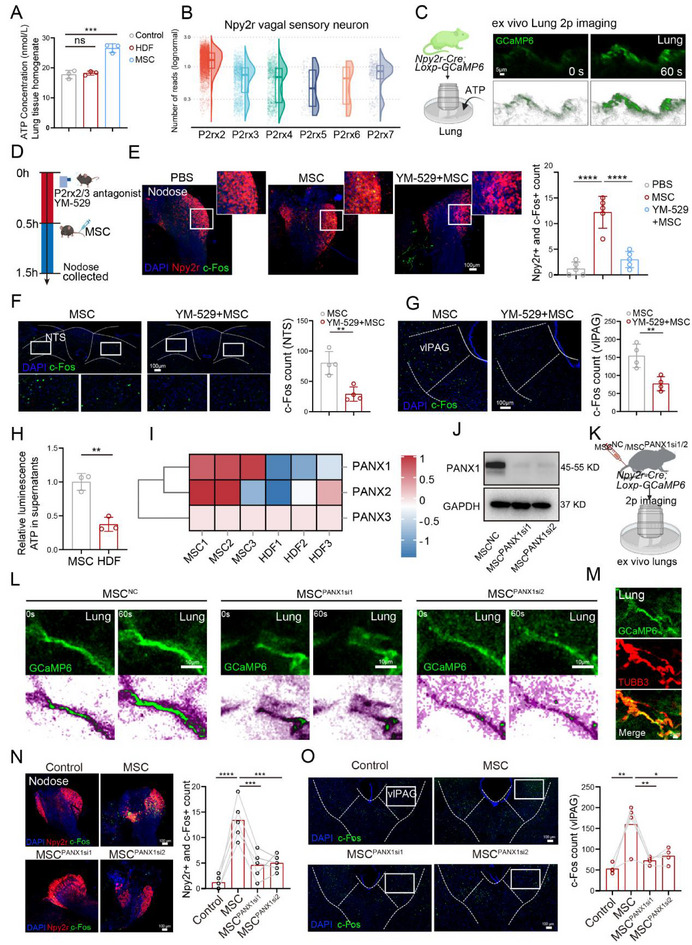 Figure 7
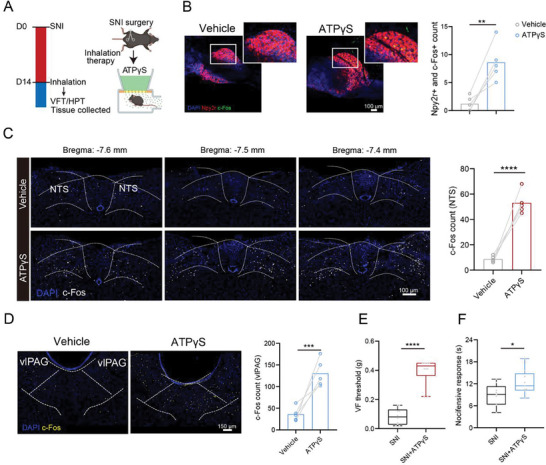 Figure 8
Peer Reviews
No public reviews on file for this paper yet. If you reviewed it on a platform where reviews are public (OpenReview, ICLR, NeurIPS, ICML), you can paste yours below so the community can read it here.
Videos
No videos yet. Explain this paper in a talk, walkthrough, or lecture? Add one.
Taxonomy
TopicsBiochemical Analysis and Sensing Techniques · Neuroscience of respiration and sleep · Advanced Chemical Sensor Technologies