Trp101-Mediated Cold Adaptation in Sphingomonas sp. Thioredoxin: Increased α4-Helix Rigidity with Preserved Overall Flexibility
Mohammed Shazaly A. Elhassan, Hoa Nguyen, ChangWoo Lee

TL;DR
This study explores how a cold-adapted thioredoxin from Sphingomonas sp. maintains flexibility and activity at low temperatures through specific structural features.
Contribution
The paper identifies Trp101 as a key residue that increases α4-helix rigidity while preserving overall flexibility in cold-adapted thioredoxin.
Findings
Trp101 in Sphingomonas sp. Trx enhances α4-helix rigidity through hydrophobic interactions.
Mutations at Trp101 caused significant structural destabilization and reduced enzyme activity.
Cold-adapted thioredoxin uses distinct stabilization mechanisms compared to Escherichia coli Trx.
Abstract
Thioredoxin (Trx) is a small, conserved redox protein composed of five β-strands and four α-helices, and it reduces disulfide bonds and helps maintain cellular redox homeostasis. During evolution from the Trx of the last bacterial common ancestor (LBCA Trx) to Escherichia coli Trx (EcTrx), the α3 helix became more flexible, while the α4 helix gained rigidity. To investigate the role of α4-helix rigidity in cold adaptation, we analyzed Sphingomonas sp. Trx (SpTrx), a cold-adapted ortholog, focusing on α2−α4 salt bridges and α4−β5 hydrophobic interactions. We constructed single and double mutants, targeting Glu43, Glu47, and Trp101, and assessed structural stability using thermal shift assays, chemical denaturation, fluorescence spectroscopy, and circular dichroism. Catalytic activity was evaluated using insulin reduction and DTNB-based kinetic assays. Salt bridge mutations (E43A, E47A,…
Genes, proteins, chemicals, diseases, species, mutations and cell lines named across the full text — each resolved to its canonical identifier and authoritative record.
Click any figure to enlarge with its caption.
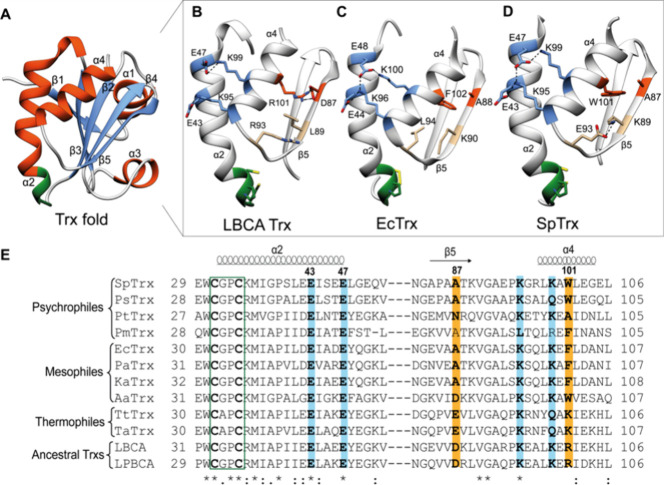 Figure 1
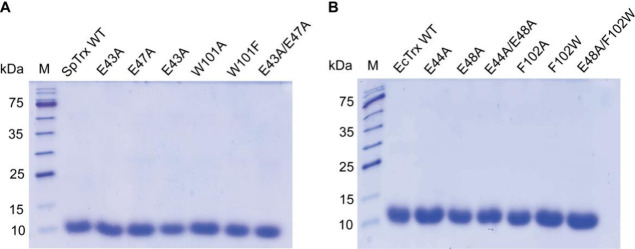 Figure 2
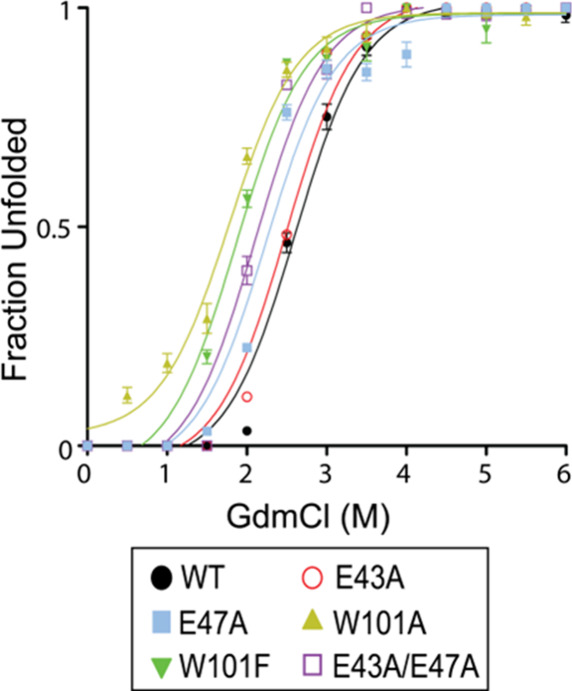 Figure 3
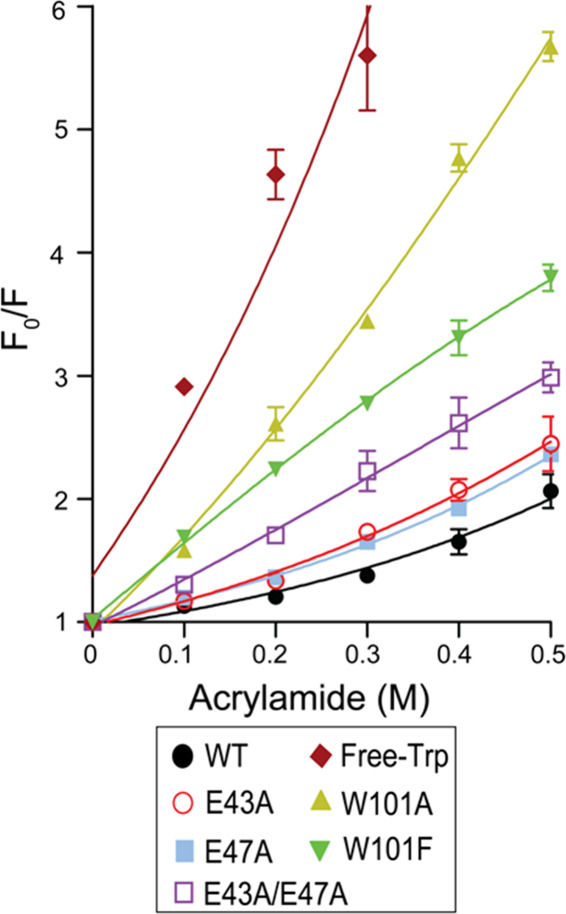 Figure 4
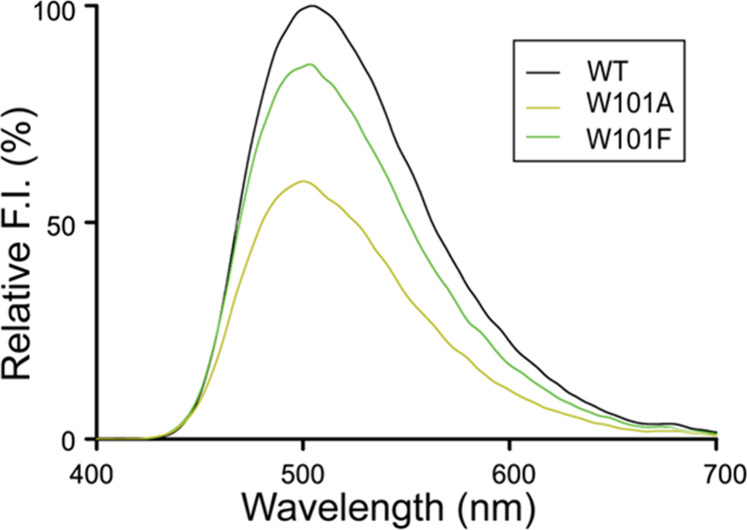 Figure 5
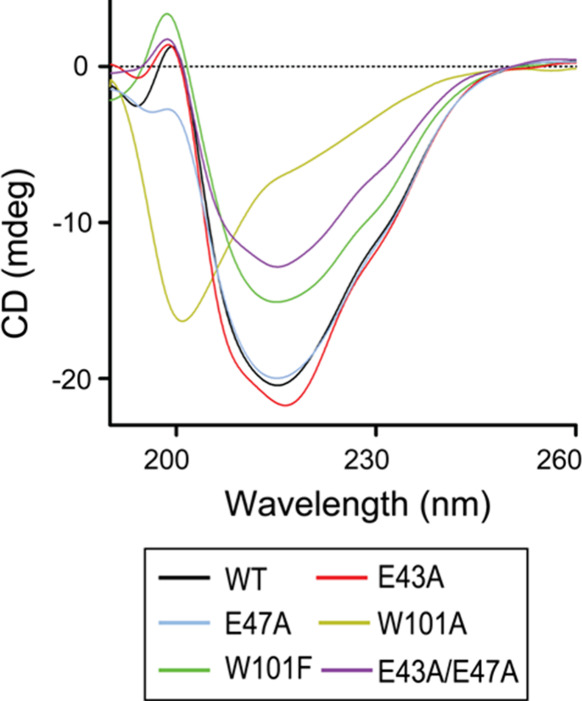 Figure 6
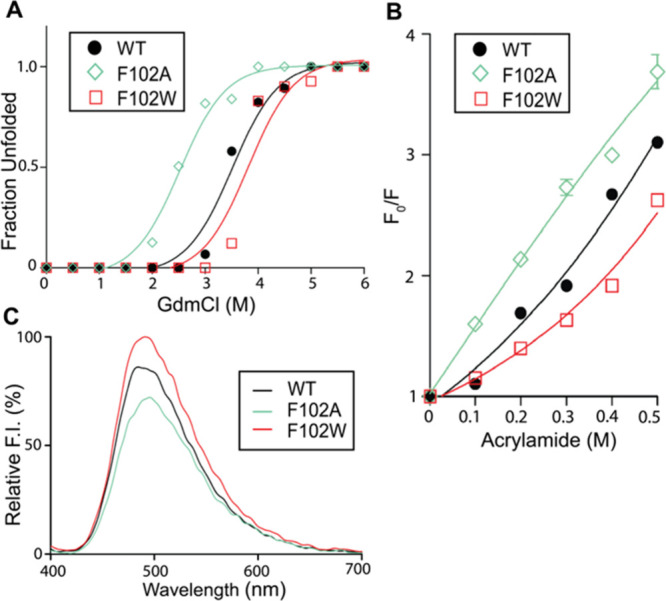 Figure 7
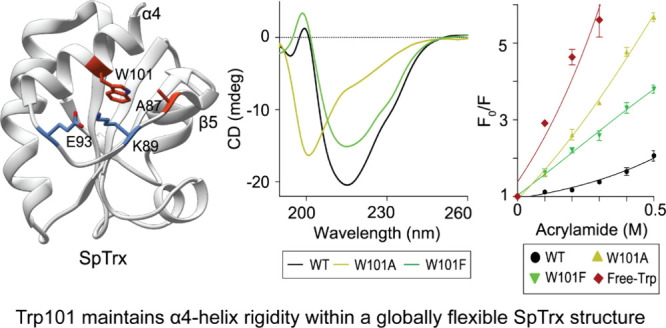 Figure 8
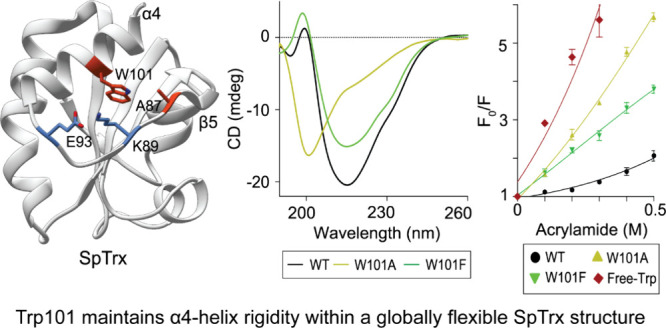 Figure 9
 Figure 10
 Figure 11
Peer Reviews
No public reviews on file for this paper yet. If you reviewed it on a platform where reviews are public (OpenReview, ICLR, NeurIPS, ICML), you can paste yours below so the community can read it here.
Videos
No videos yet. Explain this paper in a talk, walkthrough, or lecture? Add one.
Taxonomy
TopicsRedox biology and oxidative stress · Metalloenzymes and iron-sulfur proteins · Protein Structure and Dynamics