Simulated virtual reality experiences for predicting early treatment response in panic disorder
Byung-Hoon Kim, Jae-Jin Kim, Junhyung Kim, Jiook Cha, Sang-Won Jeon, Kang-Seob Oh, Dong-Won Shin, Sung Joon Cho

TL;DR
A virtual reality tool helps predict early treatment response in panic disorder patients more accurately than traditional methods.
Contribution
A new virtual reality assessment tool combined with machine learning improves prediction of early treatment response in panic disorder.
Findings
A machine-learning model using virtual reality and clinical data predicted treatment response with 85% accuracy.
Anxiety levels during virtual scenarios and heart rate variability were key predictors of treatment outcomes.
Virtual reality-based assessments outperformed traditional clinical methods in predicting early responders.
Abstract
Panic disorder (PD) is a disabling anxiety condition in which early improvement during treatment can predict better long-term outcomes. This study investigated whether a newly developed virtual reality-based assessment tool, the Virtual Reality Assessment of Panic Disorder (VRA-PD), can help predict early treatment response in individuals with PD. In total, 52 participants, including 25 patients diagnosed with PD and 27 healthy individuals, were evaluated every 2 months over a 6-month period. Assessments included self-reported anxiety levels and heart rate variability measured during virtual reality scenarios, as well as standard clinical questionnaires. Patients with PD were further categorized based on their treatment progress into early responders (n = 7) and delayed responders (n = 18). A machine-learning model (CatBoost) was used to classify participants into early responder,…
Genes, proteins, chemicals, diseases, species, mutations and cell lines named across the full text — each resolved to its canonical identifier and authoritative record.
Click any figure to enlarge with its caption.
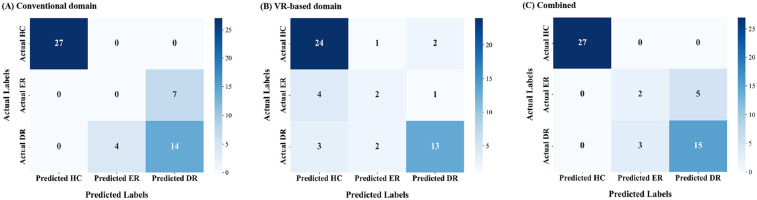 Figure 1
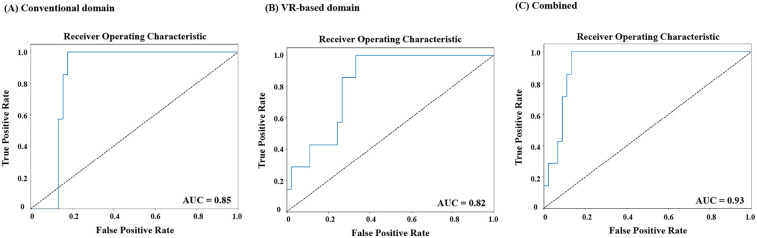 Figure 2
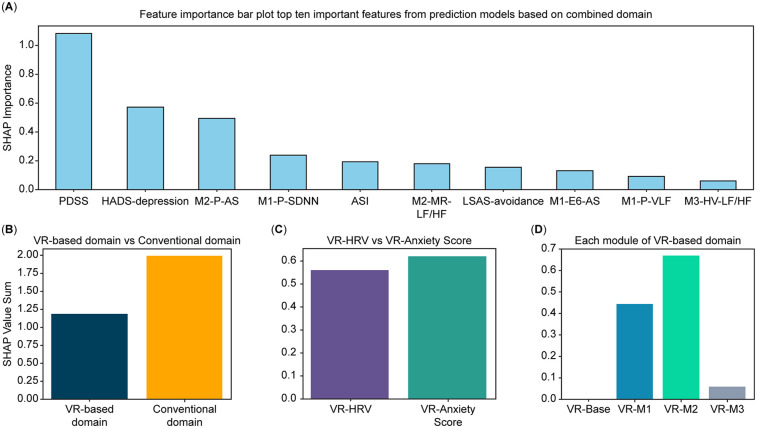 Figure 3
Peer Reviews
No public reviews on file for this paper yet. If you reviewed it on a platform where reviews are public (OpenReview, ICLR, NeurIPS, ICML), you can paste yours below so the community can read it here.
Videos
No videos yet. Explain this paper in a talk, walkthrough, or lecture? Add one.
Taxonomy
TopicsVirtual Reality Applications and Impacts · Digital Mental Health Interventions · Anxiety, Depression, Psychometrics, Treatment, Cognitive Processes