Bract size affects resource availability and fruit set in a hummingbird‐pollinated plant with distyly polymorphism
R. Trevizan, P. E. Oliveira, V. L. G. Brito, L. Oliveira, F. Telles

TL;DR
This study shows that in a plant species pollinated by hummingbirds, larger bracts signal more nectar but have higher mortality, while smaller bracts produce more fruit, suggesting a division of reproductive roles.
Contribution
The study reveals a novel trade-off between bract size, nectar signaling, and reproductive function in a distylous plant species.
Findings
Larger bracts are associated with higher nectar volume and flower count but also increased mortality.
Smaller bracts are linked to higher fruit set, suggesting a female reproductive role.
The S-morph has larger bracts and flowers compared to the L-morph, indicating morph-specific roles.
Abstract
Plants can use non‐floral signals to advertise the presence of resources to pollinators. The distylous Psychotria poeppigiana (Rubiaceae) has reddish bracts with small yellow flowers. Similar to other bracted plants with inconspicuous flowers, such bracts may signal the presence of nectar to pollinators.We investigated whether bracts act as honest signals in P. poeppigiana and how variation in bract traits affects floral reward and fructification. We asked: (1) Is there a relation between attractive traits (i.e. bracts and flowers) and the availability (quantity) and quality of the resource offered? (2) Do bract traits influence fructification rate? We hypothesized that bracts act as an honest signal to pollinators, being positively associated with nectar quantity and quality. If the signal is honest, we also expected that bracts with more resources could potentially attract more visits…
Genes, proteins, chemicals, diseases, species, mutations and cell lines named across the full text — each resolved to its canonical identifier and authoritative record.
Click any figure to enlarge with its caption.
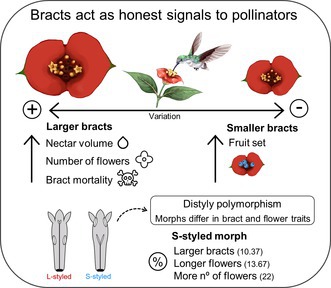 Figure 1
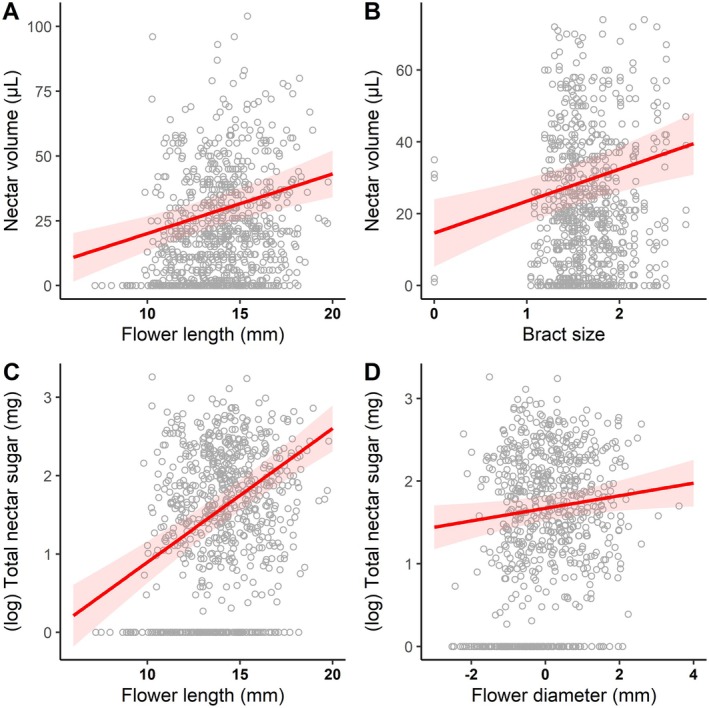 Figure 2
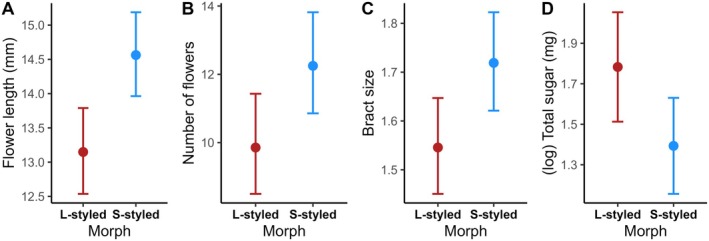 Figure 3
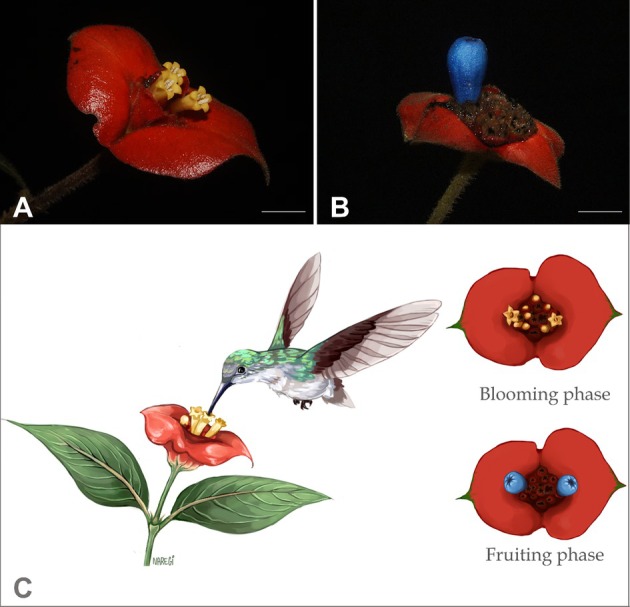 Figure 4
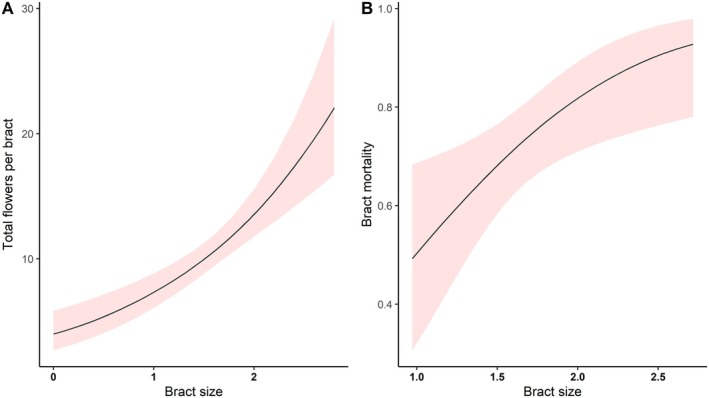 Figure 5
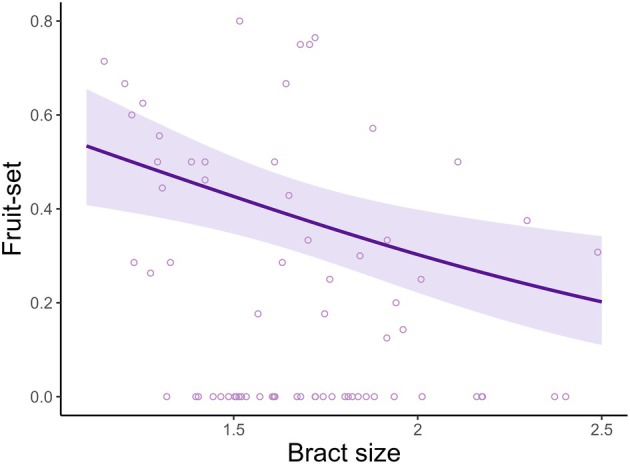 Figure 6
Peer Reviews
No public reviews on file for this paper yet. If you reviewed it on a platform where reviews are public (OpenReview, ICLR, NeurIPS, ICML), you can paste yours below so the community can read it here.
Videos
No videos yet. Explain this paper in a talk, walkthrough, or lecture? Add one.
Taxonomy
TopicsPlant and animal studies · Ecology and Vegetation Dynamics Studies · Plant Parasitism and Resistance