Low-Cost Label-Free Electrochemical Aptasensor for Dual Detection of Dengue and Zika Using Fluorine-Doped Tin Oxide Modified with APTES and Gold Nanoparticles
Bassam Bachour Junior, Marina Ribeiro Batistuti Sawazaki, Ricardo Estéfani França Rocha, Éder José Guidelli, Marcelo Mulato

TL;DR
This paper presents a low-cost electrochemical sensor that can detect both dengue and zika viruses using modified fluorine-doped tin oxide and gold nanoparticles.
Contribution
The novel contribution is a dual-detection electrochemical aptasensor for dengue and zika using cost-effective materials.
Findings
The biosensor detected dengue with a limit of detection of 0.21 ng/mL in PBS and 0.55 ng/mL in human serum.
Zika detection showed a limit of detection of 0.68 ng/mL in PBS, but nonlinear responses in serum.
The sensor can detect both viruses in a single test but cannot distinguish between them.
Abstract
The incidence of arbovirus infections, such as dengue and zika, has increased dramatically in recent decades, especially in tropical regions and in technologically limited places. The goal of this study is to create an affordable platform for both dengue and zika detection. Fluorine-doped tin oxide-coated substrates were modified with APTES and gold nanoparticles. The modified surfaces were functionalized with the DNA aptamer and 6-mercapto-1-hexanol. Electrochemical impedance spectroscopy was used to characterize and optimize aptasensors’ performance using nonstructural protein 1 (NS1) proteins as biomarkers. The biosensor exhibited a limit of detection (LoD) of 0.21 ng/mL for dengue in phosphate-buffered saline (PBS), with a sensitivity of 19.26% per decade. In commercial human serum, the platform showed a signal increase of 2% per decade, a LoD of 0.55 ng/mL, and a sensitivity of…
Genes, proteins, chemicals, diseases, species, mutations and cell lines named across the full text — each resolved to its canonical identifier and authoritative record.
Click any figure to enlarge with its caption.
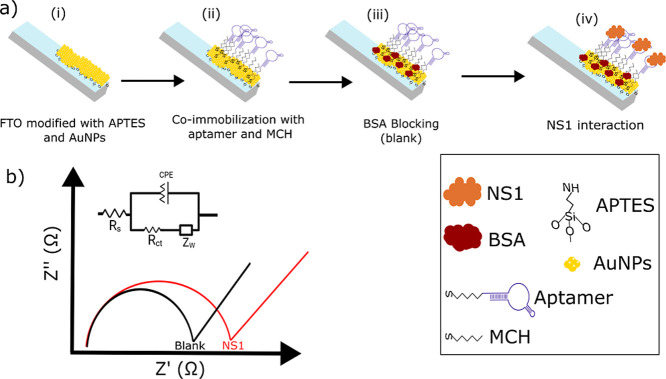 Figure 1
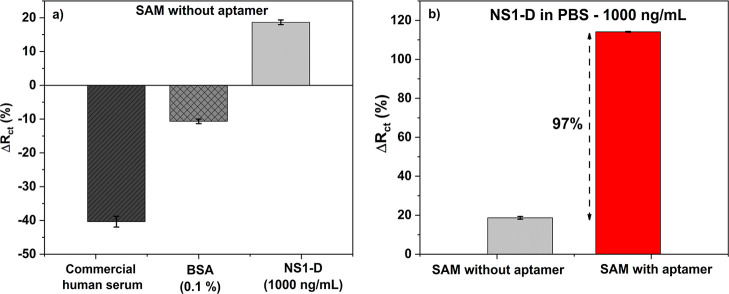 Figure 2
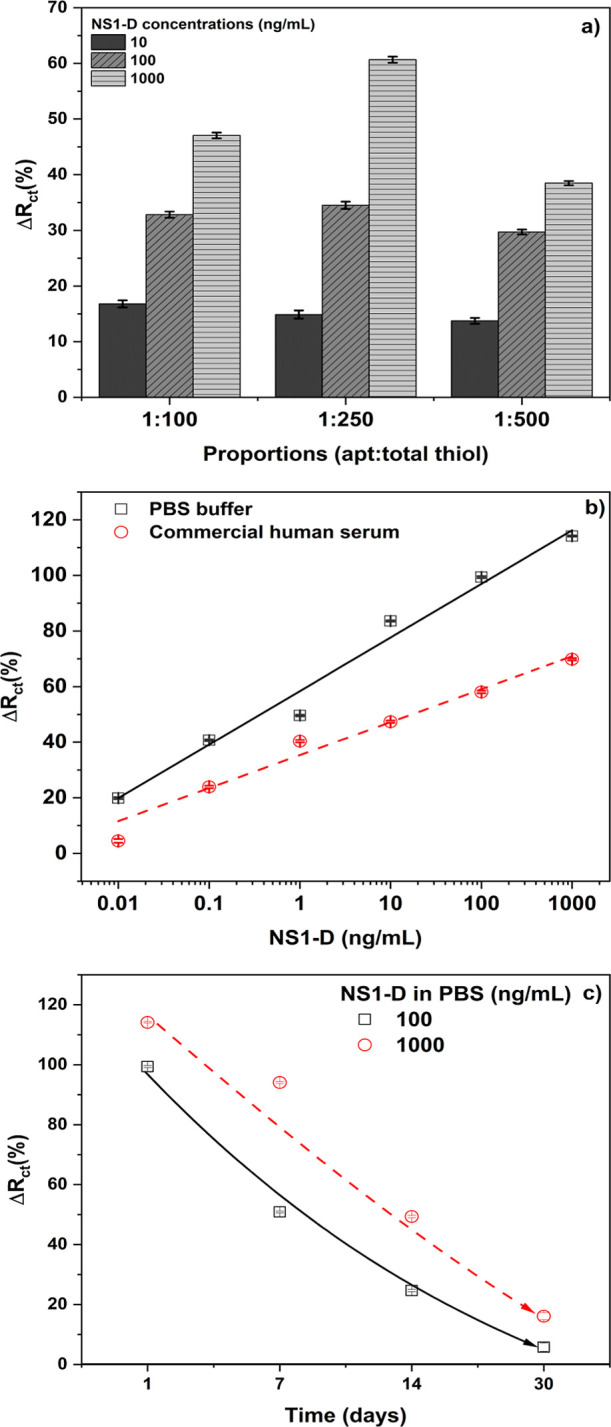 Figure 3
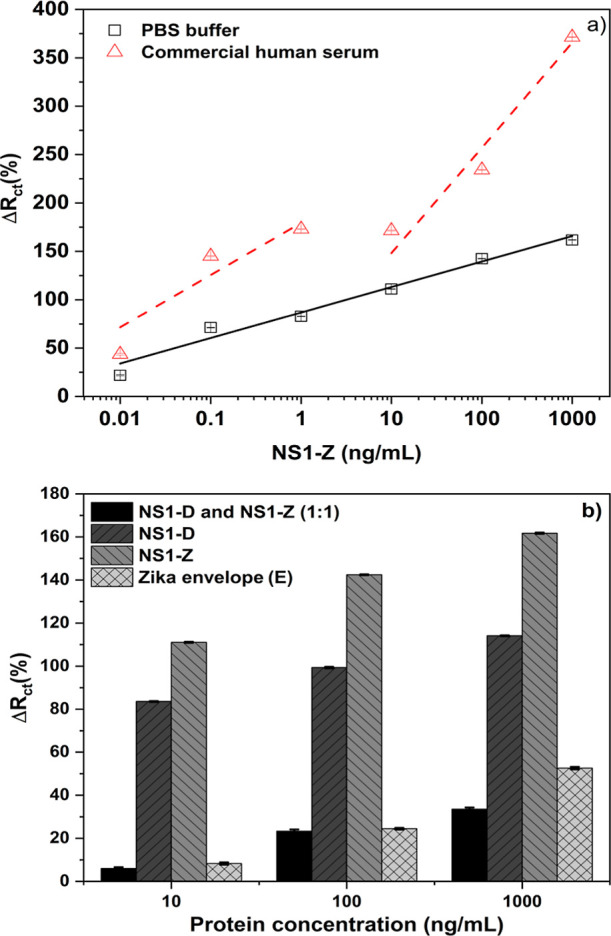 Figure 4
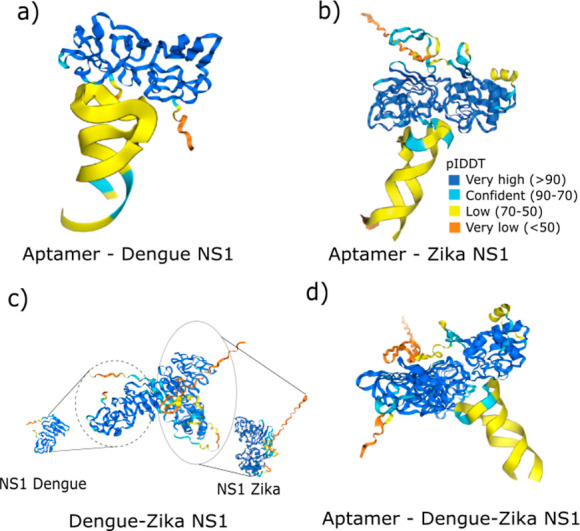 Figure 5
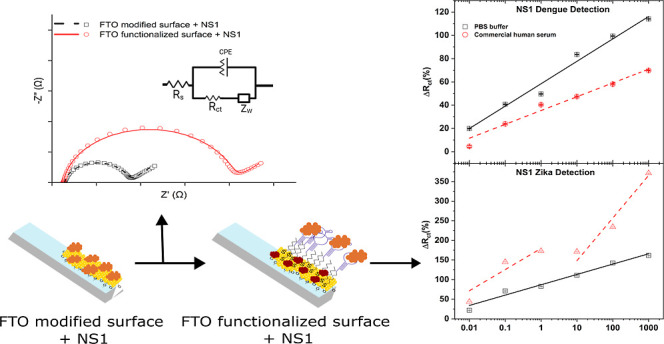 Figure 6
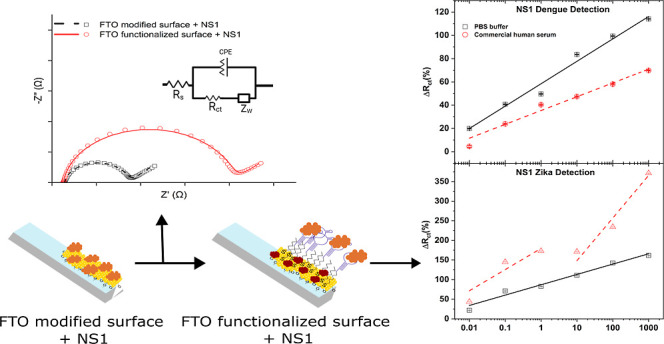 Figure 7
Peer Reviews
No public reviews on file for this paper yet. If you reviewed it on a platform where reviews are public (OpenReview, ICLR, NeurIPS, ICML), you can paste yours below so the community can read it here.
Videos
No videos yet. Explain this paper in a talk, walkthrough, or lecture? Add one.
Taxonomy
TopicsMosquito-borne diseases and control · Biosensors and Analytical Detection · Advanced biosensing and bioanalysis techniques