Clinical spectrum and outcomes of anti-metabotropic glutamate receptor 5 encephalitis in Chinese patients: a case report and literature review
Zhenyu Niu, Siwei Chen, Jianchun Wang, Meng Yu, Jingru Ren, Ran Liu, Jing Guo, Nan Zhang, Feng Gao, Hongjun Hao

TL;DR
This study examines the clinical features and treatment outcomes of anti-mGluR5 encephalitis in Chinese patients, showing varied symptoms and a low tumor association.
Contribution
The study provides the first detailed clinical overview of anti-mGluR5 encephalitis in a Chinese cohort, emphasizing its low paraneoplastic rate and effective immunotherapy.
Findings
Chinese patients with anti-mGluR5 encephalitis show significant clinical heterogeneity and a low tumor association (17%).
Immunotherapy, including steroids and rituximab, leads to favorable outcomes in most patients.
Both serum and cerebrospinal fluid antibody testing are essential for accurate diagnosis.
Abstract
Anti-metabotropic glutamate receptor 5 (mGluR5) encephalitis is a rare autoimmune disorder that targets the metabotropic glutamate receptor. It is frequently linked to limbic encephalitis and paraneoplastic syndromes, such as Ophelia syndrome associated with Hodgkin lymphoma. Due to its rarity, the complete clinical spectrum and regional variations of this condition, particularly among Chinese populations, remain inadequately understood. We present a case of a 39-year-old Chinese male diagnosed with anti-mGluR5 encephalitis. The patient initially presented with persistent fever, which later progressed to seizures, psychosis, apathy, drowsiness, and memory impairment. Brain imaging findings were unremarkable, while electroencephalogram (EEG) revealed predominant beta wave activity. Cerebrospinal fluid (CSF) analysis showed pleocytosis and elevated protein levels. Both serum and CSF…
Genes, proteins, chemicals, diseases, species, mutations and cell lines named across the full text — each resolved to its canonical identifier and authoritative record.
Click any figure to enlarge with its caption.
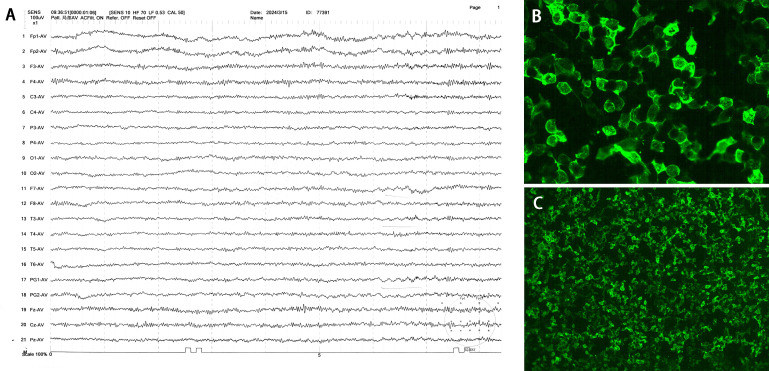 Figure 1
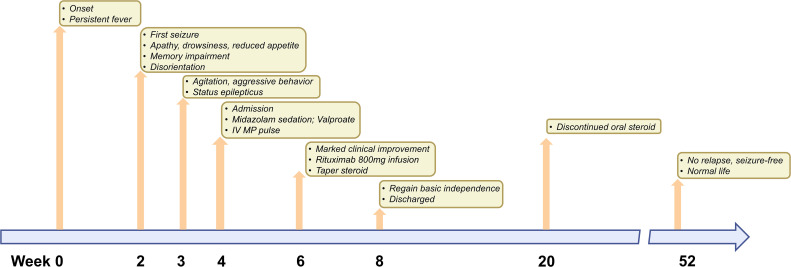 Figure 2
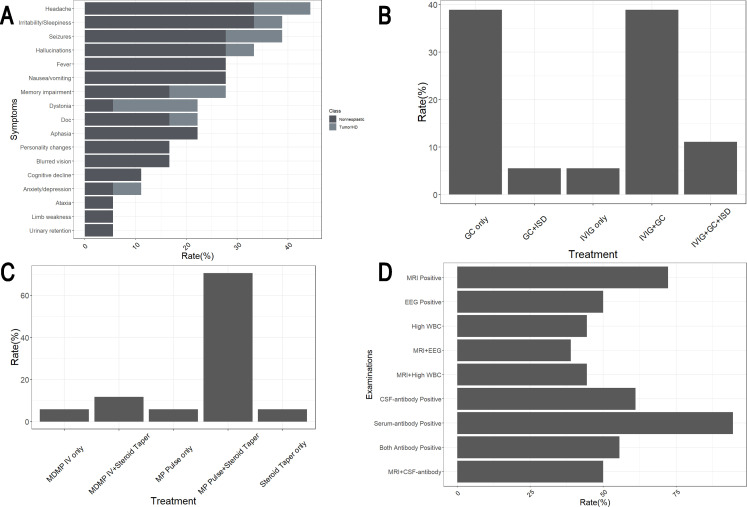 Figure 3
Peer Reviews
No public reviews on file for this paper yet. If you reviewed it on a platform where reviews are public (OpenReview, ICLR, NeurIPS, ICML), you can paste yours below so the community can read it here.
Videos
No videos yet. Explain this paper in a talk, walkthrough, or lecture? Add one.
Taxonomy
TopicsAutoimmune Neurological Disorders and Treatments · Epilepsy research and treatment · Neurological Complications and Syndromes