2‑Thiouracil Antithyroid Drug Delivery with Functionalized BC3 Monolayers: A First-Principles Study
Shengtian Hong, Xuan Luo

TL;DR
This study explores how doped BC3 monolayers can effectively deliver an antithyroid drug to treat Graves' disease.
Contribution
The novel contribution is identifying Si-doped BC3 as a superior drug delivery platform for 2-thiouracil compared to Al-doped and pristine BC3.
Findings
Si-doped BC3 exhibits stronger chemisorption of 2-thiouracil than Al-doped BC3.
The O atom in 2-thiouracil forms stronger bonds with doped BC3 compared to the S atom.
2T-Oh/Si-BC3 configuration has the highest adsorption energy, making it the most promising for drug delivery.
Abstract
2-Thiouracil (C4H4N2OS), an antithyroid drug (ATD) used in the treatment of Graves’ disease and thyroid storm, requires an effective drug delivery vehicle to successfully reach the thyroid gland. Using first-principles calculations, the adsorption of the 2-thiouracil molecule on pristine, Si-doped, and Al-doped BC3 monolayers was studied based on density functional theory (DFT). Our results show that chemisorption of 2-thiouracil is stronger on Si-doped BC3 than on Al-doped BC3, while pristine BC3 shows weak physisorption. On the doped monolayers, the O atom on 2-thiouracil displayed bond formation, hybridization, and stronger adsorption to the dopants compared to the S atom. We concluded that, of the 10 configurations computed, 2T-Oh/Si-BC3 had the largest adsorption energy, making it the most promising configuration for future antithyroid drug delivery research. Our findings highlight…
Genes, proteins, chemicals, diseases, species, mutations and cell lines named across the full text — each resolved to its canonical identifier and authoritative record.
Click any figure to enlarge with its caption.
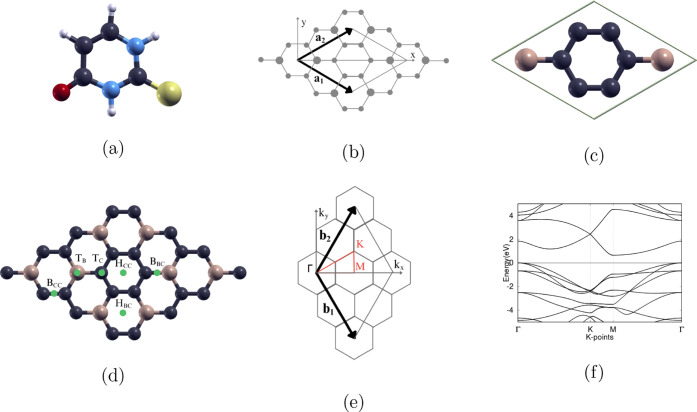 Figure 1
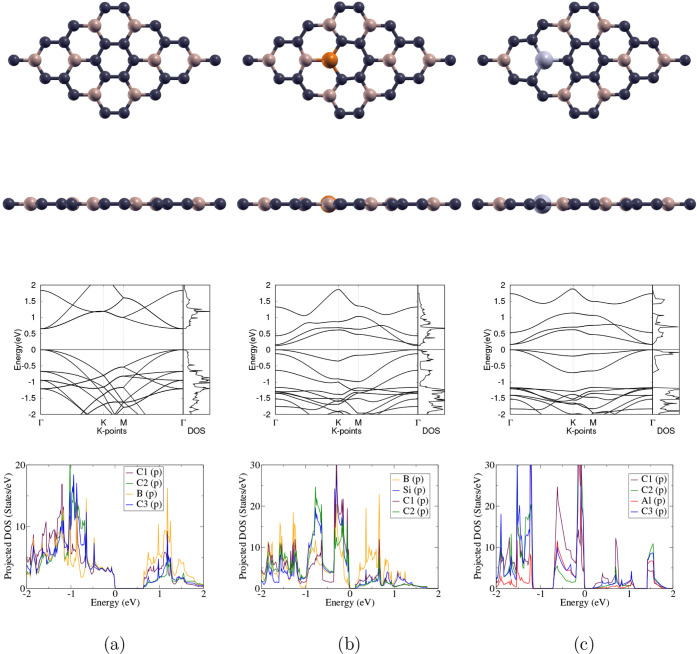 Figure 2
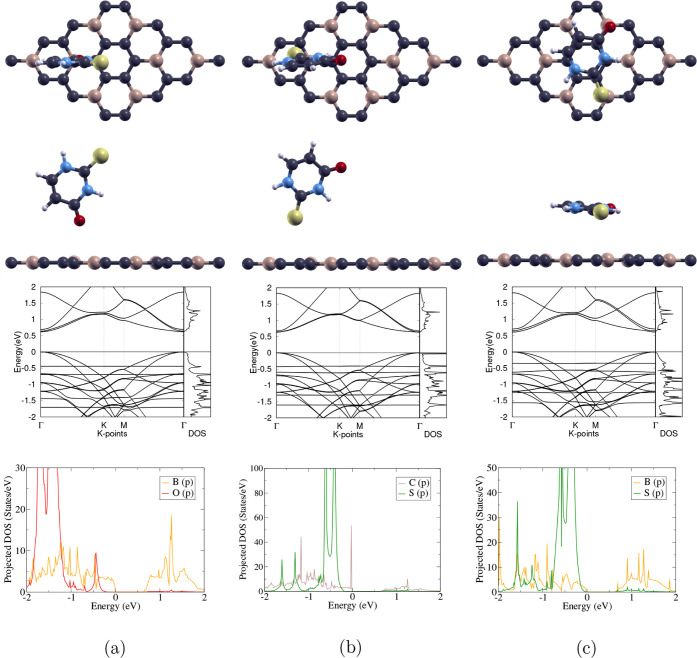 Figure 3
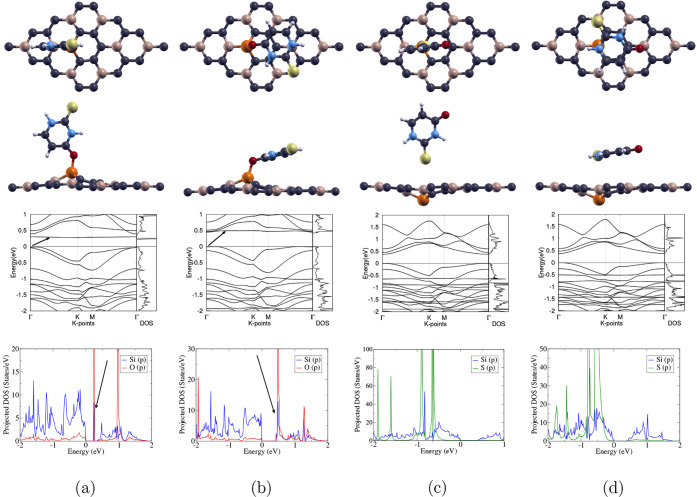 Figure 4
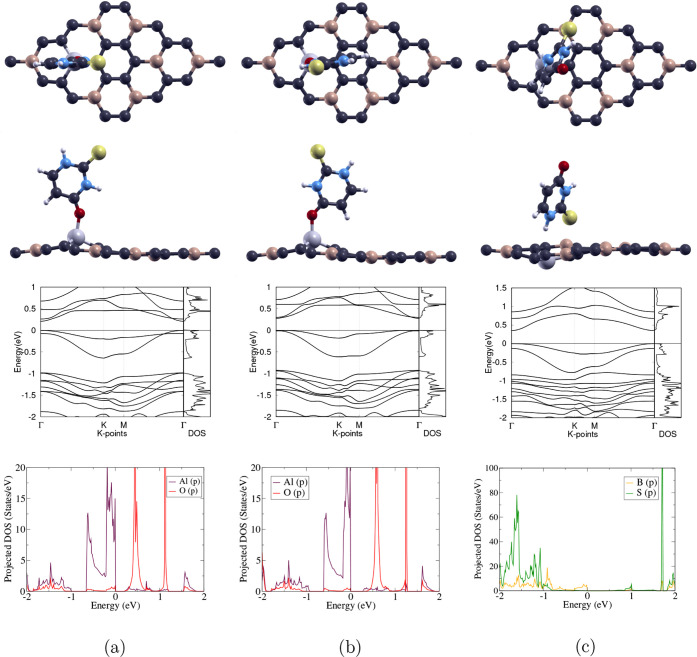 Figure 5
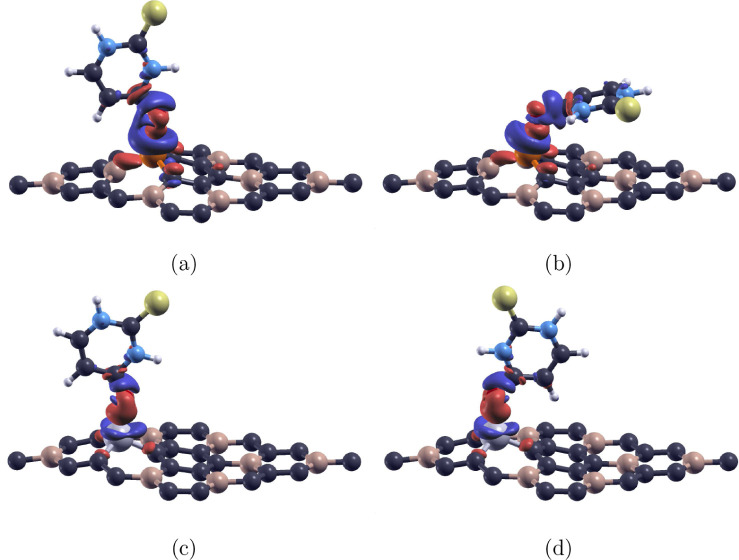 Figure 6
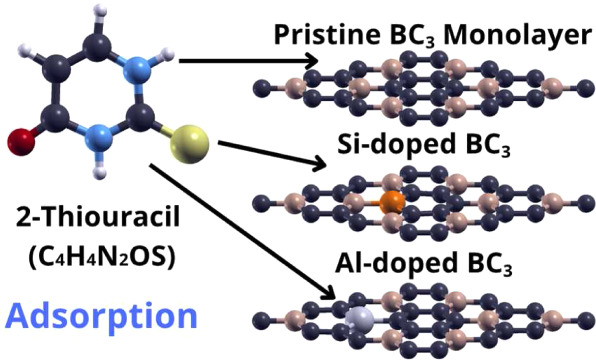 Figure 7
 Figure 8
 Figure 9
 Figure 10
 Figure 11
Peer Reviews
No public reviews on file for this paper yet. If you reviewed it on a platform where reviews are public (OpenReview, ICLR, NeurIPS, ICML), you can paste yours below so the community can read it here.
Videos
No videos yet. Explain this paper in a talk, walkthrough, or lecture? Add one.
Taxonomy
TopicsMolecular Junctions and Nanostructures · Porphyrin and Phthalocyanine Chemistry · Lipid Membrane Structure and Behavior