Evaluation of forces on muscles and intervertebral joints during active kyphosis-deepening exercises in the dynamic individual stimulation and control for spine device (DISC4SPINE, D4S): a modeling approach—proof of concept study
Tomasz Szurmik, Karol Bibrowicz, Katarzyna Nowakowska-Lipiec, Hanna Zadoń, Robert Michnik, Andrzej Waldemar Mitas

TL;DR
This study uses a modeling approach to evaluate muscle and joint forces during spine exercises for scoliosis treatment.
Contribution
A novel biomechanical modeling approach to assess forces during active kyphosis exercises in a scoliosis therapy method.
Findings
Active kyphosis increases forces on limbs and intervertebral joints compared to resting position.
Back extensor muscles show increased activity during kyphotic movements.
Supported kneeling position reduces spinal axis forces, aiding correction.
Abstract
In the conservative treatment of scoliosis, it is important to monitor the response of the muscles and the forces acting on the intervertebral joints during the recommended therapy. This study aimed to evaluate the forces exerted by the limbs and intervertebral joints, as well as the forces of selected muscles on both sides of the back, during active spinal kyphosis exercises in the supported kneeling position used in the PRESSIO method. An experimental biomechanical investigation was conducted using a prototype of the DISC4SPINE system. One healthy subject was examined. During the exercise, contact forces acting on the surfaces of the hands and knees, as well as forces generated by the system's resistance elements acting on the subject's body, were recorded. The kinematic parameters of the movement were documented using a video camera. The collected measurement data was used to inform…
Genes, proteins, chemicals, diseases, species, mutations and cell lines named across the full text — each resolved to its canonical identifier and authoritative record.
Click any figure to enlarge with its caption.
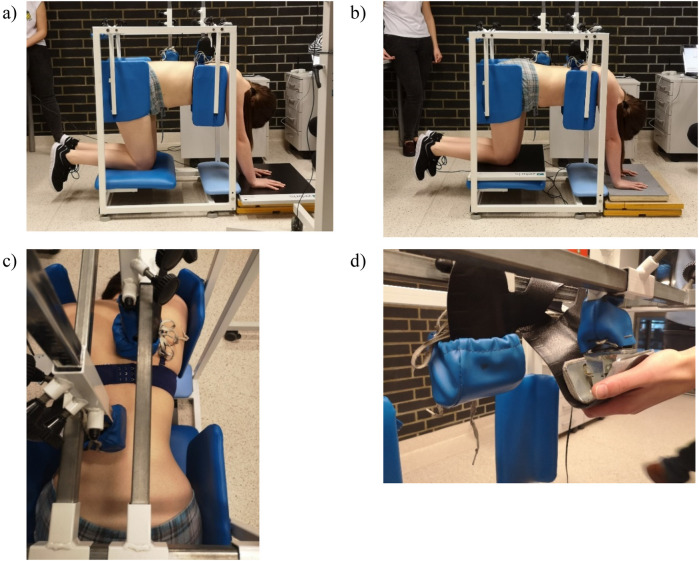 Figure 1
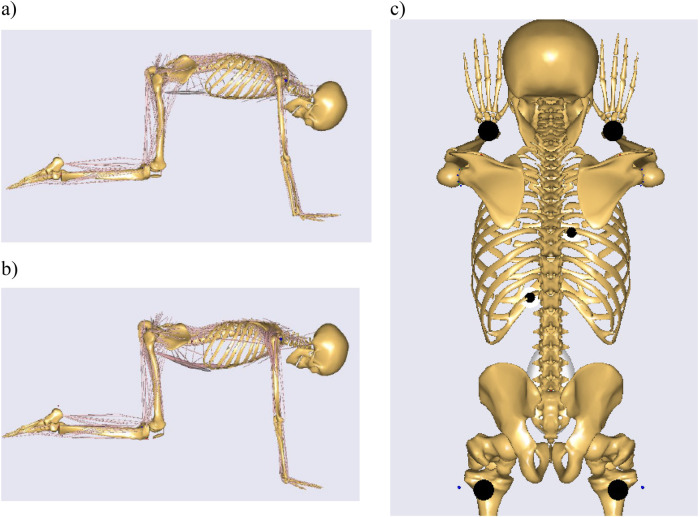 Figure 2
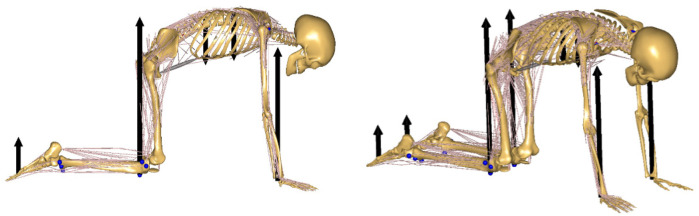 Figure 3
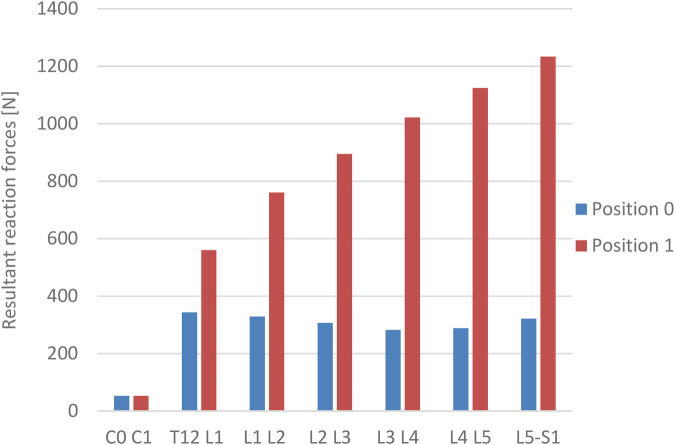 Figure 4
Peer Reviews
No public reviews on file for this paper yet. If you reviewed it on a platform where reviews are public (OpenReview, ICLR, NeurIPS, ICML), you can paste yours below so the community can read it here.
Videos
No videos yet. Explain this paper in a talk, walkthrough, or lecture? Add one.
Taxonomy
TopicsMusculoskeletal pain and rehabilitation · Muscle activation and electromyography studies · Prosthetics and Rehabilitation Robotics