Case Report: D-bifunctional protein deficiency caused by novel compound heterozygote HSD17B4 variants in a neonate in China
Hui Liu, Gaojie Liu, Lianjun Gao, Hui Wang, Yizhong Wang, Hongfang Ding

TL;DR
A Chinese neonate was diagnosed with a rare genetic disorder caused by new mutations in the HSD17B4 gene, leading to severe neurological and developmental issues.
Contribution
The study reports novel compound heterozygous HSD17B4 mutations in a Chinese neonate with D-bifunctional protein deficiency.
Findings
The patient had novel compound heterozygous HSD17B4 mutations (c.1145G>A and c.1193C>G) not previously reported.
Elevated levels of very-long-chain fatty acids (VLCFAs) confirmed the diagnosis of D-bifunctional protein deficiency.
The neonate exhibited severe developmental delays and neurological impairments at 7 months of age.
Abstract
D-bifunctional protein deficiency (D-BPD) is a rare fatal autosomal recessive peroxisomal disorder caused by biallelic pathogenic mutations in the hydroxysteroid 17-beta dehydrogenase 4 (HSD17B4) gene; it is characterized by hypotonia, seizures, and facial dysmorphisms during the neonatal period. In this report, we describe a female neonate from China who was diagnosed with D-BPD. The patient presented with neonatal asphyxia, hypotonia, weak reflexes, and feeding difficulty after birth. Seizures occurred on the fifth day of life and were initially treated with phenobarbital. However, the seizures reoccurred and became more difficult to control because of their increased frequency, duration, and anticonvulsive drug resistance. Whole-genome sequencing (WGS) revealed novel compound heterozygous mutations c.1145G>A(p.Gly382Asp)/c.1193C>G(p.Ser398*) in exon 13 of the HSD17B4 gene, which was…
Genes, proteins, chemicals, diseases, species, mutations and cell lines named across the full text — each resolved to its canonical identifier and authoritative record.
Click any figure to enlarge with its caption.
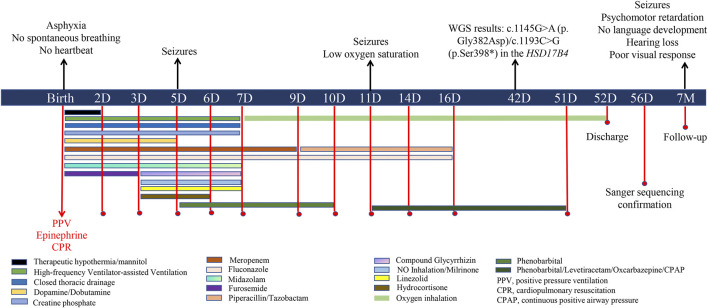 Figure 1
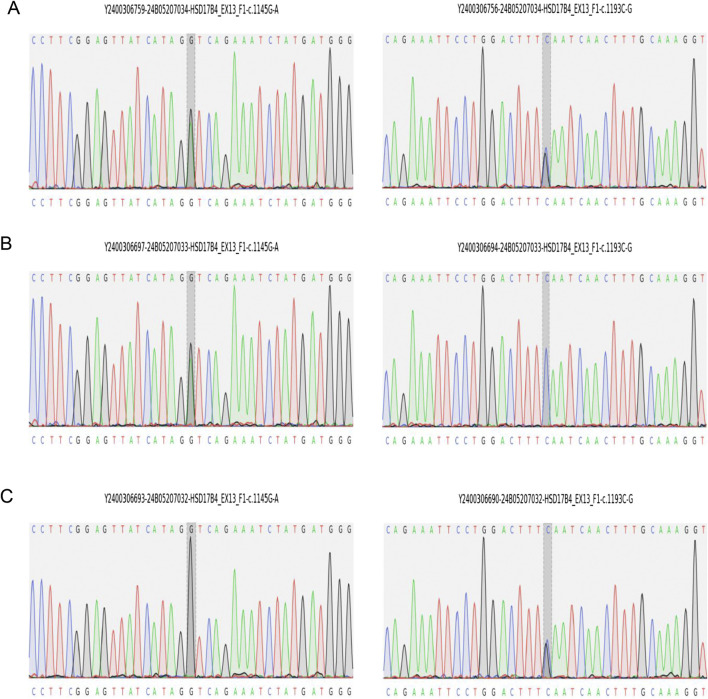 Figure 2
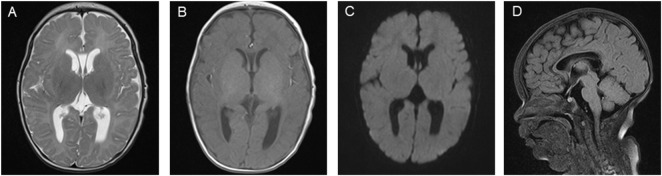 Figure 3
Peer Reviews
No public reviews on file for this paper yet. If you reviewed it on a platform where reviews are public (OpenReview, ICLR, NeurIPS, ICML), you can paste yours below so the community can read it here.
Videos
No videos yet. Explain this paper in a talk, walkthrough, or lecture? Add one.
Taxonomy
TopicsBlood groups and transfusion · Adrenal Hormones and Disorders · Diabetes and associated disorders