Associations between structural injury and task-based corticomuscular connectivity after stroke
Rachana Gangwani, Jasper I. Mark, Benjamin Y. Huang, Jessica M. Cassidy

TL;DR
This study explores how brain and muscle communication during a task is affected by stroke-related brain damage, revealing insights into recovery mechanisms.
Contribution
The study introduces task-based corticomuscular coherence as a novel method to examine structure-function relationships in stroke.
Findings
Greater corticospinal tract injury correlates with higher coherence in high beta frequency between the supplementary motor area and affected muscles.
Higher corticospinal tract integrity is linked to increased coherence in low beta frequency between the primary motor cortex and affected biceps.
Structure-function associations are subgroup-specific, highlighting the complexity of post-stroke neuroplasticity.
Abstract
Stroke-related damage to structural pathways and functional connections disrupts neural network communication, contributing to behavioral deficits. A critical next step is to determine whether observed relationships between connectivity and behavior align with established neurobiological frameworks. This involves investigating structural-functional relationships as structural connectivity provides the scaffold for functional communication. Prior work primarily explored structural-functional relationships at rest, particularly between structural measures and cortico-cortical functional connectivity. However, because stroke impacts both cortical and muscular systems, incorporating task-based functional connectivity measurements that reflect synchronous activity between cortex and muscle may offer additional insight. Therefore, in this study, we examined relationships between structural…
Genes, proteins, chemicals, diseases, species, mutations and cell lines named across the full text — each resolved to its canonical identifier and authoritative record.
Click any figure to enlarge with its caption.
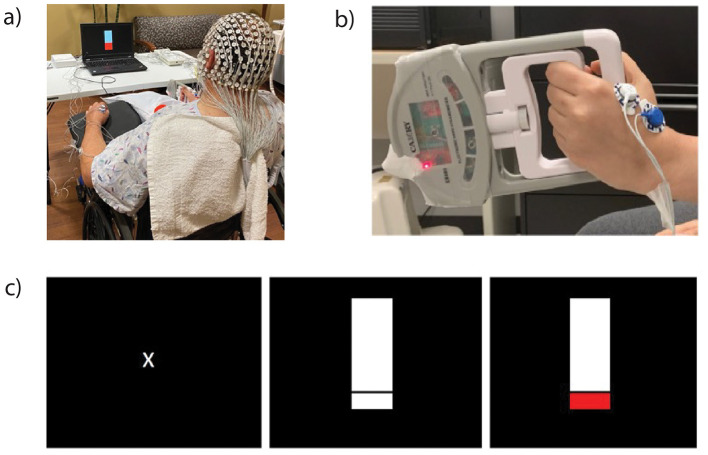 Figure 1
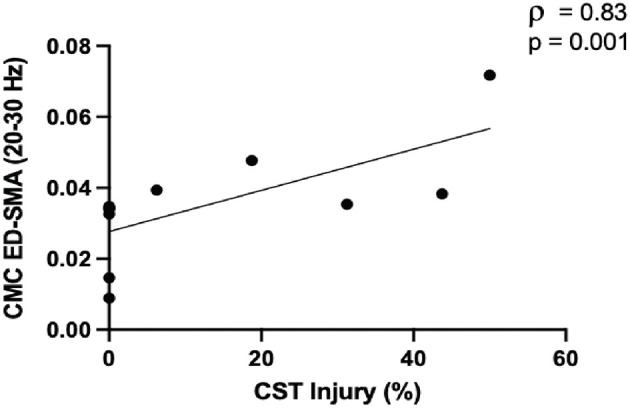 Figure 2
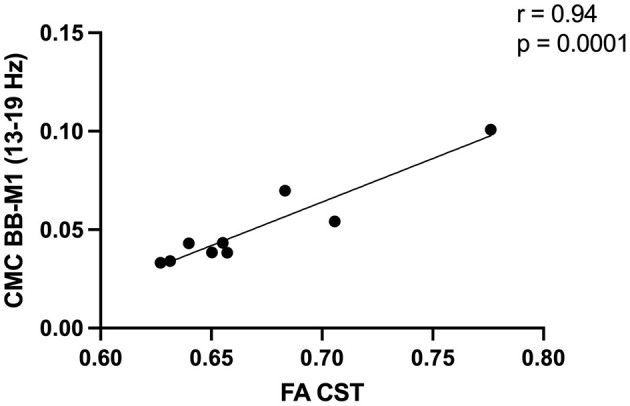 Figure 3
Peer Reviews
No public reviews on file for this paper yet. If you reviewed it on a platform where reviews are public (OpenReview, ICLR, NeurIPS, ICML), you can paste yours below so the community can read it here.
Videos
No videos yet. Explain this paper in a talk, walkthrough, or lecture? Add one.
Taxonomy
TopicsTranscranial Magnetic Stimulation Studies · Functional Brain Connectivity Studies · Muscle activation and electromyography studies