Study of Lavandula dentata, Salvia rosmarinus, and Cymbopogon citratus essential oils profile and antifungal activity of their mixture against the gray mold Botrytis cinerea
Salahddine Chafiki, Abdallah Oukarroum, Redouan Qessaoui, Soumaya El Assri, Mohamed Alouani, Hasnaa Lahchimi, Hicham El Arroussi, Rachid Bouharroud

TL;DR
This study examines essential oils from three plants and their effectiveness in fighting a fungal disease in tomatoes.
Contribution
The study identifies a 1:1:1 essential oil mixture as a potent natural antifungal against Botrytis cinerea.
Findings
The essential oils inhibited Botrytis cinerea mycelial growth in a dose-dependent manner.
A 1:1:1 mixture of the oils showed the highest antifungal activity with IC50 of 0.46 µL/mL.
The mixture reduced cherry tomato decay by 88.37% in in vivo tests.
Abstract
In this study, we investigated the chemical profile essential oils (EOs) extracted from Cymbopogon citratus, Salvia rosmarinus, and Lavandula dentata, as well as their antifungal activity against Botrytis cinerea in vitro and in vivo. GC–MS analysis showed that the EOs major components of C. citratus EOs were, Geranial (42.91%), Neral (34.11%), and β-Pinene (9.32%). While the S. rosmarinus major EOs components were Camphor (17.60%), α-Pinene (14.39%), and 1,8-cineol (14.13%). Contrariwise L. dentata EOs, Camphor (33.95%), 1,8-cineol (32.35%), and β-Pinene (5.23%) were the predominant compounds. Regarding the in vitro antifungal activity, the EOs of three plants inhibited the mycelial growth of B. cinerea in a dose-dependent manner. Moreover, at the concentration of 0.32 µL/mL air, all EOs demonstrated the inhibition of the mycelia growth of B. cinerea. In addition, the combination of…
Genes, proteins, chemicals, diseases, species, mutations and cell lines named across the full text — each resolved to its canonical identifier and authoritative record.
Click any figure to enlarge with its caption.
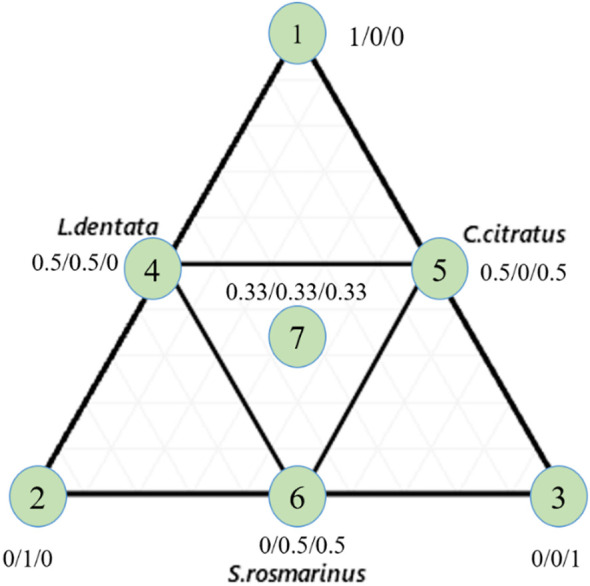 Figure 1
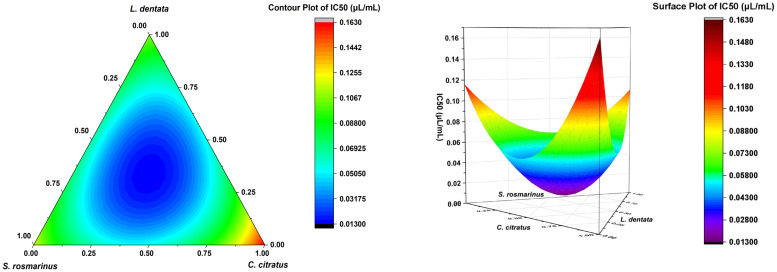 Figure 2
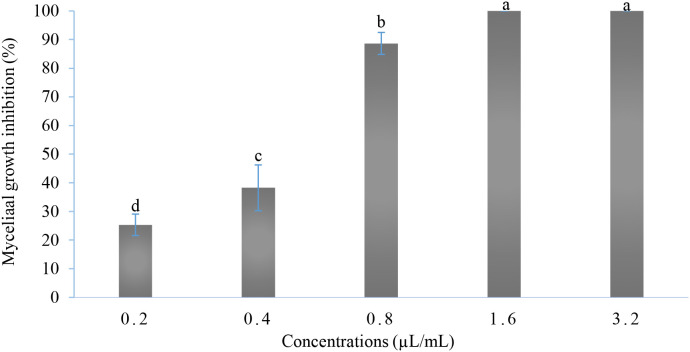 Figure 3
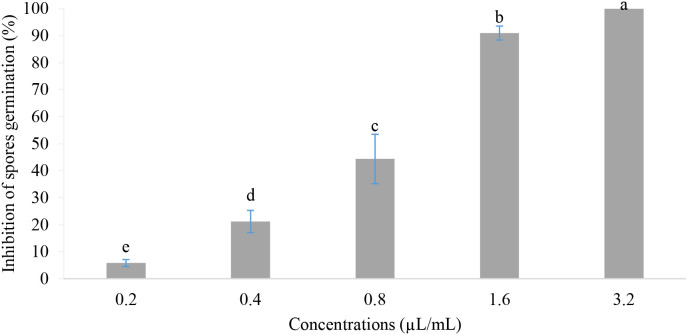 Figure 4
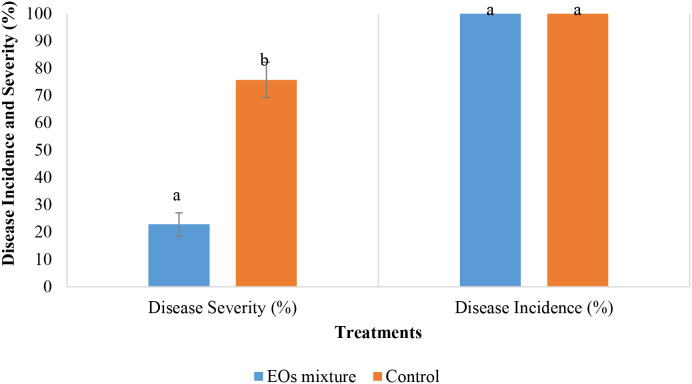 Figure 5
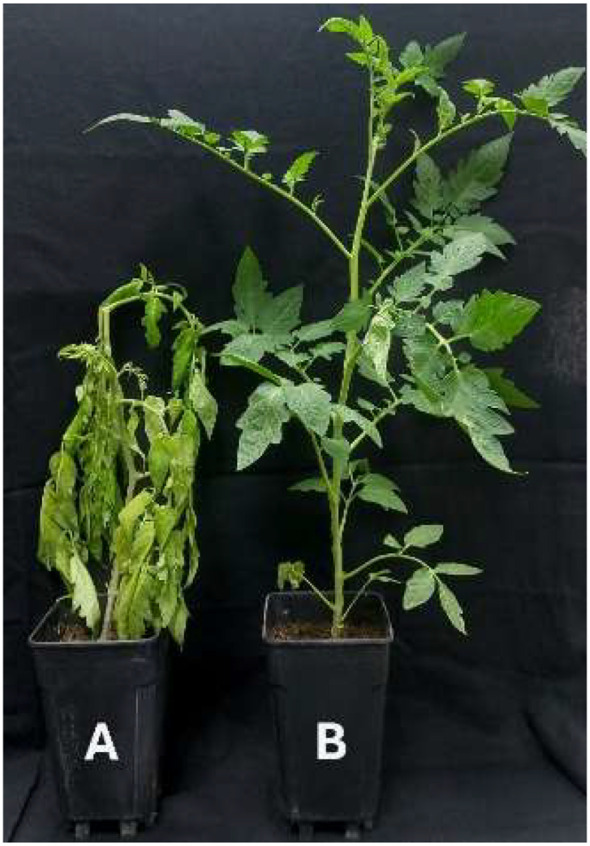 Figure 6
Peer Reviews
No public reviews on file for this paper yet. If you reviewed it on a platform where reviews are public (OpenReview, ICLR, NeurIPS, ICML), you can paste yours below so the community can read it here.
Videos
No videos yet. Explain this paper in a talk, walkthrough, or lecture? Add one.
Taxonomy
TopicsEssential Oils and Antimicrobial Activity · Nanocomposite Films for Food Packaging · Plant-Microbe Interactions and Immunity