Prakriti (constitutional typology) in Ayurveda: a critical review of Prakriti assessment tools and their scientific validity
Archana Venkatesh, Lina Johansson, Prabu Vignesh Sivanandan, Shiva Pratap Gopakumar, Karthik Sankaranarayanan, Christian S. Kessler, Shraddha Ravani, Rammanohar Puthiyedath

TL;DR
This paper reviews the development and scientific validity of tools used to assess Prakriti, a constitutional typology in Ayurveda, highlighting the need for more rigorous and validated methods.
Contribution
The paper provides a critical evaluation of Prakriti assessment tools using a standardized framework, identifying gaps in validation and suggesting areas for improvement.
Findings
Only two Prakriti assessment tools met most of the recommended validation criteria.
Most tools lack reliability testing and were not validated across diverse populations.
32 categories of measurable correlates to Prakriti have been studied, but only five used validated tools.
Abstract
Prakriti or constitutional typology is the foundation of personalized health care in Ayurveda. Traditionally, Ayurvedic clinicians have assessed Prakriti in a primarily experience-based and often subjective manner. However, in the past few decades attempts to develop objective tools have been made by researchers from multidisciplinary domains. This review aimed to identify existing Ayurvedic Prakriti assessment tools and evaluate their scientific rigor. Aligned with the SANRA framework, our narrative review incorporated systematic elements. A Boolean search in PubMed, Scopus, and Cochrane in November 2024 using (“Prakriti”) AND (“Ayurveda” OR “Ayurvedic”) yielded 635 articles, together with 12 additional articles from citations search. Ninety four studies met the inclusion criteria. Prakriti assessment tools were quantified and evaluated using Scale Development and Validation Framework…
Genes, proteins, chemicals, diseases, species, mutations and cell lines named across the full text — each resolved to its canonical identifier and authoritative record.
Click any figure to enlarge with its caption.
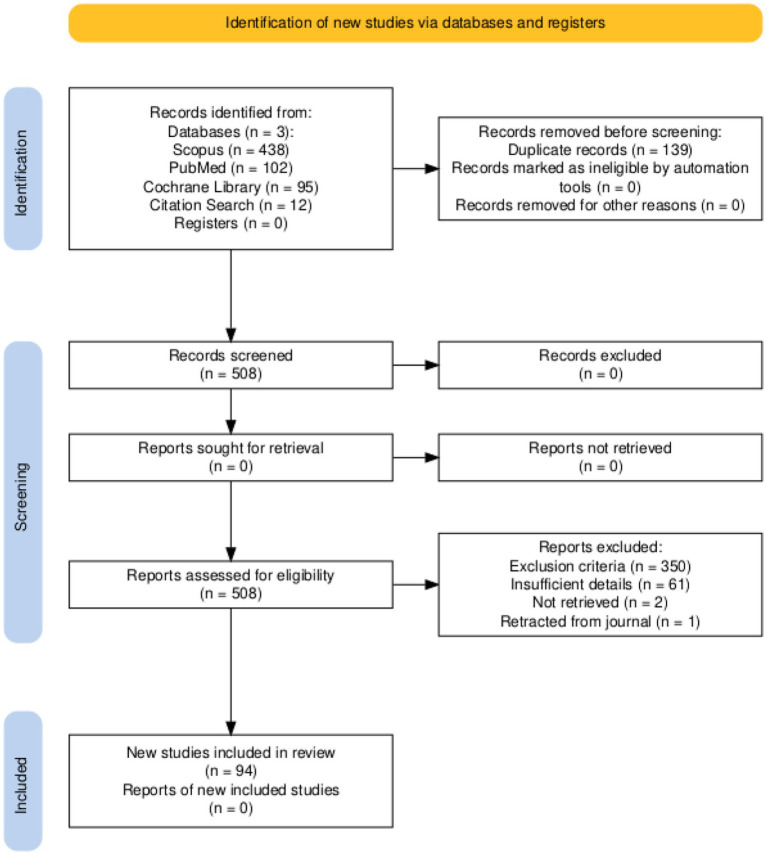 Figure 1
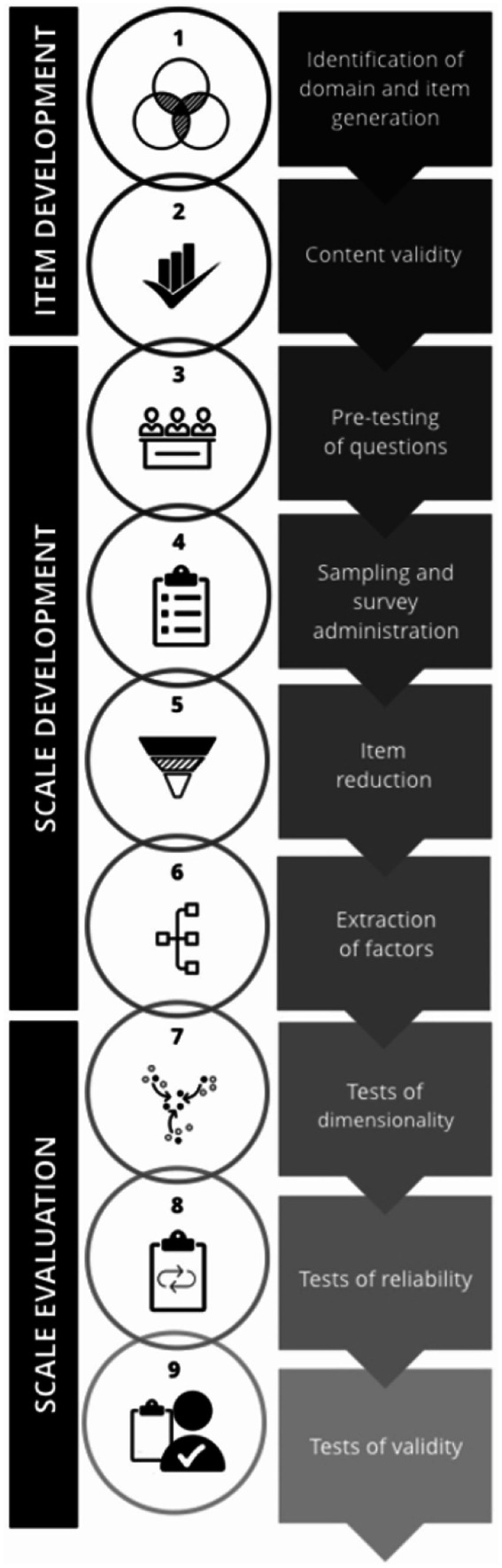 Figure 2
 Figure 3
 Figure 4
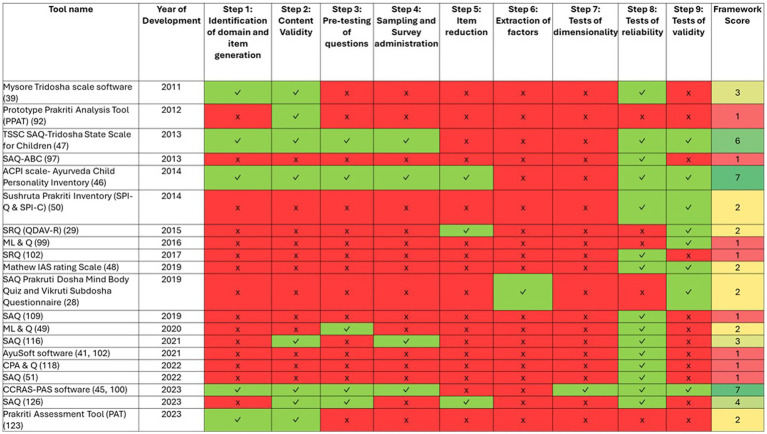 Figure 5
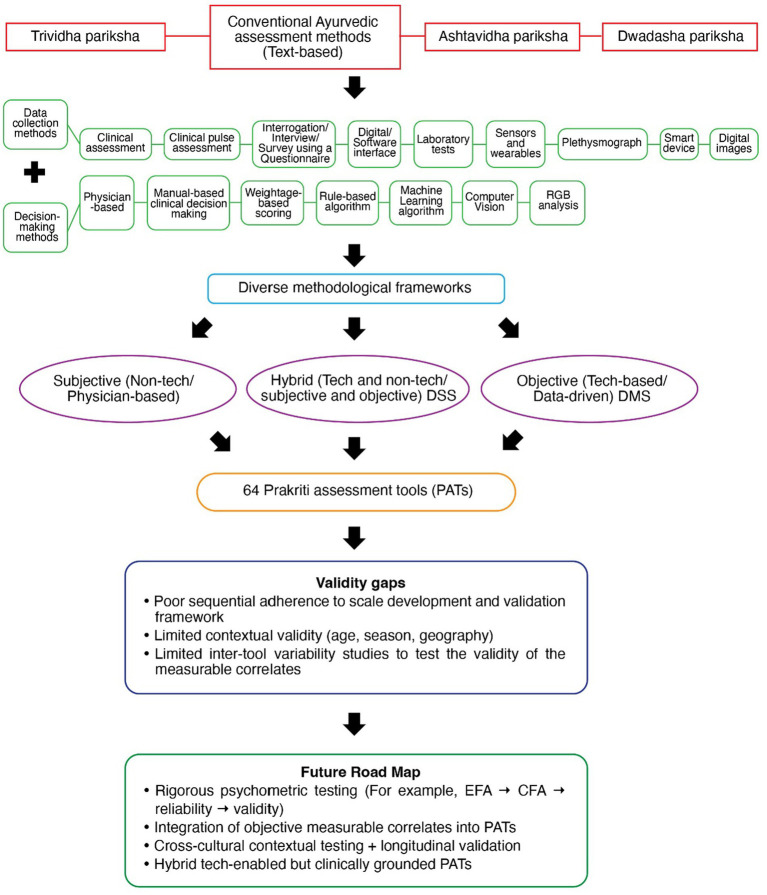 Figure 6
Peer Reviews
No public reviews on file for this paper yet. If you reviewed it on a platform where reviews are public (OpenReview, ICLR, NeurIPS, ICML), you can paste yours below so the community can read it here.
Videos
No videos yet. Explain this paper in a talk, walkthrough, or lecture? Add one.
Taxonomy
TopicsTraditional Chinese Medicine Studies · Phytochemicals and Medicinal Plants · Pharmacology and Nanomedicine Research