Saccharification and Ethanol Production of Corn Wastes Using a Locally Produced Trichoderma atroviride Enzymatic Cocktail
Mariana Fornazier Borges, Geraldo Aparecido da Rocha Junior, Daniel Pasquini, Milla Alves Baffi

TL;DR
This study shows that a homemade enzyme mix from Trichoderma atroviride can efficiently convert corn waste into ethanol, offering a low-cost solution for biofuel production.
Contribution
The study introduces a low-cost, locally produced Trichoderma atroviride enzyme cocktail for efficient cellulosic ethanol production from corn waste.
Findings
The homemade enzyme cocktail achieved high β-glucosidase and xylanase activity suitable for lignocellulose conversion.
Adding 1% Tween 20 increased total reducing sugars by 91.4% in pretreated corn cob hydrolysate.
Alcoholic fermentation of the hydrolysate achieved a theoretical conversion yield of 83.48%.
Abstract
This study investigated the efficiency of a homemade enzymatic cocktail from Trichoderma atroviride (HTM strain) in the saccharification of corn straw (CS) and corn cob (CC), aiming at cellulosic ethanol production. The blend of cellulases and hemicellulases, obtained through solid-state fermentation, exhibited high levels of β-glucosidase (374.91 U/g) and xylanase (920 U/g). The β-glucosidase from this cocktail presented optimal activity and stability at pH and temperature ranges suitable for lignocellulose bioconversions (4.5–5.0 and 50 °C) and was employed in the saccharification of alkali-pretreated CC and CS (PTCC and PTCS, respectively). The fed-batch hydrolysis, performed with 30 CBU/g (cellobiase unit) cellulose and 35% solid (w/v), released the highest concentration of total reducing sugars (TRS) in PTCC (15.86 g/L). When 1% Tween 20 was added to the reaction mixture, a total…
Genes, proteins, chemicals, diseases, species, mutations and cell lines named across the full text — each resolved to its canonical identifier and authoritative record.
Click any figure to enlarge with its caption.
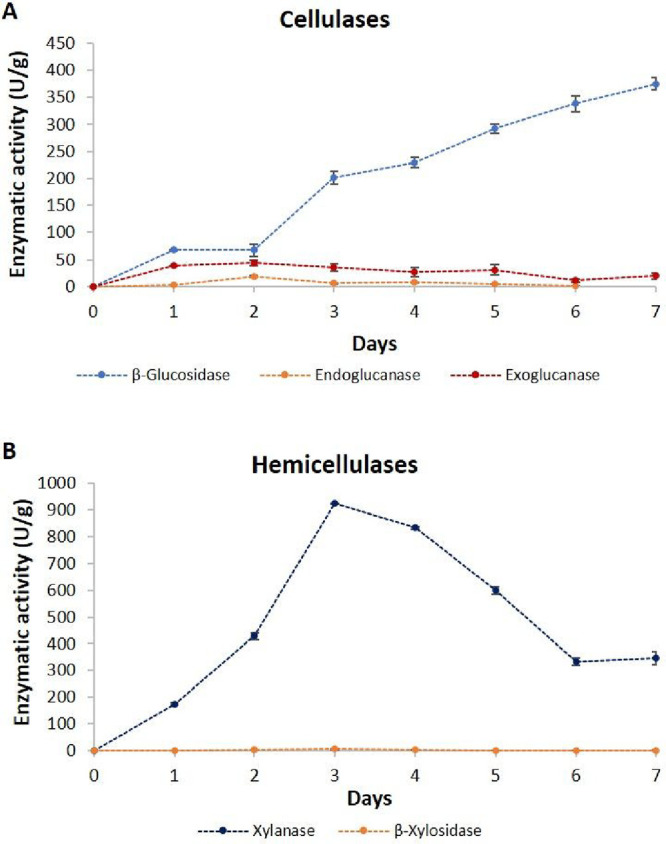 Figure 1
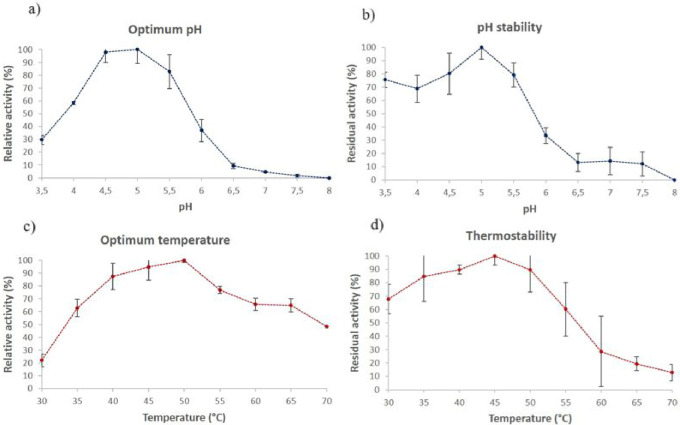 Figure 2
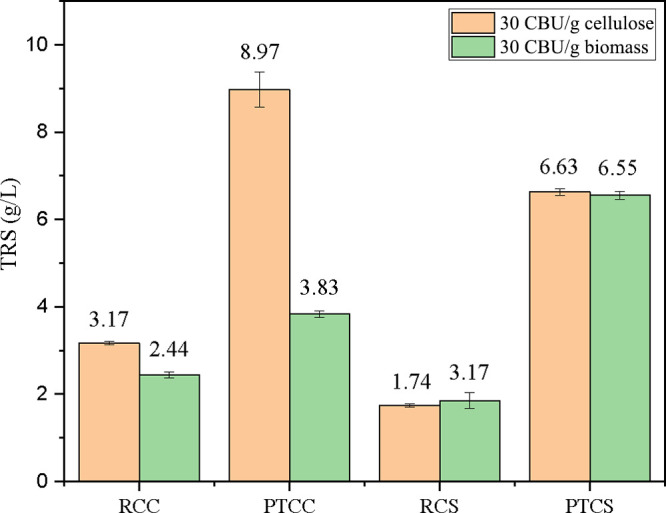 Figure 3
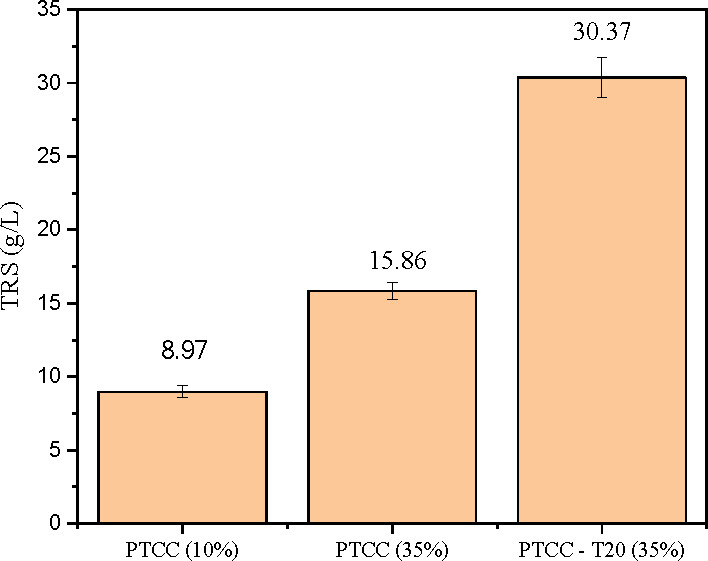 Figure 4
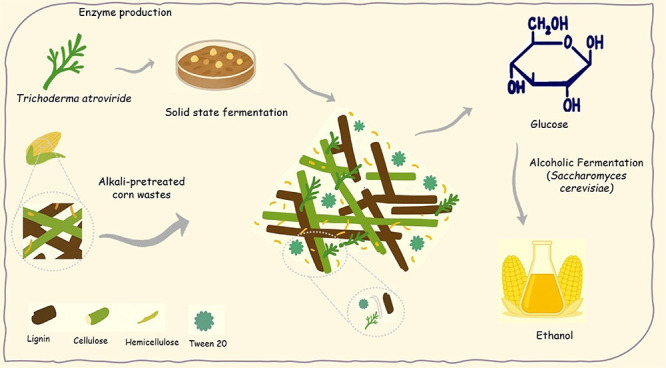 Figure 5
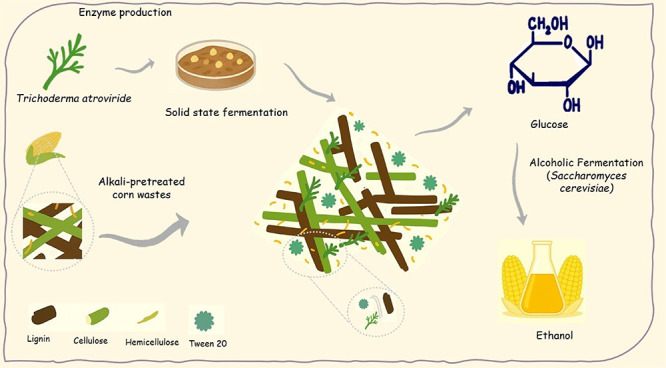 Figure 6
 Figure 7
 Figure 8
 Figure 9
 Figure 10
Peer Reviews
No public reviews on file for this paper yet. If you reviewed it on a platform where reviews are public (OpenReview, ICLR, NeurIPS, ICML), you can paste yours below so the community can read it here.
Videos
No videos yet. Explain this paper in a talk, walkthrough, or lecture? Add one.
Taxonomy
TopicsBiofuel production and bioconversion · Enzyme Catalysis and Immobilization · Enzyme Production and Characterization