Prophylactic effect of the traditional Chinese medicine formula danxiong granules (TDX105) on hand–foot skin reaction associated with the antitumor targeted drug regorafenib: a randomized, double-blind, placebo-controlled trial
Shuang Yu, Xinrui Hu, Yaqin Tan, Caixia Wang, Zhenyu Shao, Ying Xiao, Hailong Liu, Jing Lv, Sheng Li, Xuan Jiang, Lingzhi Zeng, Aiping Tian

TL;DR
A traditional Chinese medicine called Danxiong Granules (TDX105) was found to reduce the incidence and severity of a common side effect of the cancer drug Regorafenib.
Contribution
This is the first randomized, placebo-controlled trial showing that TDX105 can effectively prevent hand–foot skin reaction caused by Regorafenib.
Findings
TDX105 reduced the incidence of hand–foot skin reaction (HFSR) by 22.3% compared to placebo.
The treatment delayed the onset of HFSR and reduced its duration, particularly for severe cases.
Progression-free survival was significantly longer in patients receiving TDX105.
Abstract
Hand–foot skin reaction (HFSR) is the most common side effect of the antineoplastic drug Regorafenib. It severely affects patients’ quality of life, and no clear treatment is currently available for the condition. In preliminary clinical studies, the traditional Chinese medicine compound Danxiong Granules (TDX105) has shown significant therapeutic benefit for HFSR. This study aimed to evaluate the prophylactic effect of TDX105 for HFSR. A total of 137 colorectal cancer patients scheduled for Regorafenib treatment were randomly assigned in a 2:1 ratio to a treatment group (n = 91) and a control group (n = 46), which received basic treatment (topical urea ointment) plus TDX105 or placebo, respectively, for 8 weeks. Follow-up was conducted until tumor regression or Regorafenib discontinuation. The primary study endpoint was the incidence of HFSR within 8 weeks. The total incidence of…
Genes, proteins, chemicals, diseases, species, mutations and cell lines named across the full text — each resolved to its canonical identifier and authoritative record.
Click any figure to enlarge with its caption.
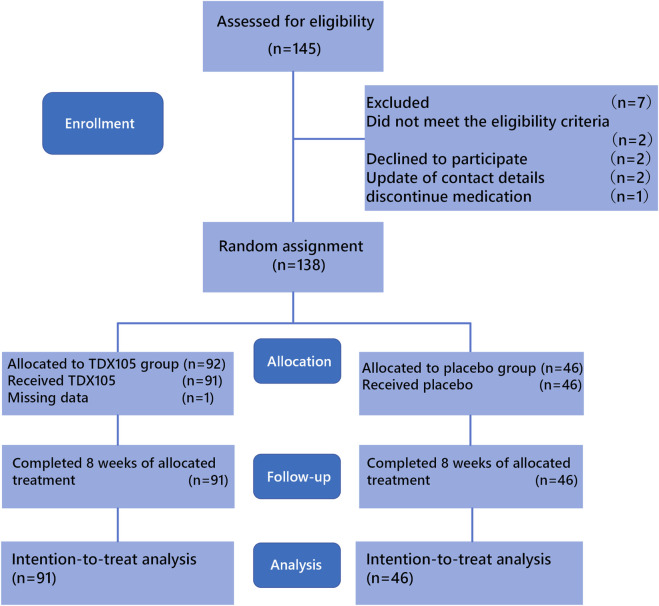 Figure 1
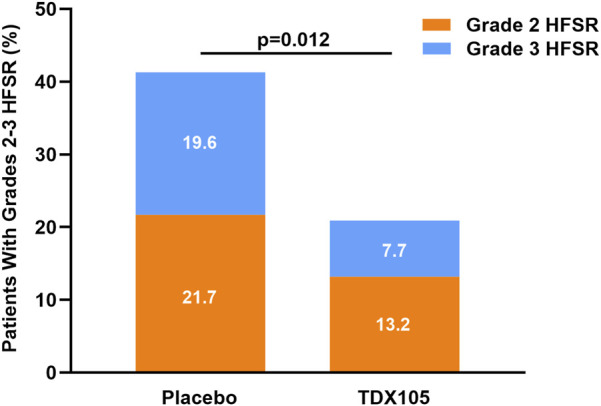 Figure 2
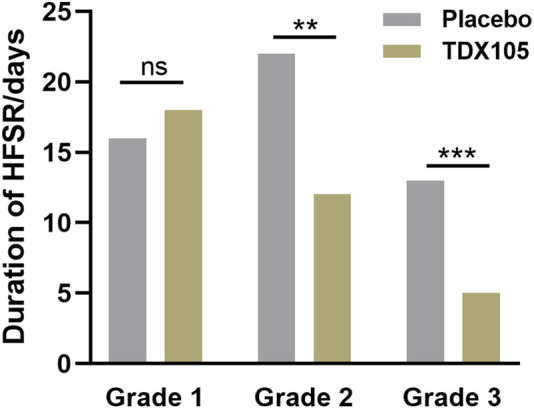 Figure 3
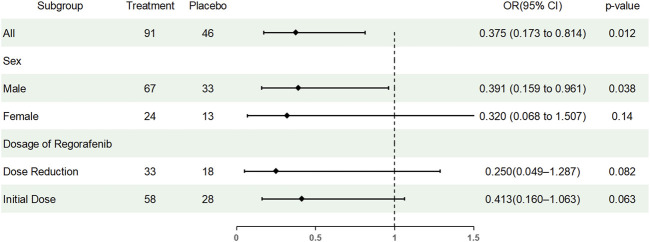 Figure 4
Peer Reviews
No public reviews on file for this paper yet. If you reviewed it on a platform where reviews are public (OpenReview, ICLR, NeurIPS, ICML), you can paste yours below so the community can read it here.
Videos
No videos yet. Explain this paper in a talk, walkthrough, or lecture? Add one.
Taxonomy
TopicsTraditional Chinese Medicine Analysis · Ginseng Biological Effects and Applications · Cancer Treatment and Pharmacology