Efgartigimod for generalized myasthenia gravis in the extreme elderly (≥80 years): a multicenter retrospective real-world study
Ye Hong, Chang-Wen Yuan, Jie Lu, Ping-Ping Kong, Shi-Qi Huang, Rui-Yuan Yang, Zhen-Hua Yuan, Hong-Dong Zhao, Teng Jiang, Jing Chen, Jian-Quan Shi

TL;DR
Efgartigimod is effective and safe for treating generalized myasthenia gravis in patients over 80 years old, with the most benefit seen in those with acute exacerbations.
Contribution
First multicenter real-world study evaluating efgartigimod in extreme elderly MG patients (≥80 years).
Findings
Efgartigimod significantly reduced MG-ADL, QMG, and MGC scores in elderly patients.
Patients with myasthenia gravis acute exacerbation showed the greatest improvement.
Treatment-related adverse events were mild and transient.
Abstract
Target-specific immunotherapies have been shown to effectively treat myasthenia gravis (MG) with less side effects. One such immunotherapy is efgartigimod, a neonatal Fc receptor antagonist, promotes degradation of pathogenic IgG antibodies. However, data specifically focusing on elderly, especially for those over 80 years, remain limited. This study included generalized MG patients over 80 years old from four neuromuscular centers who were treated with efgartigimod. Data regarding MG history, treatment regimens, and scores from the MG-ADL, QMG, and MGC scales, as well as adverse events, were prospectively recorded. Twelve patients with mean age of 82.9 ± 2.5 years were included. Anti-AChR antibodies were positive in 11 patients and anti-MuSK antibodies were detected in 1 patient. All patients received at least one cycle of efgartigimod treatment, for the following indications:…
Genes, proteins, chemicals, diseases, species, mutations and cell lines named across the full text — each resolved to its canonical identifier and authoritative record.
Click any figure to enlarge with its caption.
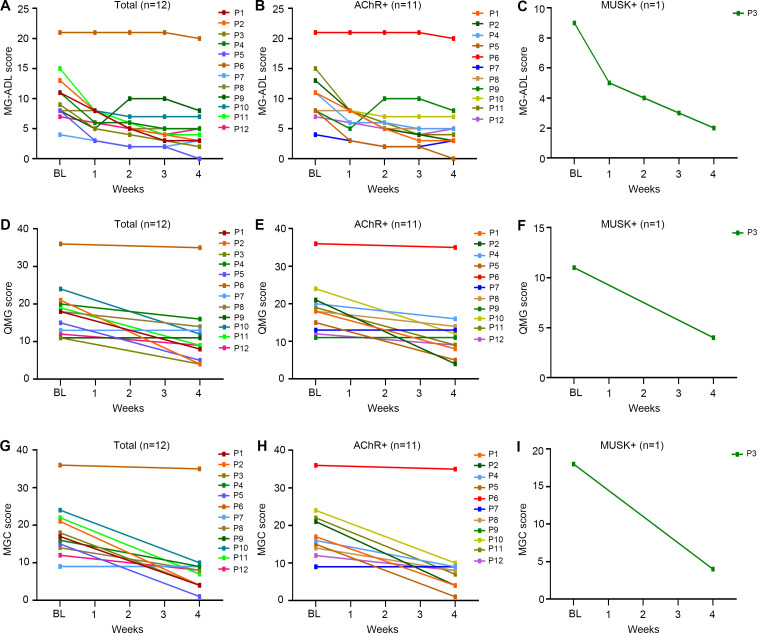 Figure 1
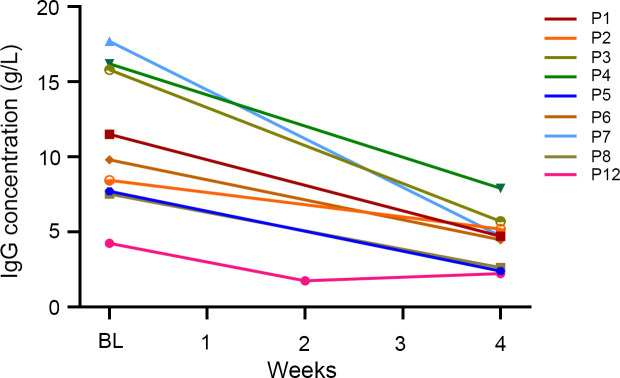 Figure 2
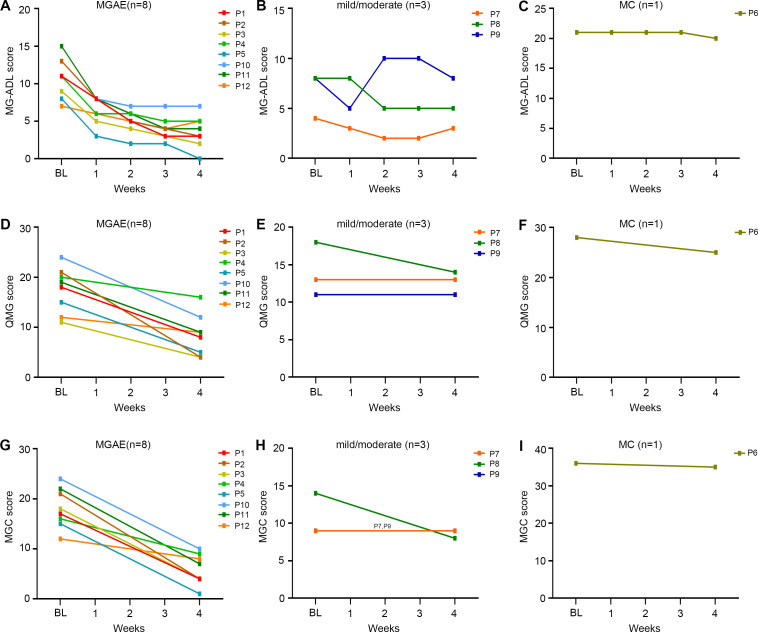 Figure 3
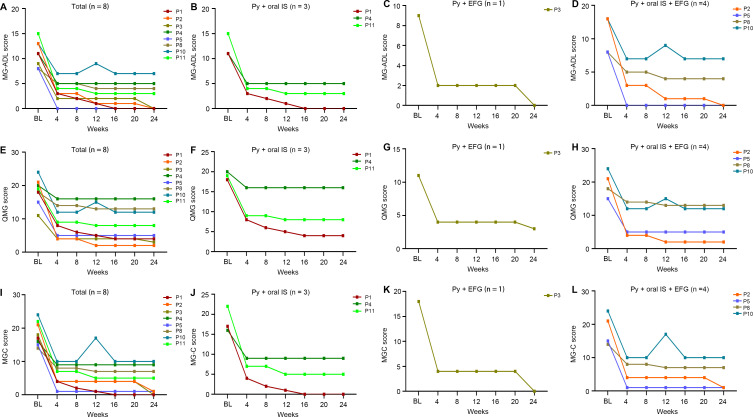 Figure 4
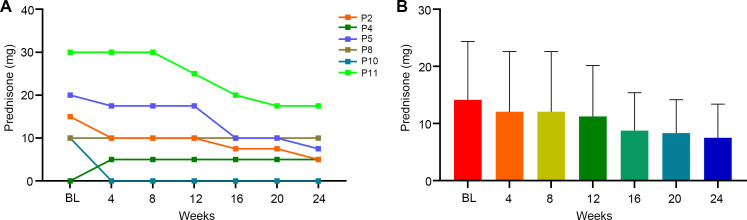 Figure 5
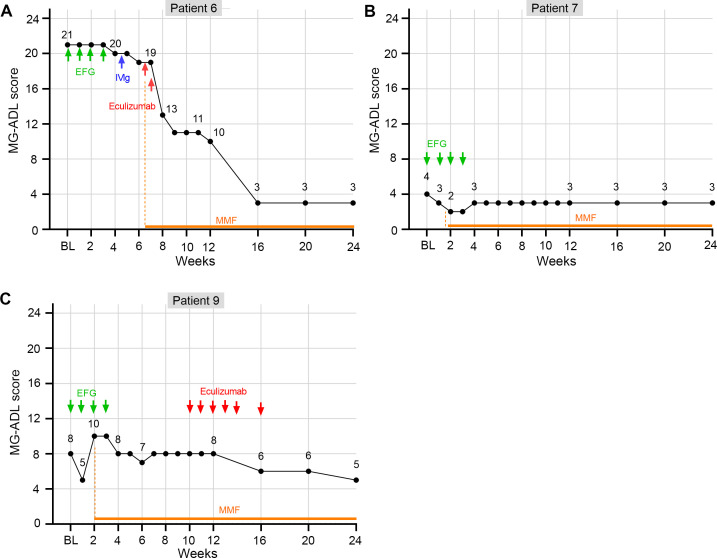 Figure 6
Peer Reviews
No public reviews on file for this paper yet. If you reviewed it on a platform where reviews are public (OpenReview, ICLR, NeurIPS, ICML), you can paste yours below so the community can read it here.
Videos
No videos yet. Explain this paper in a talk, walkthrough, or lecture? Add one.
Taxonomy
TopicsMyasthenia Gravis and Thymoma · Coagulation, Bradykinin, Polyphosphates, and Angioedema · Adrenal Hormones and Disorders