The FOUND questionnaire: identifying stable traits associated with success in remote operations—an exploratory study
Valentina Cesari, Enrico Cipriani, Giorgia Papini, Andrea Piarulli, Angelo Gemignani, Danilo Menicucci

TL;DR
The FOUND questionnaire identifies stable traits linked to success in remote operations, such as drone piloting and robotic surgery, by assessing perceptual, cognitive, and emotional domains.
Contribution
The FOUND questionnaire is a novel tool for evaluating stable traits associated with performance in remote operations, validated through empirical studies.
Findings
The FOUND questionnaire's 22-item structure includes four factors: Perception and Action, Empathic Attitude, Stress Management, and Group-Oriented Values.
Professions requiring high procedural skills scored higher in Perception and Action, Empathic Attitude, and Stress Management.
Remote operators scored higher in Perception and Action and Group-Oriented Values but lower in Stress Management compared to the general population.
Abstract
This study introduces the FOUndatioNal trait-BaseD Characterization (FOUND) questionnaire, specifically developed to assess stable characteristics of perceptual, cognitive, and emotional domains associated with effective performance in mediated settings. Items were derived from interviews with professionals in remote technology fields (e.g., robotic surgeons, drone pilots, crane operators) and grouped into four domains: cognitive-behavioral, socio-emotional, functional-organic, and value-based. Items, rated on a 4-point Likert scale, were designed to reflect stable traits. A panel of nine experts evaluated content validity; items with a CVI > 0.78 and a mean relevance ≥3 were retained, resulting in a 26-item scale. The factorial structure of FOUND was validated in a sample of 300 Italian participants, with convergent validity assessed, and participants were subsequently categorized…
Genes, proteins, chemicals, diseases, species, mutations and cell lines named across the full text — each resolved to its canonical identifier and authoritative record.
Click any figure to enlarge with its caption.
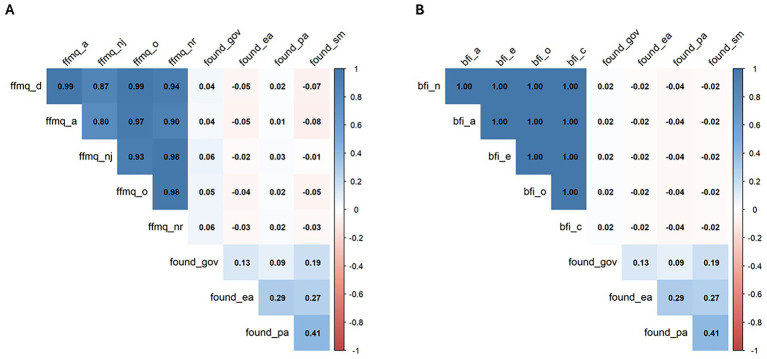 Figure 1
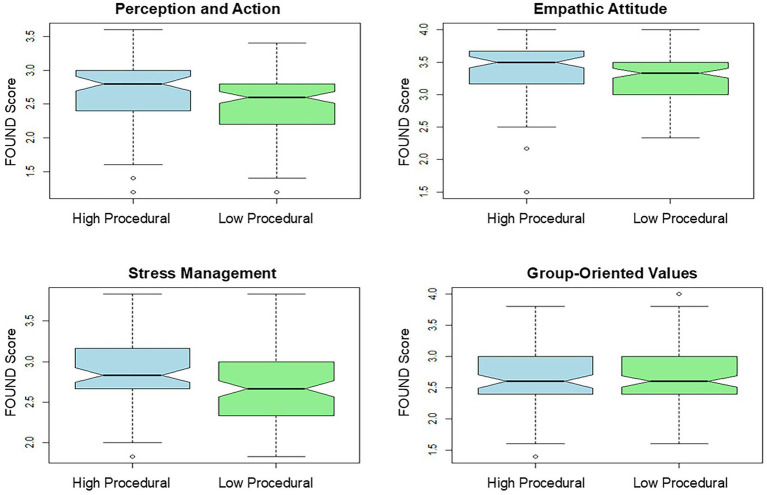 Figure 2
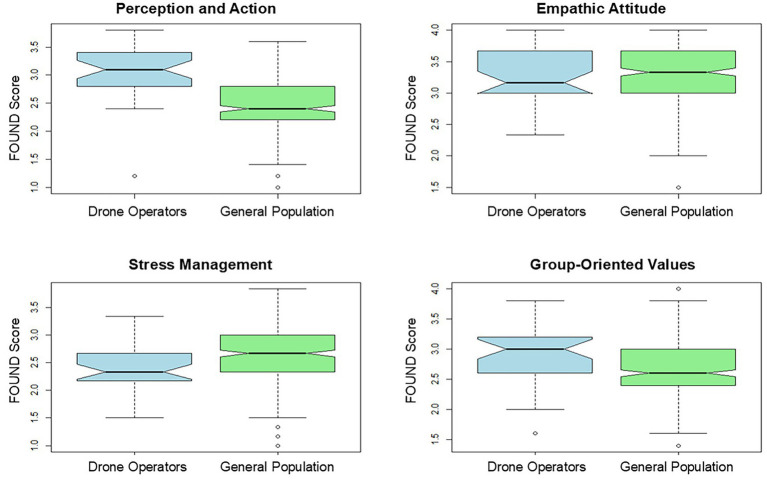 Figure 3
Peer Reviews
No public reviews on file for this paper yet. If you reviewed it on a platform where reviews are public (OpenReview, ICLR, NeurIPS, ICML), you can paste yours below so the community can read it here.
Videos
No videos yet. Explain this paper in a talk, walkthrough, or lecture? Add one.
Taxonomy
TopicsSimulation-Based Education in Healthcare · Surgical Simulation and Training · Social Robot Interaction and HRI