Case Report: Endovascular repair of thoracoabdominal aneurysm aorta and generalized mycobacterial infection (clinical case)
Mikhail Chernyavskiy, Almaz Vanyurkin, Ekaterina Verkhovskaya, Yuliya Panteleeva, Daria Ryzhkova, Ilona Basek, Anton Ryzhkov, Lubov Mitrofanova, Dmitry Gulyaev, Galina Salogub, Ivan Danilov, Dmitry Ovchinnikov, Anna Starshinova, Dmitry Kudlay, Evgeny Shlyakhto

TL;DR
This case report describes a successful endovascular repair of a ruptured aortic aneurysm in a patient with a generalized mycobacterial infection.
Contribution
The report highlights the use of branched endovascular aortic repair (BEVAR) as a viable alternative in high-risk patients with complex infections.
Findings
BEVAR was successfully used to treat a ruptured thoracoabdominal aneurysm in a patient with mycobacterial infection.
The patient's condition improved with antituberculosis chemotherapy and minimally invasive surgery.
The case supports BEVAR as an effective option for high-risk patients with complex vascular infections.
Abstract
Mycotic aortic aneurysms account for only 0.7%–1.3% of all aortic aneurysms but remain a life-threatening vascular complication, with in-hospital mortality rates reaching 36%. Immediate surgical intervention is required due to the high risk of rupture. Standard management combines targeted antimicrobial therapy with a radical resection of infected tissues and vascular reconstruction, yet the choice of optimal surgical strategy in elderly, comorbid patients remains controversial. Endovascular interventions are pivotal in the treatment of patients at high risk of infections, offering a minimally invasive approach that reduces the likelihood of complications and improves treatment outcomes. In this study, we report the case of a 65-year-old man who presented with severe lumbar pain. He was diagnosed with mycobacterial spondylitis of the L2–L4 vertebrae and a right-sided psoas abscess…
Genes, proteins, chemicals, diseases, species, mutations and cell lines named across the full text — each resolved to its canonical identifier and authoritative record.
Click any figure to enlarge with its caption.
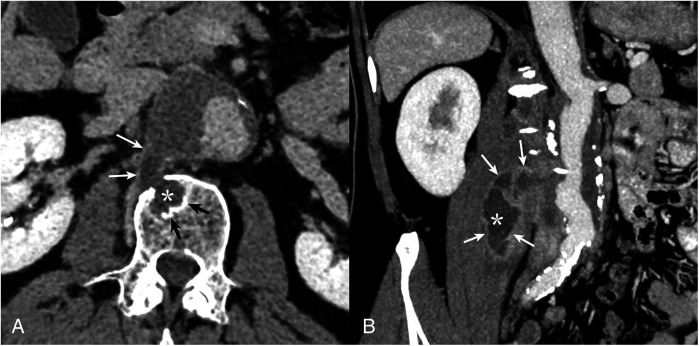 Figure 1
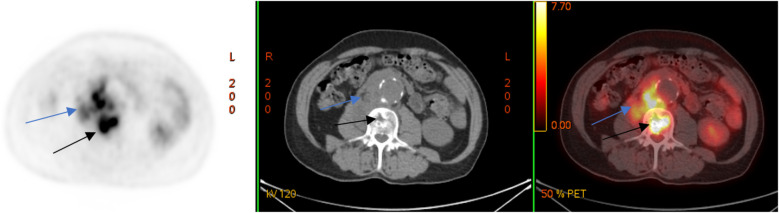 Figure 2
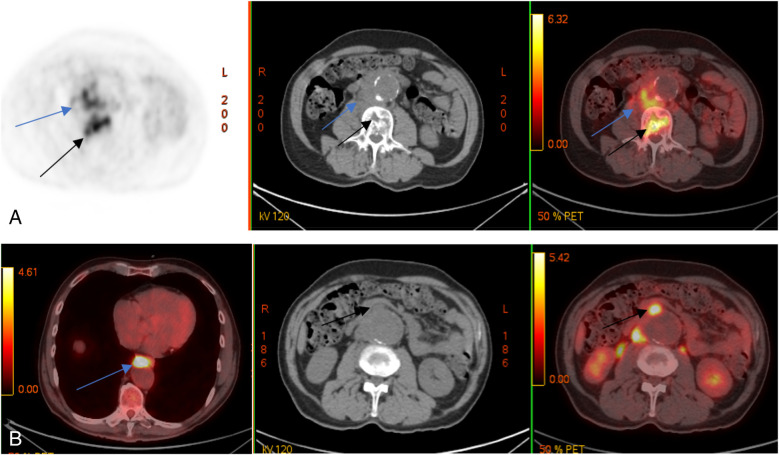 Figure 3
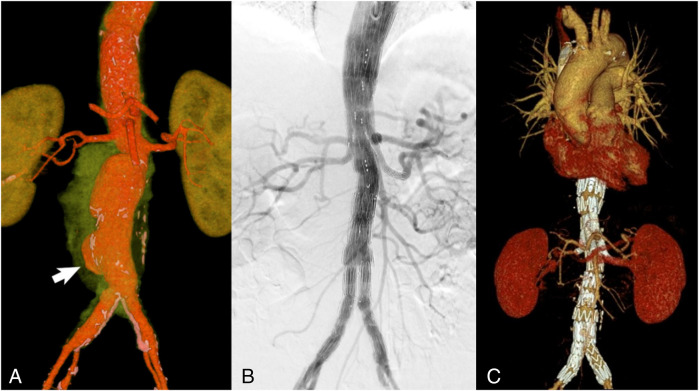 Figure 4
Peer Reviews
No public reviews on file for this paper yet. If you reviewed it on a platform where reviews are public (OpenReview, ICLR, NeurIPS, ICML), you can paste yours below so the community can read it here.
Videos
No videos yet. Explain this paper in a talk, walkthrough, or lecture? Add one.
Taxonomy
TopicsInfectious Aortic and Vascular Conditions · Orthopedic Infections and Treatments · Aortic Disease and Treatment Approaches