Does C1 esterase inhibitor play a role in post COVID-19 neurological symptoms? A randomized, double-blind, placebo-controlled, crossover, proof-of-concept study
Isaac Melamed, Caley Buckley, Mary Ellen Bayko, Joe Lynn Williams, Noga Or-Geva

TL;DR
This study explores whether C1 esterase inhibitor can help reduce neurological symptoms in patients recovering from COVID-19.
Contribution
The study is the first to investigate C1-INH as a potential treatment for post-COVID neurological symptoms in a randomized, placebo-controlled trial.
Findings
C1-INH treatment showed trends toward improvement in depression, fatigue, and pain scores in patients with post-COVID fatigue syndrome.
Patients with post-COVID fatigue syndrome had lower TLR-related signaling biomarkers compared to healthy controls.
Improvements in symptoms were not sustained after switching to placebo, suggesting a direct effect of C1-INH.
Abstract
Many patients with severe acute respiratory syndrome coronavirus 2 (SARS-CoV-2) infection experience neurologic changes post-infection, which has been hypothesized to be due to dysregulation in the infectious-immune axis that leads to a neuro-immune response. This immune dysfunction has been termed “Alzheimer’s of the Immune System” or AIS and there are several immune factors that may play a key role. These include, among others, complement activation due to low levels of C1-esterase inhibitor (C1-INH) and function, and a decrease in signaling of Toll-like receptor (TLR)-3. We propose that C1-INH replacement may upregulate the immune dysfunction, thereby improving neurological symptoms. In this randomized, double-blind, placebo-controlled, crossover, proof-of-concept study, adults experiencing SARS-CoV-2 post-viral fatigue syndrome for >4 weeks post-recovery from coronavirus disease…
Genes, proteins, chemicals, diseases, species, mutations and cell lines named across the full text — each resolved to its canonical identifier and authoritative record.
Click any figure to enlarge with its caption.
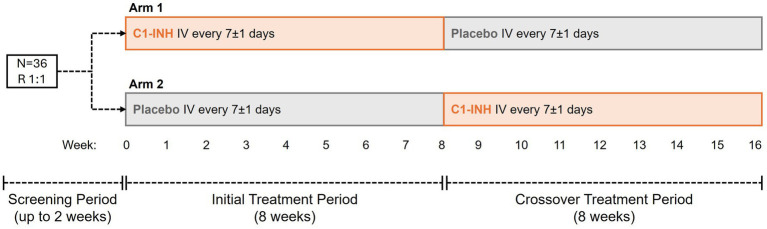 Figure 1
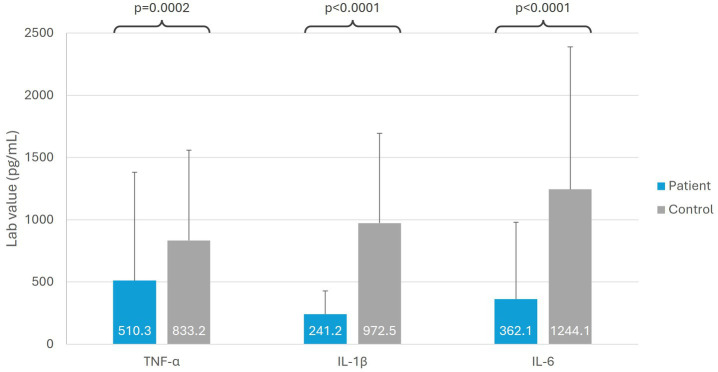 Figure 2
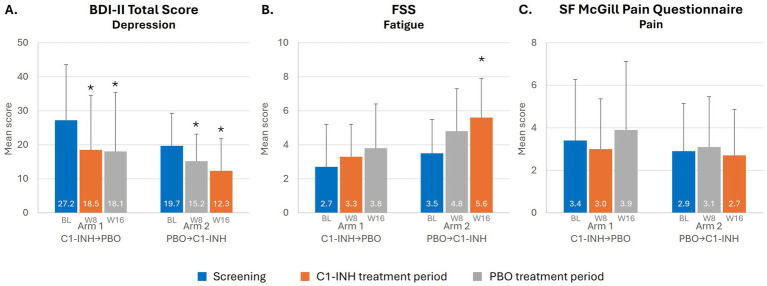 Figure 3
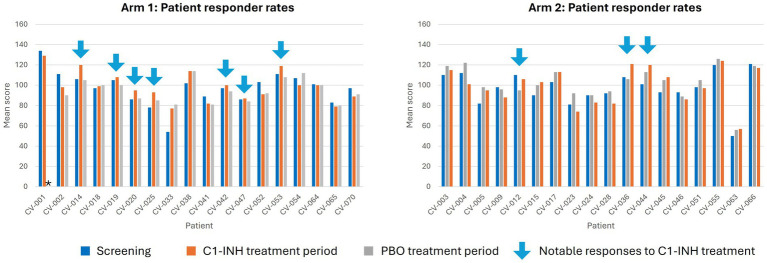 Figure 4
Peer Reviews
No public reviews on file for this paper yet. If you reviewed it on a platform where reviews are public (OpenReview, ICLR, NeurIPS, ICML), you can paste yours below so the community can read it here.
Videos
No videos yet. Explain this paper in a talk, walkthrough, or lecture? Add one.
Taxonomy
TopicsCoagulation, Bradykinin, Polyphosphates, and Angioedema · Complement system in diseases · Long-Term Effects of COVID-19