Modeling neurodegenerative diseases with brain organoids: from development to disease applications
Teresa Larriba-González, Marina García-Martín, Doddy Denise Ojeda-Hernández, Paula Rincón-Cerrada, Lucía Martín-Blanco, María Soledad Benito-Martín, Belén Selma-Calvo, Sarah de la Fuente-Martín, Jordi A Matias-Guiu, Jorge Matias-Guiu, Ulises Gómez-Pinedo

TL;DR
Brain organoids are used to model neurodegenerative diseases like Alzheimer’s and Parkinson’s, offering better insights than traditional methods but still facing challenges in scalability and standardization.
Contribution
This review highlights the use of brain organoids for disease modeling and identifies key challenges and future directions for improving their translational potential.
Findings
Organoids provide more physiologically relevant data than traditional 2D cultures and animal models.
Organoids have been used to model cellular and molecular aspects of Alzheimer’s and Parkinson’s diseases.
Challenges include variability in organoid generation and lack of vascularization.
Abstract
Organoids derived from stem cells have significantly advanced disease modeling, particularly in neurodegenerative disorders, while advancing personalized and regenerative medicine. These three-dimensional structures reproduce key aspects of human brain organization and functionality, while remaining simplified models that do not yet recapitulate full neural circuitry or disease progression, providing an improved platform for studying disease mechanisms, drug responses, and potential therapeutic strategies. This review explores the methodologies used in organoid development, including the differentiation of stem cells and culture techniques that enable the formation of self-organizing tissues. Organoids have been successfully used to model key cellular and molecular aspects of neurodegenerative diseases such as Alzheimer’s and Parkinson’s, offering insights into early disease mechanisms…
Genes, proteins, chemicals, diseases, species, mutations and cell lines named across the full text — each resolved to its canonical identifier and authoritative record.
Click any figure to enlarge with its caption.
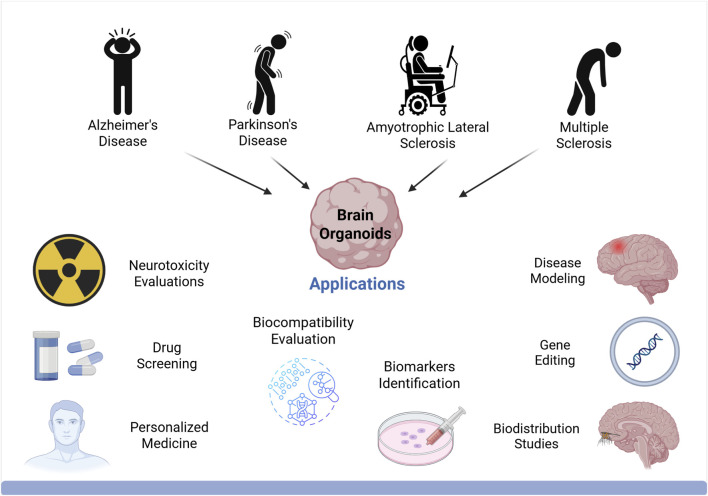 Figure 1
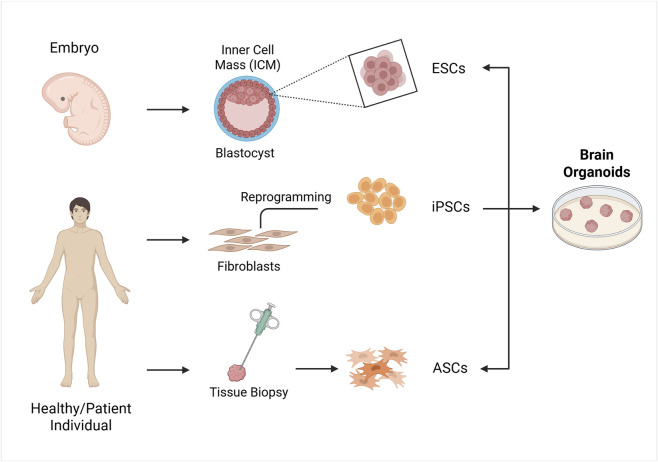 Figure 2
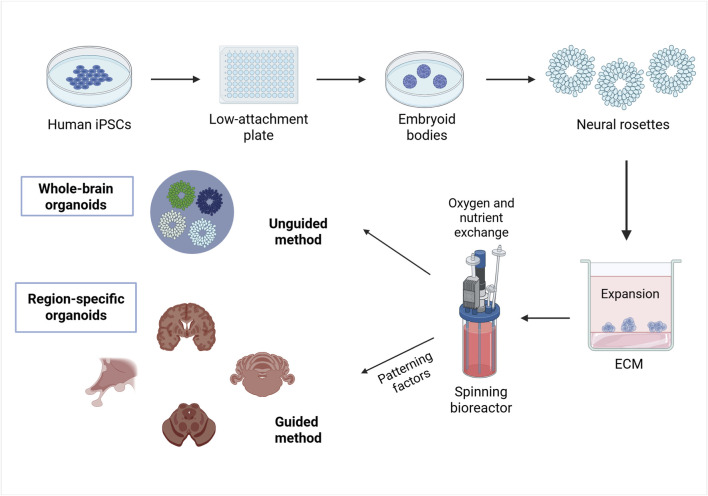 Figure 3
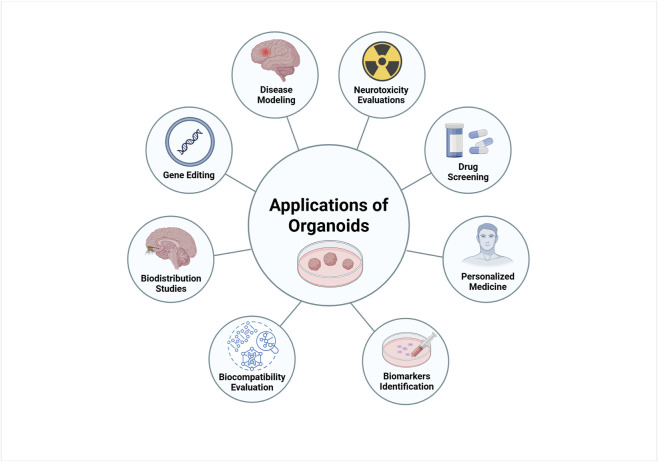 Figure 4
Peer Reviews
No public reviews on file for this paper yet. If you reviewed it on a platform where reviews are public (OpenReview, ICLR, NeurIPS, ICML), you can paste yours below so the community can read it here.
Videos
No videos yet. Explain this paper in a talk, walkthrough, or lecture? Add one.
Taxonomy
TopicsPluripotent Stem Cells Research · Neurogenesis and neuroplasticity mechanisms · Cancer Cells and Metastasis