Proteomic study of Akkermansia muciniphila and Bifidobacterium species co-culture under different carbon sources
Jordy Evan Sulaiman, Yuewei Zhan, Shuchen Wang, Ka Lun Lai, James Ho Wa Li, Daniel Ye Yutong, Karl Wah Keung Tsim, Kenneth King Yip Cheng, Yong Lai, Henry Lam

TL;DR
This study explores how different carbon sources affect the growth and protein expression of two probiotic bacteria, Akkermansia muciniphila and Bifidobacterium species, when co-cultured.
Contribution
The study reveals how co-culturing Akkermansia muciniphila with Bifidobacterium species under various carbon sources influences their growth and proteomic profiles.
Findings
Akkermansia muciniphila reduces Bifidobacterium longum abundance in co-culture regardless of carbon source.
Bifidobacterium breve reduces Akkermansia muciniphila abundance in co-culture with monosaccharides but not with mucin.
Arabinoxylan promotes Bifidobacterium longum growth and enhances Akkermansia muciniphila's barrier function protein expression.
Abstract
Akkermansia muciniphila and Bifidobacterium spp. are major probiotic strains that have been shown to improve host metabolism and treat metabolic diseases. Previous studies have proposed formulating these probiotics as a therapeutic product to improve efficacy, but how they affect the growth and protein expression of each other in response to different nutrient environments remains unexplored. Here, we performed label-free quantitative proteomics on A. muciniphila and two Bifidobacterium species, Bifidobacterium longum and Bifidobacterium breve, in the presence of different carbon sources. Akkermansia muciniphila displayed distinct growth profiles when co-cultured with B. breve and B. longum in media containing monosaccharides (glucose and N-acetyl-D-glucosamine) or mucin. Akkermansia muciniphila led to reduced abundance of B. longum in co-culture compared to monoculture, irrespective of…
Genes, proteins, chemicals, diseases, species, mutations and cell lines named across the full text — each resolved to its canonical identifier and authoritative record.
Click any figure to enlarge with its caption.
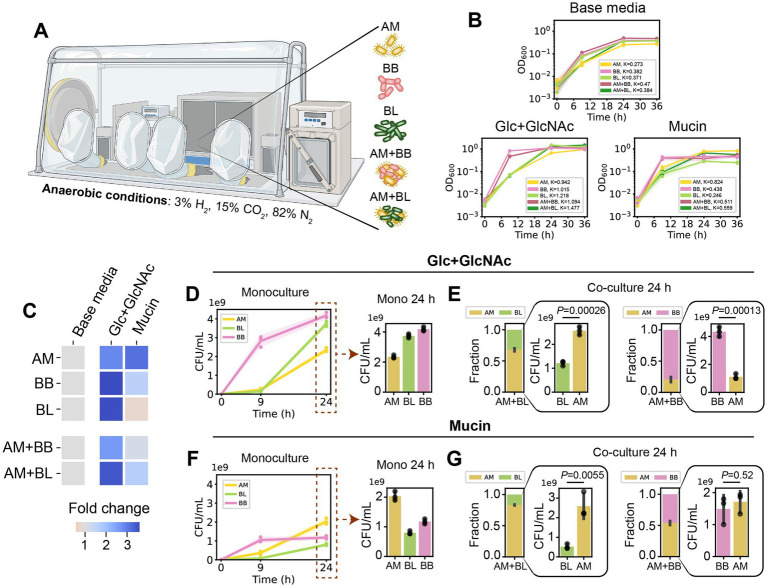 Figure 1
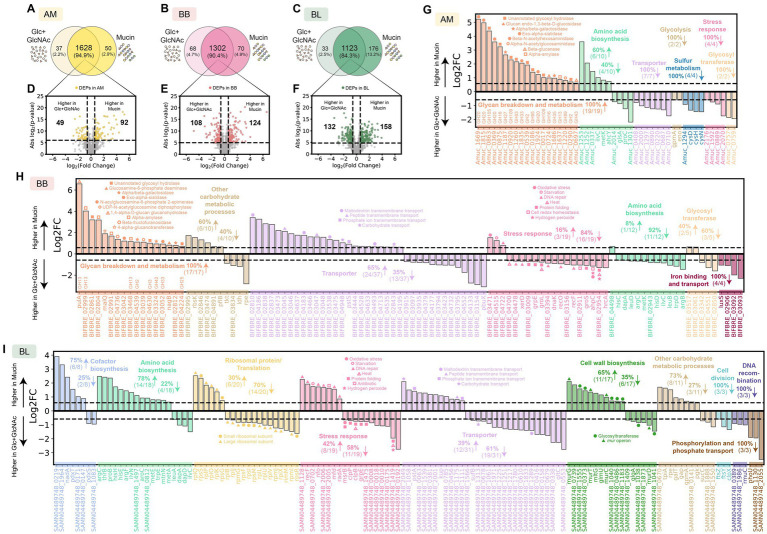 Figure 2
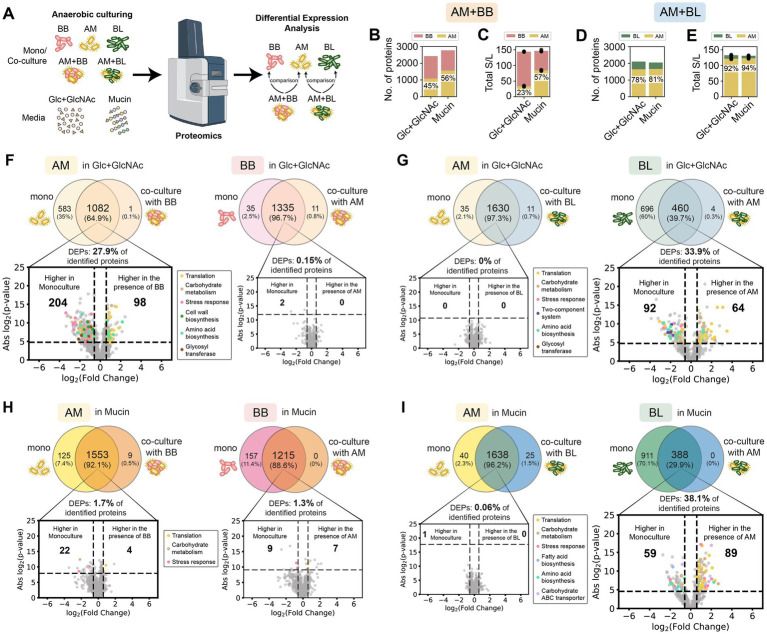 Figure 3
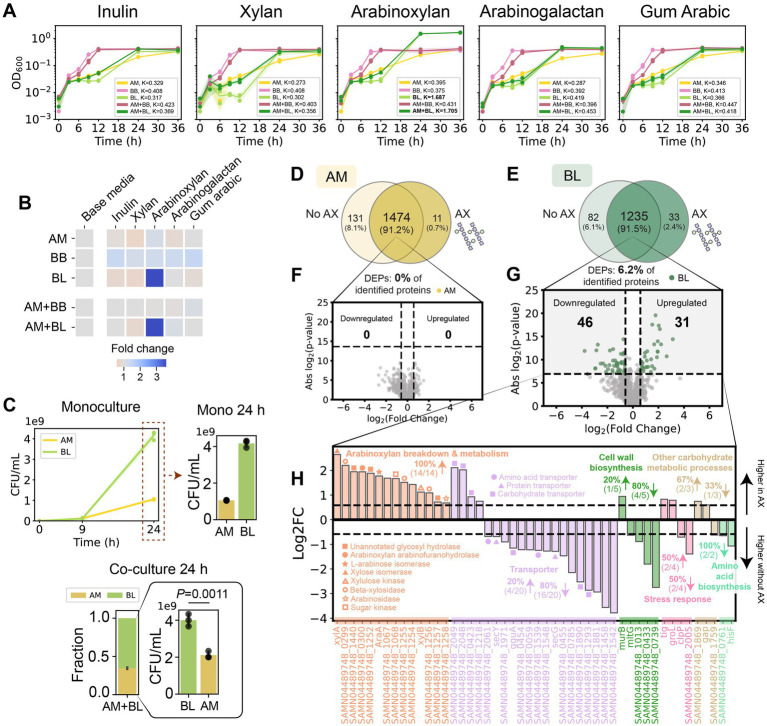 Figure 4
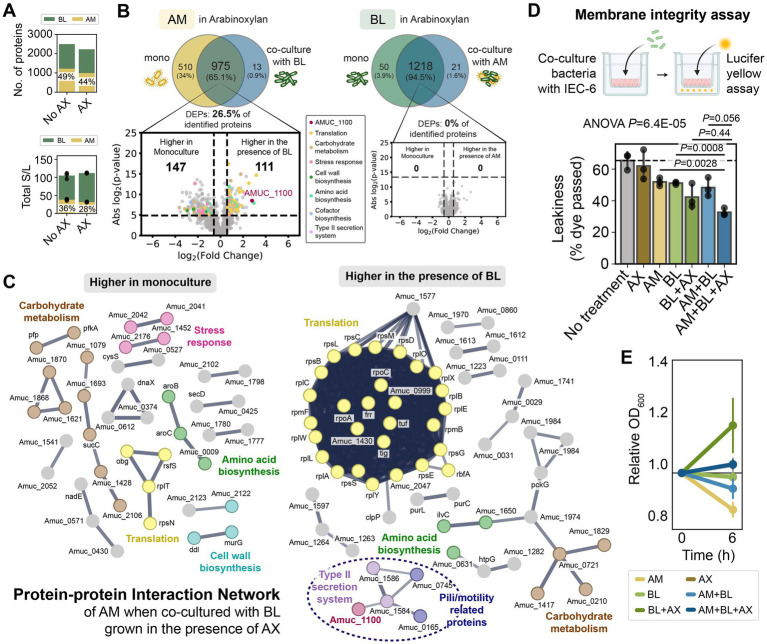 Figure 5
Peer Reviews
No public reviews on file for this paper yet. If you reviewed it on a platform where reviews are public (OpenReview, ICLR, NeurIPS, ICML), you can paste yours below so the community can read it here.
Videos
No videos yet. Explain this paper in a talk, walkthrough, or lecture? Add one.
Taxonomy
TopicsProbiotics and Fermented Foods · Gut microbiota and health · Biopolymer Synthesis and Applications