Examination of the toxicity of a new group of Karenia papilionacea isolated from the Yellow Sea, China, to multiple species of marine aquatic animals
Qiantong Chen, Menghan Gao, Ning Zhang, Lang Li, Yingyi Fan, Jiali Zhao, Xintong Xu, Zhe Tao, Yunyan Deng, Yulei Zhang, Feng Li, Siheng Lin, Ying Zhong Tang, Zhangxi Hu

TL;DR
This study examines the toxicity of a new strain of Karenia papilionacea from the Yellow Sea to marine animals, expanding its known distribution and highlighting its ecological impact.
Contribution
First report of K. papilionacea in northern China and characterization of its toxicity to multiple marine species.
Findings
The Yellow Sea strain of K. papilionacea formed a new genetic group distinct from other Chinese strains.
The strain showed significant lethal effects on rotifers, brine shrimp, and finfish but had minimal impact on brine shrimp egg hatching.
This study expands the known distribution of K. papilionacea along the Chinese coast.
Abstract
The dinoflagellate genus Karenia G. Hansen and Moestrup is notorious for forming harmful algal blooms (HABs), most of which can produce a variety of potent toxins (e.g., brevetoxins), killing fish and other aquatic animals above a certain cell density. Among the 11 currently accepted Karenia species, more than half of which are toxic, 8 species (K. bicuneiformis, K. brevis, K. brevisulcata, K. hui, K. longicanalis, K. mikimotoi, K. papilionacea, and K. selliformis) have been reported or described in Chinese coastal waters. Among these, K. papilionacea is globally distributed, with records in Asia, Europe, America, and Oceania. In China, it occurs in the East and South China Seas, though its morphological characterization and toxicology have not been well documented. In this study, we established a clonal culture of Karenia papilionacea through single-cell isolation from the coast of…
Genes, proteins, chemicals, diseases, species, mutations and cell lines named across the full text — each resolved to its canonical identifier and authoritative record.
Click any figure to enlarge with its caption.
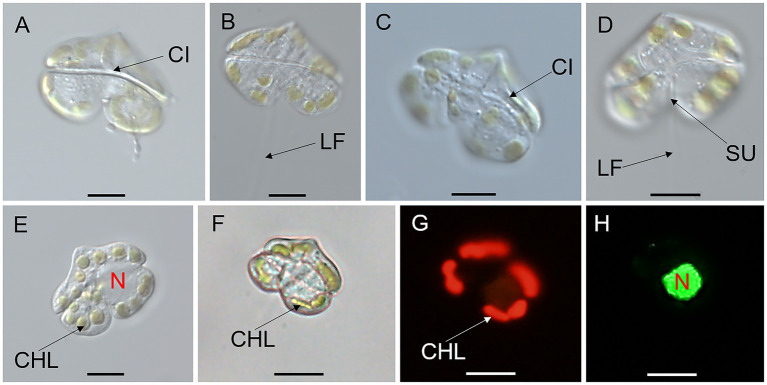 Figure 1
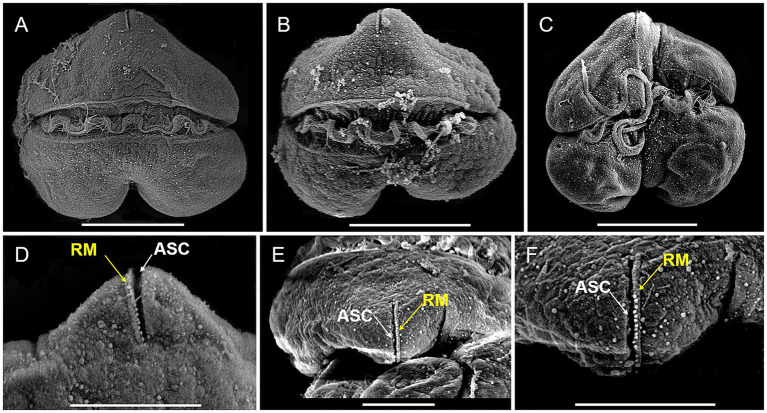 Figure 2
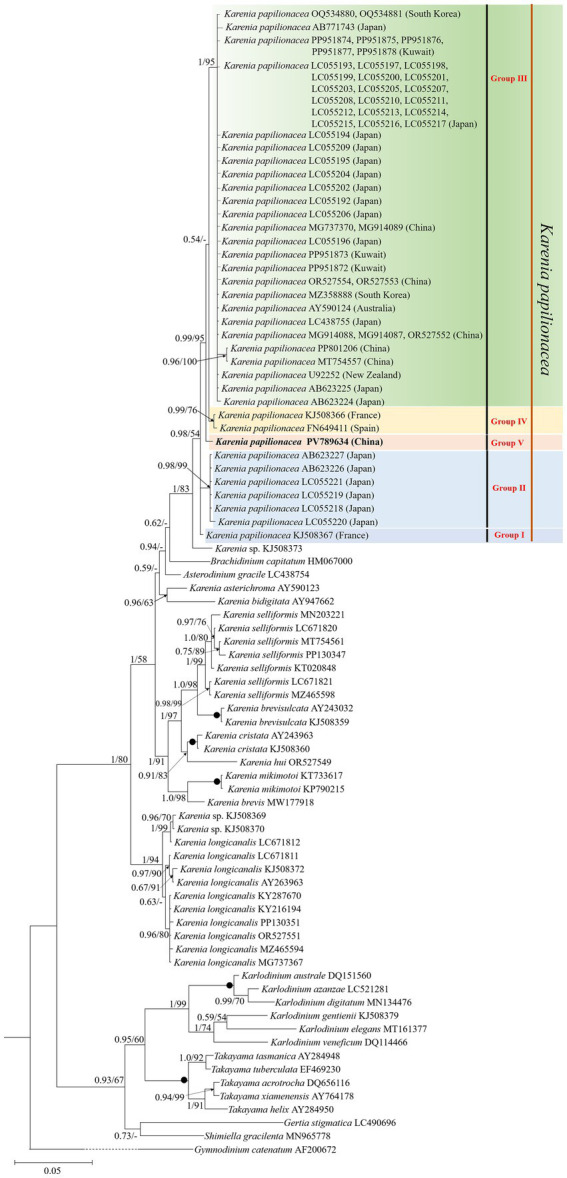 Figure 3
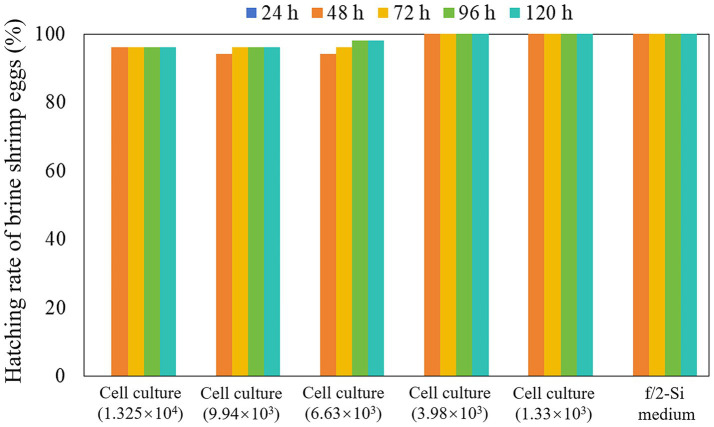 Figure 4
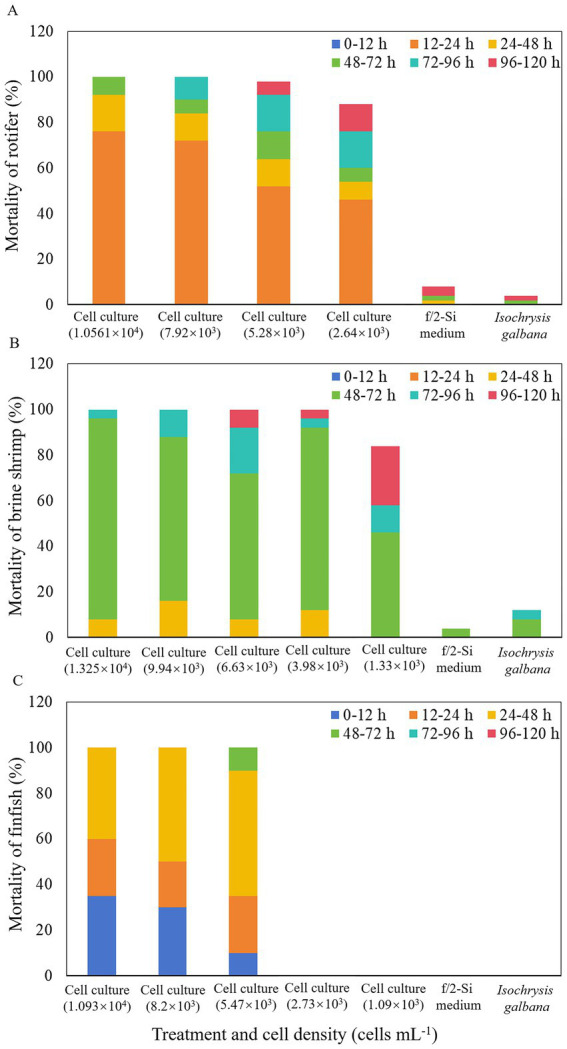 Figure 5
Peer Reviews
No public reviews on file for this paper yet. If you reviewed it on a platform where reviews are public (OpenReview, ICLR, NeurIPS, ICML), you can paste yours below so the community can read it here.
Videos
No videos yet. Explain this paper in a talk, walkthrough, or lecture? Add one.
Taxonomy
TopicsMarine Toxins and Detection Methods · Marine Invertebrate Physiology and Ecology · Marine Sponges and Natural Products