Association between triglyceride-glucose index and major adverse cardiovascular events in patients with intermediate coronary stenosis: a prospective cohort study
Hui-juan Li, Lei-guang Zhang, Haobo Xu, Yao-xin Wang, Shuai Liu, Jie-yun Liu

TL;DR
This study found that a higher triglyceride-glucose index is linked to a greater risk of heart problems in patients with moderate artery blockage.
Contribution
The study shows the TyG index is a novel predictor of cardiovascular risk in patients with intermediate coronary stenosis.
Findings
Higher TyG quartiles were associated with significantly increased MACE risk (HR 1.87 in highest quartile).
The TyG index became a significant risk factor for MACE when exceeding a value of 10.19.
The association was strongest in diabetic patients, males, and those over 65 years old.
Abstract
This study aimed to evaluate the correlation between the triglyceride-glucose (TyG) index and the incidence of major adverse cardiovascular events (MACE) in patients with intermediate coronary stenosis. A prospective cohort study was conducted involving 217 patients diagnosed with intermediate coronary stenosis confirmed by coronary angiography at Kaifeng Central Hospital. Patients were stratified into quartiles based on the TyG index and were followed for a median period of 858 days. During the follow-up, 35 patients experienced MACE. Kaplan-Meier survival analysis, adjusted for confounding variables in Model 3, demonstrated a significantly elevated risk of MACE in the highest TyG quartile compared with those in the lowest quartile (log-rank p = 0.015). The hazard ratio (HR) for MACE in the highest quartile was 1.87 (95% CI: 1.23–2.18; p = 0.005). Restricted cubic spline analysis…
Genes, proteins, chemicals, diseases, species, mutations and cell lines named across the full text — each resolved to its canonical identifier and authoritative record.
Click any figure to enlarge with its caption.
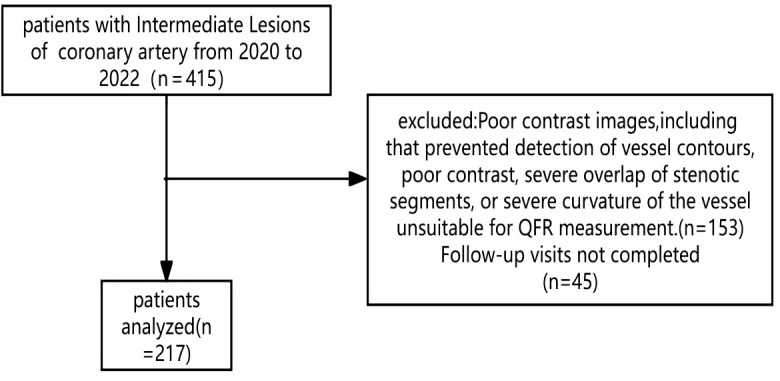 Figure 1
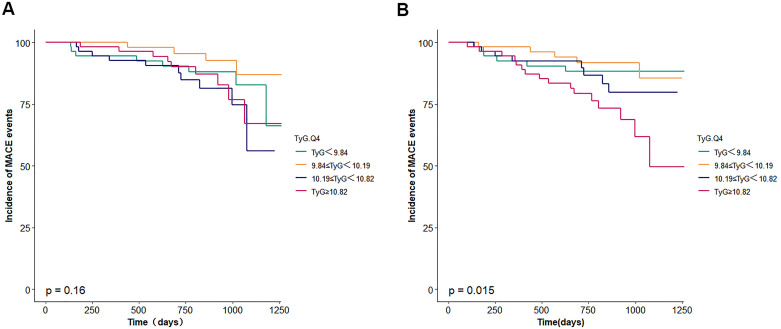 Figure 2
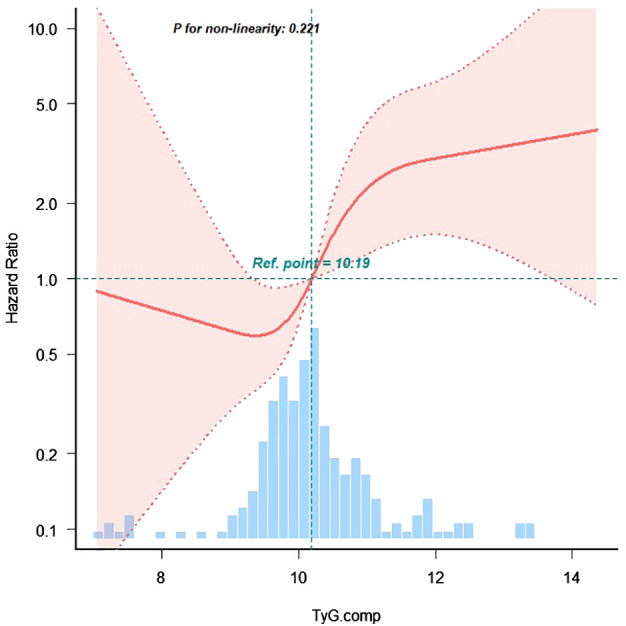 Figure 3
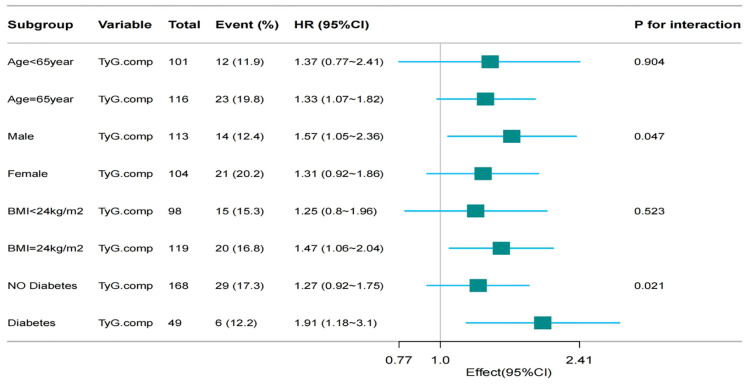 Figure 4
Peer Reviews
No public reviews on file for this paper yet. If you reviewed it on a platform where reviews are public (OpenReview, ICLR, NeurIPS, ICML), you can paste yours below so the community can read it here.
Videos
No videos yet. Explain this paper in a talk, walkthrough, or lecture? Add one.
Taxonomy
TopicsCardiovascular Function and Risk Factors · Diabetes, Cardiovascular Risks, and Lipoproteins · Cardiac Imaging and Diagnostics