TGF-β1/SMAD3-mediated Non-canonical Hedgehog Signaling Promotes Pancreatic Stellate Cell Activation and Fibrosis in Chronic Pancreatitis
Linrui Peng, Yuchen Hu, Xiaoying Zhang, Chunlu Tan, Chan Yang, Tingting Liu, Pawel E Ferdek, Shufen Yin, Liu Wang, Wei Huang, Yuwei Zhang

TL;DR
This study reveals that a specific signaling pathway involving GLI2 in pancreatic cells contributes to fibrosis in chronic pancreatitis and identifies GLI2 as a potential treatment target.
Contribution
The study identifies GLI2 as a key driver of non-canonical Hedgehog signaling in pancreatic stellate cells during chronic pancreatitis.
Findings
GLI2 is highly expressed in activated pancreatic stellate cells in chronic pancreatitis patients.
PSC-specific deletion of Gli2 reduces fibrosis and disease severity in mouse models of chronic pancreatitis.
TGF-β1/SMAD3 signaling promotes GLI2 activation, and its inhibition reverses PSC activation.
Abstract
Excessive Hedgehog (Hh) signaling activity contributes to fibrosis in multiple organs. However, its role in pancreatic stellate cell (PSC) activation and fibrosis development during chronic pancreatitis (CP) remains elusive. We show that GLI2 is one of the top-ranked effectors in the pancreas of CP patients and is highly expressed in activated PSCs. PSC-specific deletion of Gli2, but not Smo, significantly reduces fibrosis and the severity of the mouse CP, indicating that GLI2 in PSCs can be driven by non-canonical fashion during CP. In culture-activated primary PSCs, early nuclear translocation and increased GLI2 expression are observed promptly following in vitro culture. Whereas GLI2 inhibition reduces PSC activation, SMO inhibition dose not consistently affect changes in GLI2 levels or PSC activation. TGF-β1 promotes GLI2 activation and expression, while these processes and…
Genes, proteins, chemicals, diseases, species, mutations and cell lines named across the full text — each resolved to its canonical identifier and authoritative record.
Click any figure to enlarge with its caption.
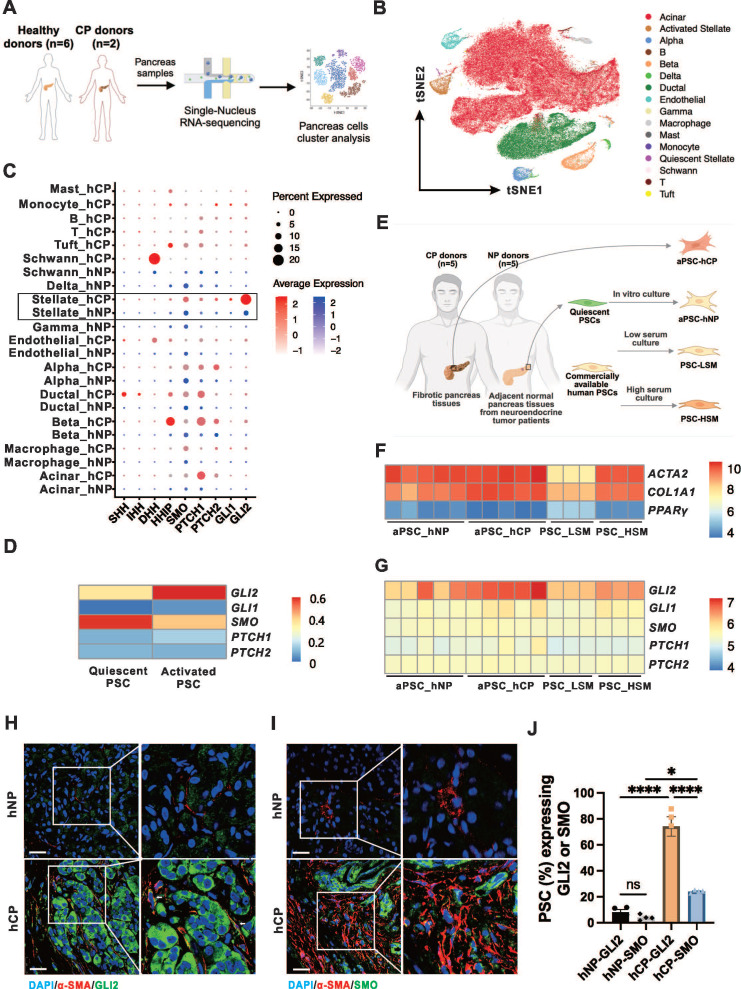 Figure 1
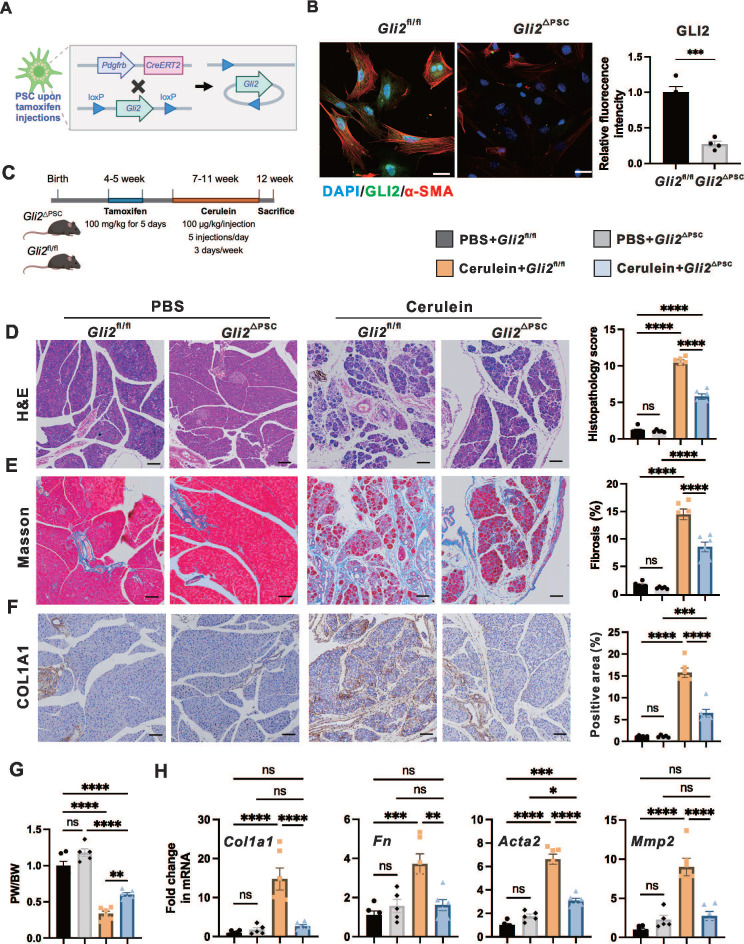 Figure 2
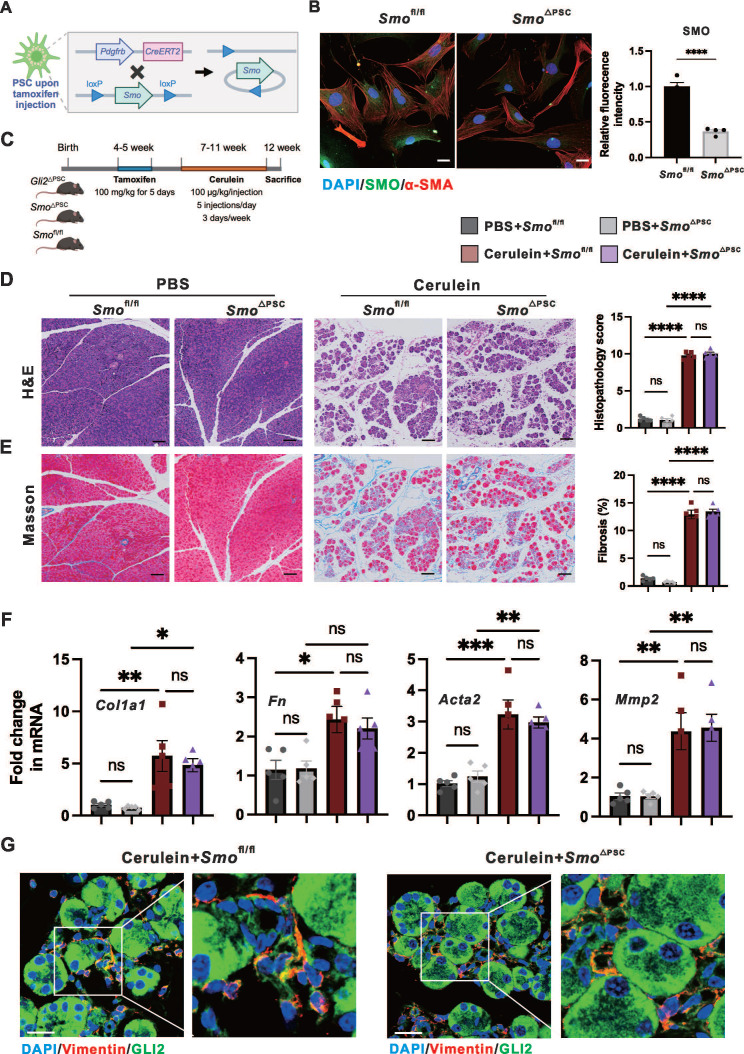 Figure 3
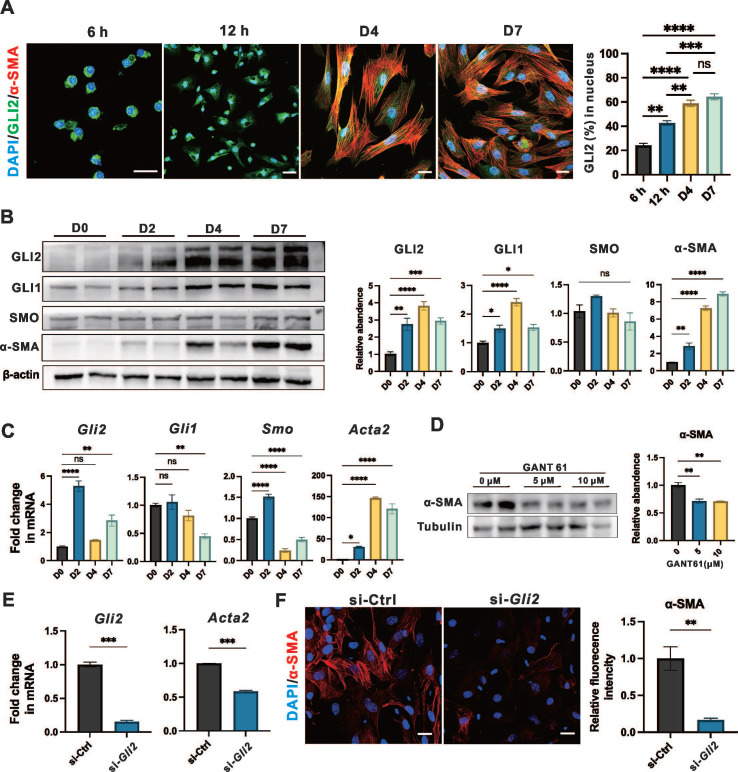 Figure 4
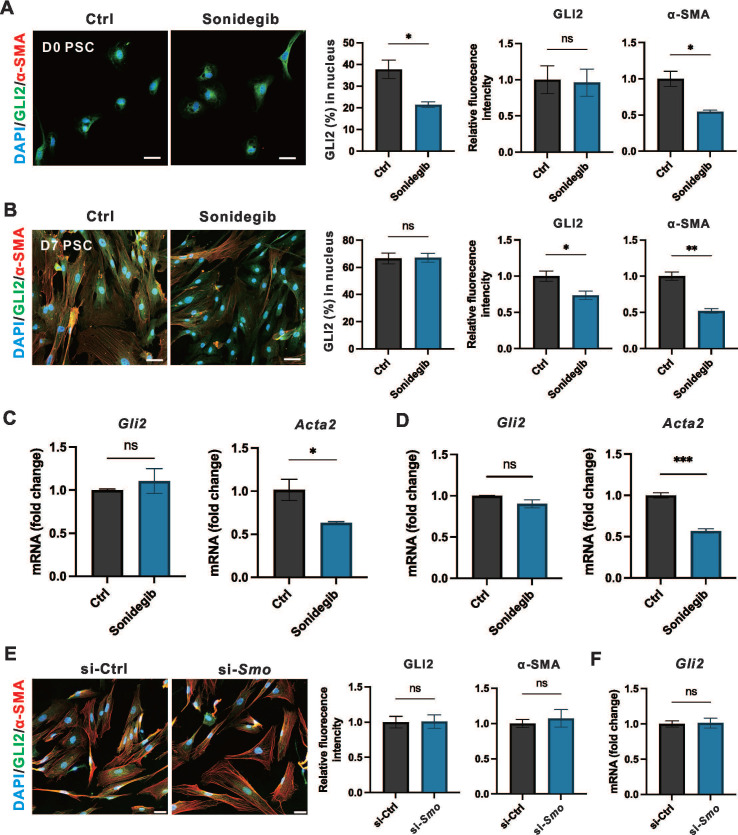 Figure 5
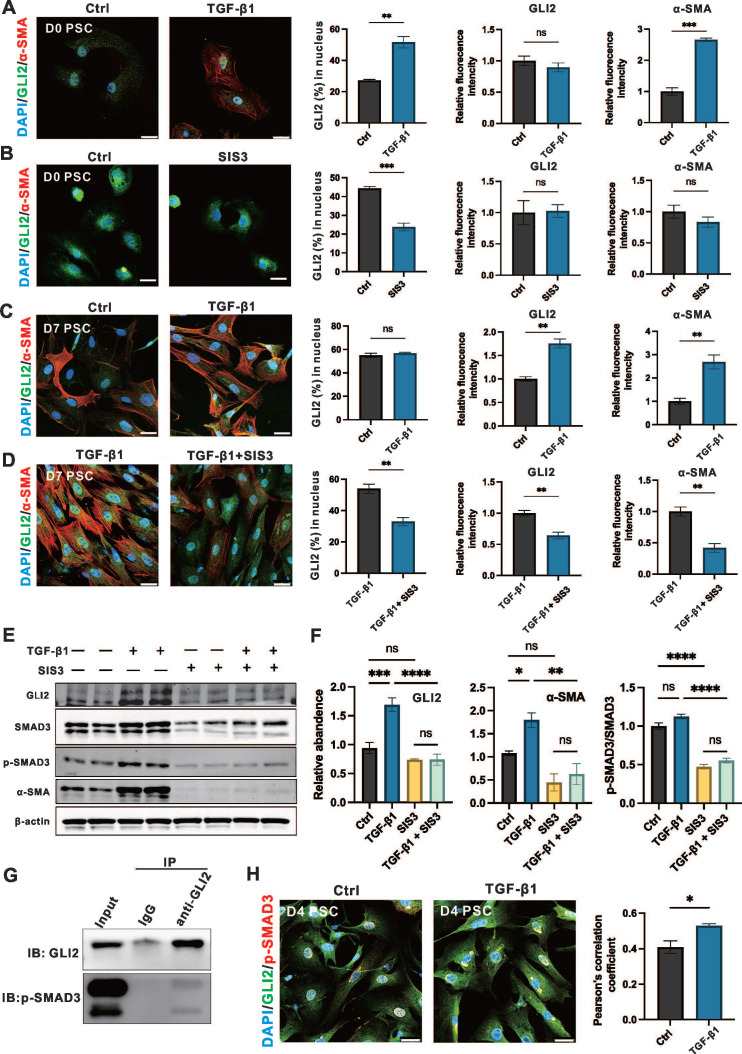 Figure 6
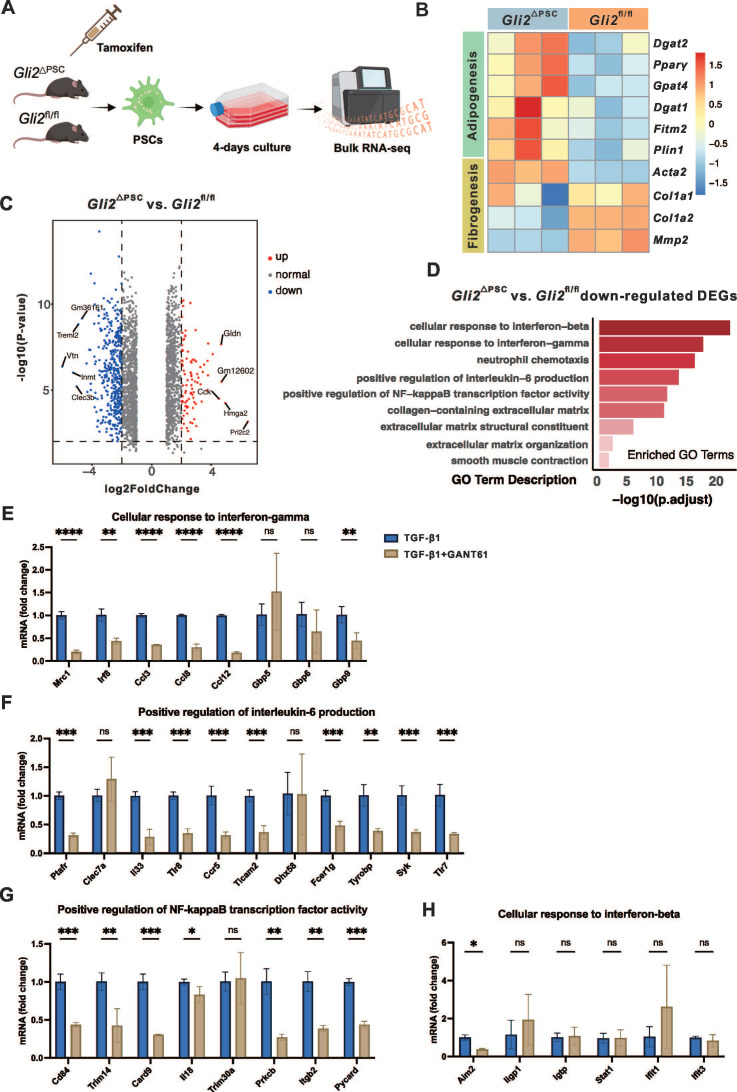 Figure 7
Peer Reviews
No public reviews on file for this paper yet. If you reviewed it on a platform where reviews are public (OpenReview, ICLR, NeurIPS, ICML), you can paste yours below so the community can read it here.
Videos
No videos yet. Explain this paper in a talk, walkthrough, or lecture? Add one.
Taxonomy
TopicsHedgehog Signaling Pathway Studies · Pancreatitis Pathology and Treatment · Pancreatic and Hepatic Oncology Research