The efficacy and safety of low-intensity focused ultrasound pulses for prolonged disorders of consciousness: a study protocol for a randomized controlled trial
Yuehong Huang, Qiuyi Yu, Hongxiang Liu, Chenxia Xue, Caroline Schnakers, Steven Laureys, Martin M. Monti, Haibo Di

TL;DR
This study will test if low-intensity focused ultrasound pulses can safely and effectively help patients with prolonged disorders of consciousness recover.
Contribution
The study introduces a novel use of low-intensity focused ultrasound pulses as a non-invasive neuromodulation technique for treating prolonged disorders of consciousness.
Findings
The study will assess the effects of two LIFUP parameter settings on neural connectivity and brain chemistry.
Multimodal assessments will explore the relationship between neurofunctional changes and behavioral outcomes.
The research aims to identify potential biomarkers of neuroplasticity for future therapeutic strategies.
Abstract
Recent randomized controlled trials (RCTs) in patients with prolonged disorders of consciousness (pDoC) have yielded limited success. Among them, only studies involving amantadine have provided Class II evidence. The effects of other non-invasive brain stimulation techniques remain inconclusive, largely due to patient heterogeneity and the clinical complexities of implementing such interventions. Low-intensity focused ultrasound pulses (LIFUP), as a novel, non-invasive, and safe neuromodulation technique, have the potential to both stimulate and inhibit deep subcortical structures. This makes LIFUP a promising approach for modulating consciousness and promoting recovery in patients with pDoC. This study aims to evaluate the therapeutic efficacy and safety of LIFUP through a randomized controlled design. Our primary research focus involves conducting multimodal neurofunctional…
Genes, proteins, chemicals, diseases, species, mutations and cell lines named across the full text — each resolved to its canonical identifier and authoritative record.
Click any figure to enlarge with its caption.
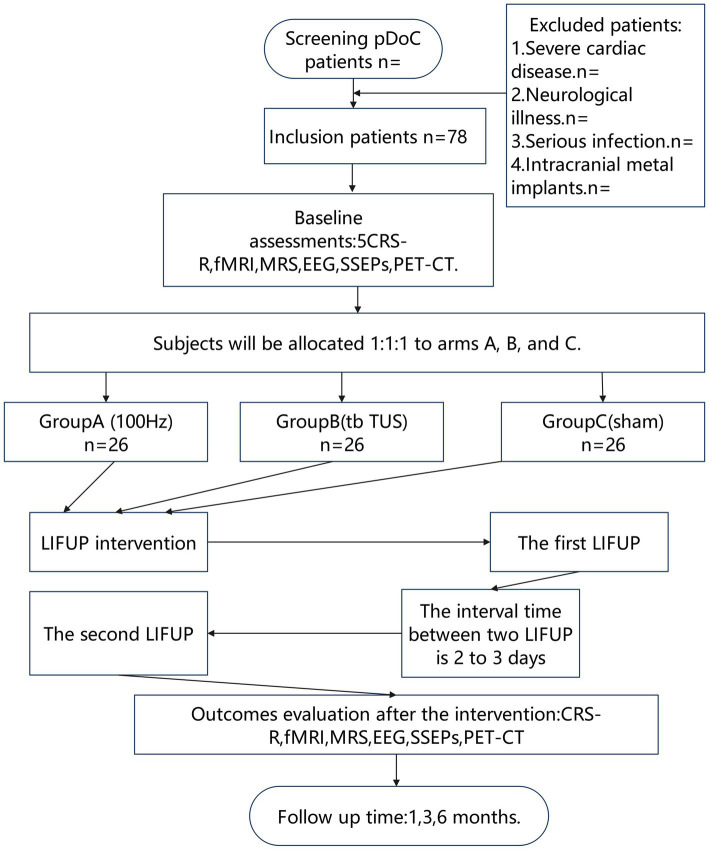 Figure 1
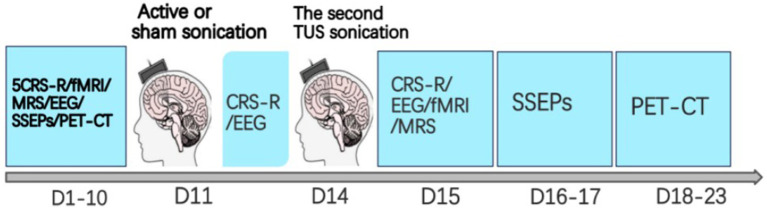 Figure 2
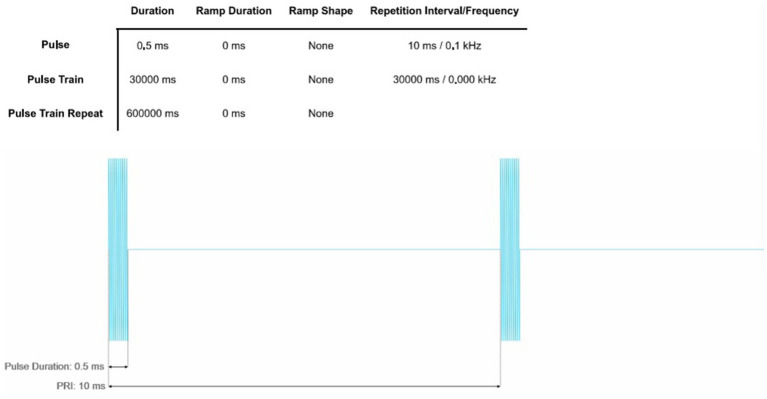 Figure 3
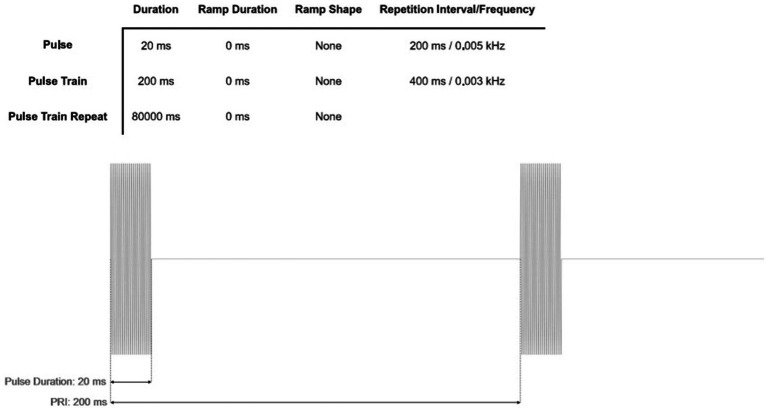 Figure 4
 Figure 5
 Figure 6
Peer Reviews
No public reviews on file for this paper yet. If you reviewed it on a platform where reviews are public (OpenReview, ICLR, NeurIPS, ICML), you can paste yours below so the community can read it here.
Videos
No videos yet. Explain this paper in a talk, walkthrough, or lecture? Add one.
Taxonomy
TopicsUltrasound and Hyperthermia Applications · Cardiac Arrest and Resuscitation · Ultrasound and Cavitation Phenomena