Generative Models and Sentence Transformers for the Recognition and Normalization of Continuous and Discontinuous Phenotype Mentions: Model Development and Evaluation
Areej Alhassan, Viktor Schlegel, Monira Aloud, Riza Batista-Navarro, Goran Nenadic

TL;DR
This paper presents a system for identifying and normalizing genetic phenotype mentions in clinical reports, especially handling discontinuous mentions effectively.
Contribution
The novel contribution is a 2-phase pipeline, DiscHPO, using generative models and sentence transformers to handle both continuous and discontinuous phenotype mentions.
Findings
The system achieved an F1-score of 0.723 for entity normalization and 0.665 for span extraction, outperforming baseline models.
The model demonstrated the ability to recognize discontinuous spans with an F1-score of 0.631 on the validation set.
Partial mention matches can be sufficient for successful normalization, supporting the system's utility in clinical tasks.
Abstract
Extracting genetic phenotype mentions from clinical reports and normalizing them to standardized concepts within the human phenotype ontology are essential for consistent interpretation and representation of genetic conditions. This is particularly important in fields such as dysmorphology and plays a key role in advancing personalized health care. However, modern clinical named entity recognition methods face challenges in accurately identifying discontinuous mentions (ie, entity spans that are interrupted by unrelated words), which can be found in these clinical reports. This study aims to develop a system that can accurately extract and normalize genetic phenotypes, specifically from physical examination reports related to dysmorphology assessment. These mentions appear in both continuous and discontinuous lexical forms, with a focus on addressing challenging discontinuous entity…
Genes, proteins, chemicals, diseases, species, mutations and cell lines named across the full text — each resolved to its canonical identifier and authoritative record.
Click any figure to enlarge with its caption.
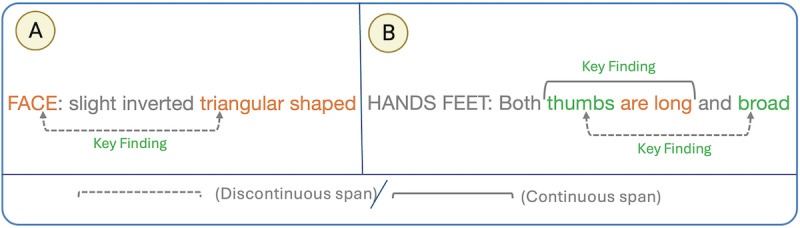 Figure 1
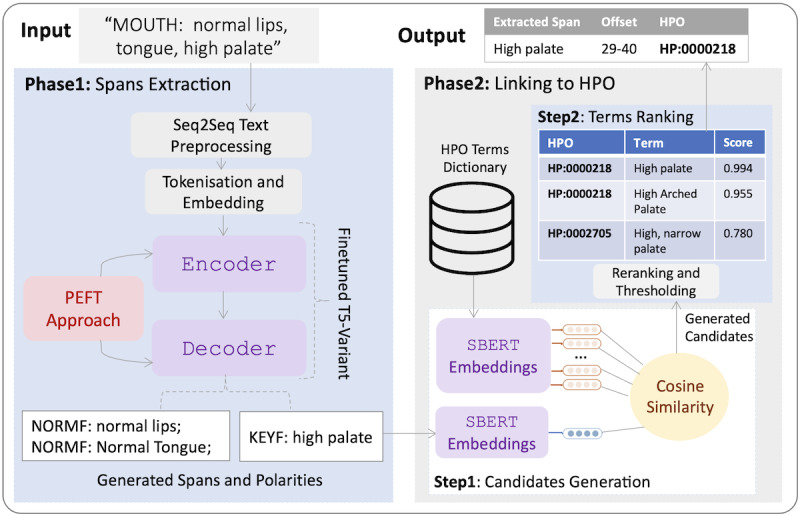 Figure 2
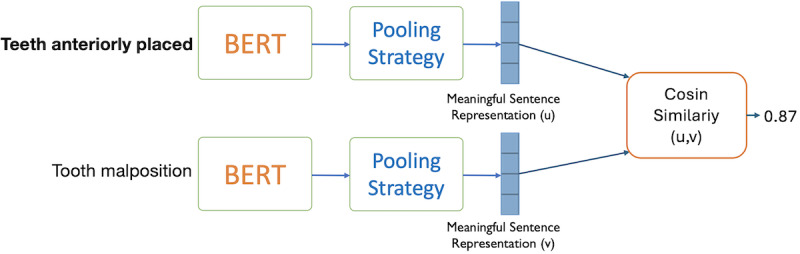 Figure 3
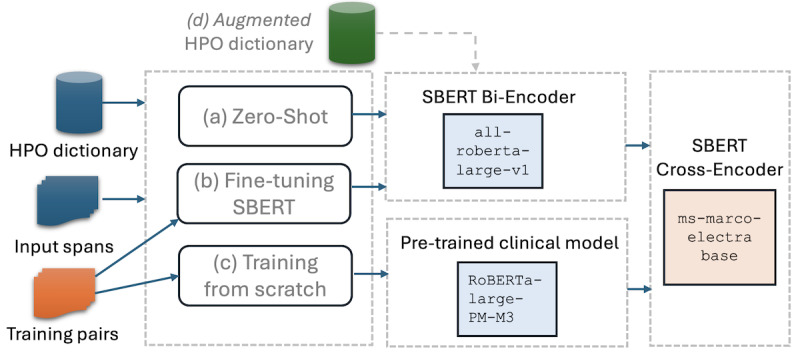 Figure 4
 Figure 5
Peer Reviews
No public reviews on file for this paper yet. If you reviewed it on a platform where reviews are public (OpenReview, ICLR, NeurIPS, ICML), you can paste yours below so the community can read it here.
Videos
No videos yet. Explain this paper in a talk, walkthrough, or lecture? Add one.
Taxonomy
TopicsTopic Modeling · Natural Language Processing Techniques · Biomedical Text Mining and Ontologies