Clinical significance of measuring the lateral atlantodental interval in children with tic disorders
Beiru Peng, Runxin Peng, Xiumei Chen, Xuanrui Lu, Chuyu Huang, Lijiao Zhang, Gaofeng Liang

TL;DR
This study finds that children with tic disorders show a link between head shaking tics and asymmetry in the lateral atlantodental interval, but not with overall tic severity.
Contribution
The study introduces a novel clinical observation linking atlantoaxial joint asymmetry to specific tic symptoms in children.
Findings
Children with tics showed a mean VBLADI of 1.32 mm, with a range of 0.62–2.19 mm.
Head shaking tics were strongly associated with VBLADI >2.2 mm after adjusting for confounders.
No correlation was found between VBLADI levels and overall tic severity measured by the Yale scale.
Abstract
The pathophysiology and causation of tic disorders (TD) remain unclear. Clinically, children with TD with head and neck tics, trunk tics, often showing associated spinal abnormalities, may be closely related to the atlantoaxial joint. The purpose of this research is to assess the level of lateral atlantodental interval (LADI) in children with TD and to explore the correlation between TD and the asymmetry of bilateral LADI. The variance in the bilateral lateral atlantodental interval (VBLADI) level was investigated in a retrospective analysis of 80 children with TD between July 2021 and December 2024. Meanwhile, examining the correlation between tic symptoms and VBLADI levels based on VBLADI ≤ 2 mm and >2 mm for grouping. The mean VBLADI among children with TD was 1.32 mm (range: 0.62–2.19 mm). A robust and statistically significant association was identified between head shaking and…
Genes, proteins, chemicals, diseases, species, mutations and cell lines named across the full text — each resolved to its canonical identifier and authoritative record.
Click any figure to enlarge with its caption.
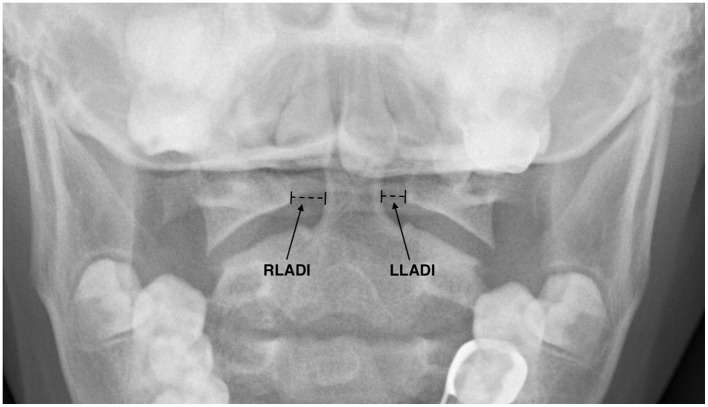 Figure 1
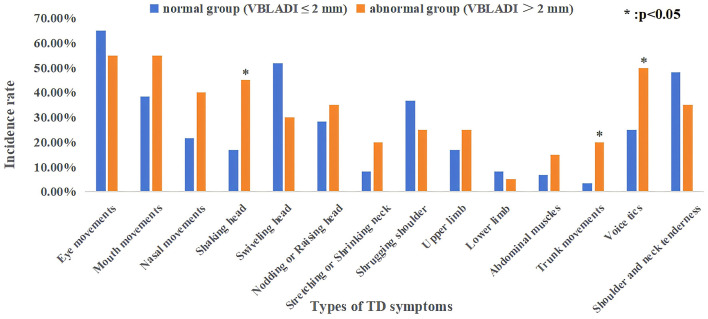 Figure 2
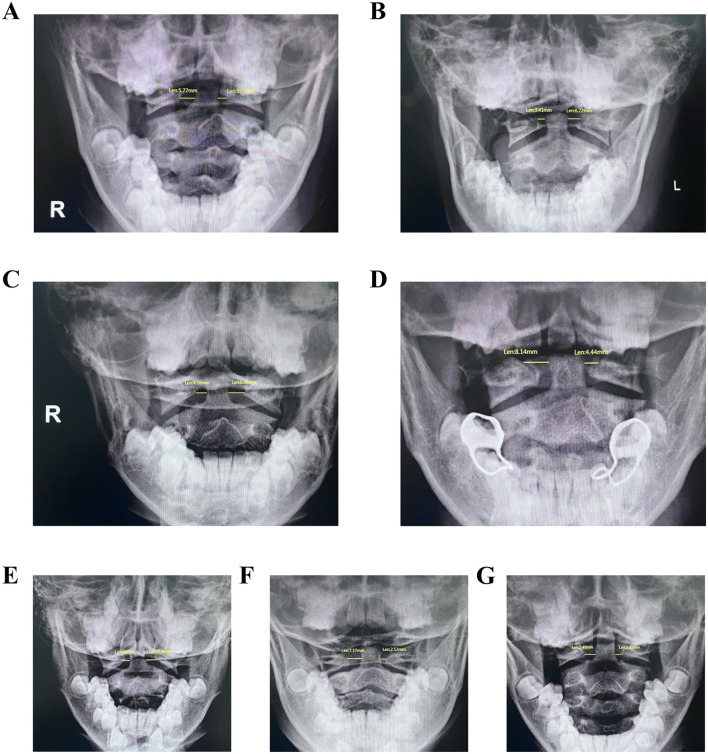 Figure 3
Peer Reviews
No public reviews on file for this paper yet. If you reviewed it on a platform where reviews are public (OpenReview, ICLR, NeurIPS, ICML), you can paste yours below so the community can read it here.
Videos
No videos yet. Explain this paper in a talk, walkthrough, or lecture? Add one.
Taxonomy
TopicsObsessive-Compulsive Spectrum Disorders · Trigeminal Neuralgia and Treatments · Oropharyngeal Anatomy and Pathologies